— TEPCO: 5 Billion Bq of Strontium-90 flows to the sea every single day

From Fukushima Diary

5 Billion Bq of Strontium-90 flows to the Pacific on the daily basis in 2014. Tepco announced in the press conference of 8/25/2014.

This is due to the contaminated water overflowing from the seaside of Reactor 1 ~ 4 to Fukushima plant port.

They also announced 2 Billion Bq of Cesium-137 and 1 Billion Bq of Tritium flow to the sea every single day as well.

Fukushima plant port is not separated from the Pacific. Discharged nuclide naturally spreads to the sea.

http://www.tepco.co.jp/tepconews/library/archive-j.html

Posted by 

http://fukushima-diary.com/2014/08/5-billion-bq-strontium-90-flows-sea-every-single-day/

— 10,000 tons of toxic water pools in Fukushima nuclear plant trenches

From the Mainichi

August 23, 2016 (Mainichi Japan)

TOKYO (Kyodo) — Around 10,000 tons of contaminated water have pooled in underground trenches around the Nos. 1 to 4 reactor buildings of the crippled Fukushima Daiichi nuclear power plant, according to the plant operator Tokyo Electric Power Company Holdings Inc.

Tokyo Electric has no immediate plan to remove the water in the trenches where cables run for the nuclear power complex devastated by the March 2011 earthquake and tsunami disaster.

Water that flew into the trenches in the wake of the huge tsunami is believed to have been mixed with highly radioactive water leaking from the basements of reactor buildings and contaminated rainwater.

“Compared with around 70,000 tons of highly contaminated water that remain in the basements of the reactor buildings, (the water in the trenches) has a low level of concentration and thus poses little threat in terms of radiation exposure and the environment,” said an official of the utility known as TEPCO.

TEPCO said in a report issued in July — based on research conducted in fiscal 2015 — that it has found around 8,000 tons of toxic water in 17 locations in the trenches that connect with reactor buildings where highly radioactive water accumulates, as well as around 3,000 tons of toxic water at 11 locations in trenches that do not connect with reactor buildings.

Of the water in the trenches around the Nos. 1 to 4 reactor buildings, a removal procedure was completed by June for around 500 tons of water in a pipe that measured the highest level of radioactive cesium at 500,000 becquerels per liter.

The level of radioactive cesium in water at other locations in the trenches was mostly measured at several thousands becquerels or below.

The level in toxic water in the basements of reactor buildings has been measured at around dozens of millions becquerels at maximum.

TEPCO has said it will continue to monitor and measure the level of contamination in water in the trenches regularly and consider taking measures to remove the water in the future. But no concrete plan has been created yet.

The electricity firm has so far removed a total of around 10,000 tons of highly radioactive water at three locations in the trenches running in the seaside of the complex and completed the procedure to fill locations concerned with cement to prevent water leaks.

Still, the level of radioactive cesium remains unchecked at 40 locations in the trenches due to high radioactive levels as well as debris and other objects blocking the research operation

Editor: This is after 5 years.

http://mainichi.jp/english/articles/20160823/p2g/00m/0dm/074000c

Posted under Fair Use Rules.

— Tourism is booming in Fukushima prefecture

From Japan Times

Fukushima tourism making strong progress on recovery
August 14, 2016

Excerpt:

Tourism in Fukushima Prefecture approached a milestone in fiscal 2015 after recovering to nearly 90 percent of where it was before the nuclear disaster unfolded in March 2011, the prefectural government said in a recent tourism report.

In the year ended March 31, the prefecture saw 50.31 million tourists visit its resorts, sightseeing spots and leisure facilities, data compiled by the Fukushima Prefectural Government showed earlier this month.

That’s an increase of 3.42 million on the year before and nearly 90 percent of its tourism tally in fiscal 2010, when 57.17 million tourists visited, the report said.

It is also the first time the annual threshold of 50 million has been achieved since 2011, when the Great East Japan Earthquake tipped the Fukushima No. 1 power plant into a triple core meltdown on March 11.

Fukushima officials praised their promotion drive, dubbed the “Fukushima Destination Campaign,” for bearing fruit. The campaign allows its municipalities to tap the transport resources of the Japan Railway group across the country.

We will work to draw more tourists by analyzing the effect of the Destination Campaign,” said a Fukushima prefectural official in charge of tourism promotion.

Fukushima tourism making strong progress on recovery

http://www.travelandleisure.com/trip-ideas/nature-travel/fukushima-tourism-rebound

– Forget radioactive contamination! It’s full speed ahead to the 2020 Tokyo Olympics

From the Washington Post

Japanese Prime Minister Abe wows Rio finale as Super Mario

By Elaine Kurtenbach
August 22, 2016

TOKYO — Japanese Prime Minister Shinzo Abe’s brief but showstopping gig at the Olympics closing ceremony as the Nintendo game character Super Mario offered a tantalizing glimpse at Tokyo’s plans for the 2020 games.

The organizers for the Tokyo games crammed the works into a brief two-minute film montage before Abe’s appearance: athletes participating in more than a dozen sports, as iconic Japanese images like Tokyo Tower, cherry blossoms, a bullet train, Tokyo Bay Bridge and the famous “scramble” intersection in Shibuya whiz by.

Anime and video game characters including Pac Man and Hello Kitty are featured, along with the beloved blue Doraemon cat, who pulls from his pocket of magic gadgets a green warp pipe to whisk Abe, transformed briefly into Super Mario, from his limousine in Tokyo straight to Rio.

… As they gear up for the 2020 games, the organizers appear to have achieved what they were striving for: “Cool!” ‘’OMG” and “I want to go to Tokyo!” were among various comments on Twitter.

For complete article:

https://www.washingtonpost.com/world/asia_pacific/japanese-prime-minister-abe-wows-rio-finale-as-super-mario/2016/08/22/2b2e15d0-6834-11e6-91cb-ecb5418830e9_story.html

Posted under Fair Use Rules

— Chitin, important for intestinal health, absorbs and bioaccumulates radiation

Another great article from this fantastic website showing the impact of radiation on our gut!

From Nuke Professional

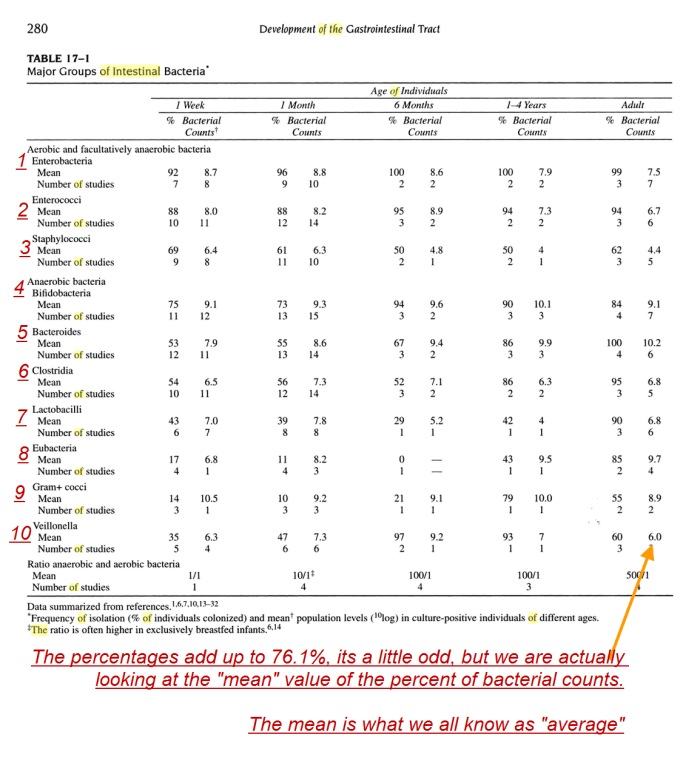
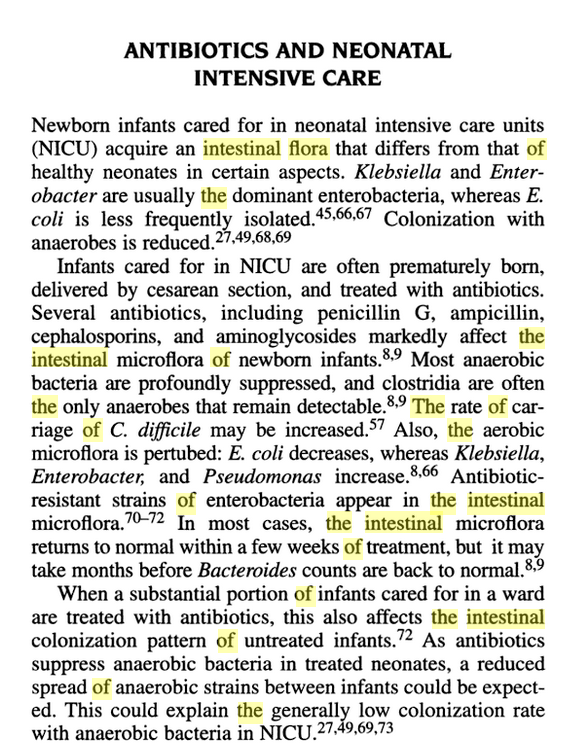
Pro-biotic Food Stuffs and Gut “Flora” –Necessary for Health and Immune System, Destroyed by Fake Food

August, 2016

Roughly there are 10 important gut bacteria.   See Chart.

Gut flora has somehow taken a huge nosedive in the last few years, and now Pro-biotic is a common word.

Some gut flora is greatly benefited by the presence of Oligosaccharides in the gut.

OK for those that follow me, this is now going to knock your socks off.

What is the best source of Oligosaccharides?

Chitin

And Chitin absorbs radiation like a sponge and bioconcentrates it.

So the thing that we need desperately for gut health is destroyed by radiation.

And Fukushima released as much radiation as ALL THE ATOMIC BOMB TEST EVER CONDUCTED.

Research on Chitin and Gut Flora

For the remainder of the article:
http://nukeprofessional.blogspot.in/2016/08/probiotic-food-stuffs-and-gut-flora.html

See his previous article here:
http://nukeprofessional.blogspot.com/2016/02/a-scientific-basis-for-destruction-of.html
A scientific basis for destruction of ocean food chain via radiation

https://healfukushima.org/2016/02/16/a-scientific-basis-for-destruction-of-ocean-food-chain-via-radiation/

And follow his blog.


– ‘Astronomical amounts of radiation’ in downtown Tokyo; ‘high doses of radiation, usually found in nuclear waste…highly radioactive dust’ in ‘decontaminated’ area; ‘serious internal exposure’ from inhalation into the lungs

Posted on ENE News

August 22, 2016

CCTV (Channel 17 in Burlington, Vermont), published Jun 20, 2016 (emphasis added):

  • Margaret Harrington, host: I know you mentioned Arnie Gundersen, the chief engineer at Fairewinds, and he said that he measured the radiation there, too. Could you talk about that a little bit?
  • Maggie Gundersen, Fairewinds Energy Education founder and CEO: He’s working with some other scientists who are studying — both Japanese scientists, the samples that they took, and the US scientists who are evaluating the samples — and they’re finding astronomical amounts of radiation, even in downtown Tokyo outside of METI’s door. METI is the regulatory agency over nuclear power… When he and others were downtown in Tokyo, they took samples right there in a garden right outside the door and on the front doormat, and these are really, really high samples. Frightening, because people walking in Tokyo will then be inhaling that dust. What was the film we saw from Japan that had the mothers who were in an area where kids play and run from middle school?
  • Caroline Phillips, Fairewinds Energy Education: It’s a fantastic video… it’s a mothers organization, they live in the Fukushima Prefecture and they’re actually using Geiger counters that have been issued by the government. They’re walking along the river [in Fukushima City.]
  • Maggie Gundersen: What’s so tragic about it – kids are running along dirt paths doing gym class and track and things like that and the mothers are right down in areas that are not posted and the kids can go after school and play, and people do nature hikes and stuff. And the radiation readings are horrific.

Gendai Business Online (article in Japanese here), Jun 14, 2016: [J]ust before the 5th anniversary of the triple meltdown at Fukushima Daiichi, a group of young girls in the city of Minami-Soma rode their bikes to school past a shocked and saddened pedestrian. That upset observer was Arnie Gundersen, nuclear reactor expert… “What surprised me at this visit to Japan… is that the decontaminated area is contaminated again,” Mr. Gundersen said while explaining why it was such as sad shock to witness the girls on their bicycles. “This was not what I had expected. I had thought that we would not find such high doses of radiation in the decontaminated area. But, sadly, our results prove otherwise.”… Gundersen collected samples of dust [though] the official data cannot be released before the publication of formal scientific papers, it is evident that high doses of radiation, usually found in nuclear waste, was detected from these samples. “This means that highly radioactive dust is flying around the city. In other words, the decontaminated land is contaminated again. Little girls are affected by the radiation 20 times as much as adult men. The Japanese government’s standard of 20 mSv is based on exposure assessments for adult men. The girls on their bicycles are actually being affected by a radiation dose equivalent to as much as 400 mSv.” Mr. Gundersen also pointed out that human lungs are heavily affected by internal exposures to radiation. “At this visit, I wore a radiation proof mask that can filter out 99.98% of radiation for six hours. I sent my filter to the lab, and they found a high dose of Cesium. But, unfortunately, the Japanese government only cares about the number on a Geiger counter and does not consider the internal exposure. This has resulted in a hazardous downplay of this kind of data and human lungs are affected by the serious internal exposure.”… [T]he radiation from the mountains are coming back to the city by way of wind and rain. Mr. Gundersen noted the extreme radioactive contamination of the mountains… vegetables grown in that area exceed the government’s standard by 1500 Bq. These vegetables were sold at the MichinoEki in Tochigi prefecture, and the bamboo shoot grown in this contaminated region was used for elementary school lunches in Utsunomiya. These school lunches contained more than twice as much radiation as the government’s standard… However, the government continues to push for the end of people’s relocation and force the return to recontaminated areas… Mr. Gundersen also found that Tokyo remains contaminated. He measured dust… and found a high dose of radiation. That dust is in the air that will be inhaled by the visitors and athletes of the 2020 Olympic Games. Needless to say, the current residents are inhaling it every day…

Watch the CCTV Channel 17 interview here

http://enenews.com/tv-astronomical-amounts-radiation-found-downtown-tokyo-horrific-readings-detected-children-playing-fukushima-extreme-contamination-found-food-grown-school-lunches-nuclear-expert-shocked-upsettin

— ‘It’s a lie’: former Japanese prime minister Junichiro Koizumi blasts Shinzo Abe’s government over Fukushima clean-up

“I think nuclear is an environmentally viable way to produce electricity.”
— Dale Klein, an adviser to TEPCO and a former chairman of the US Nuclear Regulatory Commission

Dale Klein is a good example of the revolving door between government and private industry. Regulators don’t regulate because they don’t want to jeopardize their career options.

From South China Morning Post

Sept. 8, 2016

Former prime minister backed the use of nuclear power during his years in office but now says he regrets being ignorant about its risks

Former Japanese prime minister Junichiro Koizumi has blasted current premier Shinzo Abe’s stance that the situation at the crippled Fukushima nuclear power plant is under control.

“It’s a lie,” an impassioned Koizumi, 74, told reporters in Tokyo on Wednesday. “They keep saying it’s going to be under control, but still it’s not effective. I really want to know how you can tell a lie like that.”

A spokesman for Abe’s office didn’t immediately respond to a phone call and e-mail requesting comment.

More than five years after the meltdowns at the Fukushima Dai-Ichi plant, the operator – Tokyo Electric Power Co. – continues to struggle to contain the radiation-contaminated water that inundates the plant. Tepco is using a frozen “ice wall” to stop water from entering the wrecked facility, but still about 300 metric tonnes of water flows into the reactor building daily, mixing with melted fuel and becoming tainted, according to the company’s website.

Company spokesman Tatsuhiro Yamagishi said by email that a process to bolster the ice wall is beginning to have an effect, adding that the company believes no underground water is flowing into the sea without being treated. All radioactive materials are under measurable limits, he said.

Koizumi was speaking at an event to publicise his campaign to raise money to help US servicemen who say they contracted radiation sickness while working on the clean-up after the March 2011 earthquake, tsunami and meltdown.

The former prime minister backed the use of nuclear power during his years in office from 2001-06, but now says he regrets that he had been ignorant about its risks and is campaigning for its abolition.

“When I was prime minister, I believed what they told me. I believed it was a cheap, safe and clean form of energy,” Koizumi said. “I’m now ashamed of myself for believing those lies for so long.”

Koizumi also blasted Japan’s Nuclear Regulation Authority, saying that its chief, Shunichi Tanaka, gave permission to restart the Sendai reactor in the southern Japanese island of Kyushu despite having reservations about its safety. The authority wasn’t immediately available to comment outside of business hours.

Local courts and governments have been one of the biggest roadblocks to restarting more reactors, crimping Abe’s goal of deriving as much as 22 per cent of the nation’s energy needs from nuclear by 2030. [it’s always at the local and grassroots level where action happens]

The Otsu District Court earlier this year made a surprise decision that restricted Kansai Electric Power Co. from operating two reactors in western Japan only weeks after they’d been turned back on.

On March 10, the eve of the fifth anniversary of the disaster, Abe said that Japan can’t do without nuclear power.

Just three of the nation’s 42 operable reactors are currently online. Kyushu Electric Power Co.’s Sendai No. 1 and No. 2 reactors, which restarted last year, are facing opposition from the region’s new governor, who has twice formally demanded that they be temporarily shut for inspection.

“There is no perfect source for electricity,” Dale Klein, an adviser to Tepco and a former chairman of the US Nuclear Regulatory Commission, said in an interview in Tokyo last week. “If there were a perfect source, we wouldn’t be having our energy debates. Wind has its problems, solar has its problems, coal has its problems. But at the end of the day, we need electricity. And I think nuclear is an environmentally viable way to produce electricity.”

Koizumi contested claims by Abe’s administration that the nuclear watchdog is imposing the world’s most stringent safety standards in the earthquake-prone nation. “If you compare the Japanese regulations to those in America, you realise how much looser the Japanese regulations are,” he said.

“Abe knows the arguments on both sides, but he still believes the arguments for nuclear power generation,” Koizumi added.

http://www.scmp.com/news/asia/east-asia/article/2017251/its-lie-former-japanese-prime-minister-junichiro-koizumi-blasts
— Would You CONSENT to Nuclear Waste? Tell DOE “NO” to Fukushima Freeways — deadline July 31

The DOE proposal is about the “future” of nuclear energy. DOE wants to continue promoting nuclear power plants, continue creating nuclear weapons, continue churning out nuclear waste. Without disposal, there is no future. We can collectively refuse.

Sane people want to  know: how can there be “disposal” for something that lasts millions or billions of years?

From Nuclear Information and Resource Service

July 27, 2016

Dear Friends,

What would it take for you to consent to accept nuclear waste in your region? The Department of Energy (DOE) wants to know.

DOE has held 9 public meetings across the country this year, and is now taking written comments, on the concept of public “consent” to accept high-level radioactive waste.

Send DOE  your comment today: No more nuclear waste – No Fukushima Freeways!

After decades of trying to force-feed the proposed Yucca Mountain nuclear dump down the throats of Nevadans and the Western Shoshone Nation, the DOE and nuclear proponents now want to know what it will take to get people to “consent,” or at least appear to consent, to take nuclear waste in their communities.

DOE acknowledges this is also “consent” to future nuclear waste production as part of setting up an “integrated waste management system.” The federal agency says that the future of nuclear energy in this country depends on this.

Tell DOE what you think of nuclear waste by clicking here.

DOE seeks public input on how to be FAIR, WHO to include in the consent process, and what RESOURCES it will take to induce community participation in the nation’s radioactive waste program.

  • DOE wants to identify who adequately represents a community and will consent to take nuclear waste on its behalf.
  • DOE is not defining exactly what or how much nuclear waste we would be “consenting” or not consenting to accept.
  • And DOE is not asking how a community can refuse or express permanent “non-consent,” although you can let them know that if you choose to.

Although they have reports, diagrams of storage containers and systems, ideas and plans for the tens of thousands of tons of nuclear waste in this country, they claim to want to negotiate with communities who would “consent” to take it forever or supposedly temporarily.

Tell DOE what you think of nuclear waste by clicking here.

No consideration of the rights or consent of communities along transport routes is being made or requested. Although one of the greatest dangers to the most people, environments and ecosystems is the movement of tens of thousands of tons of nuclear waste on roads, rails and waterways, DOE has stated that there is complete federal preemption over transport of nuclear waste, so states and communities along the transport routes would have no voice, no matter how much waste DOE plans to move through them.

DOE is giving no consideration of the rights of future generations who will inevitably be affected.

DOE and the nuclear industry are eager for volunteering or consenting communities to take the waste and for the DOE to take title to it–absolving the industry of responsibility for managing the waste it creates before there is even a proven solution for its long-term management.

Thanks for all you do!

Mary Olson – Southeast Office Director
Diane D’Arrigo – Radioactive Waste Project Director

For More Information

NIRS Info Materials on Fukushima Freeways and Consolidated Storage
Talking Points on Consent-Based Siting from Beyond Nuclear

Click here to read a Federal Register notice that explains more about DOE’s request for public comment on these issues. There is also information on this DOE website.

You can contact Diane D’Arrigo or Mary Olson at NIRS for more information about the other meetings and the issue generally.

Submit a Public Comment! We encourage everyone to submit your own thoughts on these issues to DOE. Comment deadline is July 31, 2016. Please send an email to consentbasedsiting@hq.doe.gov. Please include “Response to IPC” in the subject line.

Stay Informed:

NIRS on the web: http://www.nirs.org

GreenWorld: (NIRS’ blog chronicling nuclear issues and the transition to a nuclear-free, carbon-free energy system) http://www.safeenergy.org

NIRS on Facebook:

http://www.facebook.com/pages/Nuclear-Information-and-Resource-Service/26490791479?sk=wall&filter=12

http://www.facebook.com/nonukesnirs

http://www.facebook.com/groups/nukefreeclimatefreemarch/

NIRS on Twitter: http://twitter.com/#!/nirsnet

NIRS on YouTube: http://www.youtube.com/user/nirsnet
http://org2.salsalabs.com/o/5502/t/0/blastContent.jsp?email_blast_KEY=1369374

— Pennsylvania: Nuclear plant operators suspended after prioritizing reactor operation ahead of safety

From Beyond Nuclear

As Susan Schwartz of the Press Enterprise reports from Salem Twp., PA, three senior reactor operators at the Susquehanna nuclear power plant (see NRC file photo, left) have been temporaily suspended, pending retraining:

Three senior reactor operators have been temporarily disqualified after they took a safety system offline before shutting down a reactor at the Susquehanna nuclear plant in May, regulators confirm. A nuclear watchdog believes the operators did it in an effort to avoid shutting down the unit, an expensive move for the plant.

Susquehanna has two reactors, both Fukushima Daiichi sibling designs. Susquehanna Units 1 and 2 are General Electric Mark II boiling water reactors.

The article, which reports the incident took place at Unit 2, quotes Dave Lochbaum of UCS:

Watchdog’s take

But David Lochbaum, nuclear safety project director for the Union of Concerned Scientists, said he suspects the operators disabled the safety system to buy themselves time in the hope of avoiding the shutdown.

If the high pressure coolant injection system is triggered, it can cause the unit to shut down automatically, said Lochbaum. He’s a nuclear engineer who worked 17 years in the industry and also a former reactor technology instructor with the Nuclear Regulatory Commission.

He believes the operators hoped that by delaying the automatic scram, they would give workers time to fix the electrical fault and restore proper cooling and ventilation so the reactor wouldn’t need to be shut down.

But before they took the safety system offline, they didn’t check to make sure nothing was happening that might require it to work.

“They breezed through that step,” he said. “They put the operation of the plant ahead of safety. They took some shortcuts.”

‘Mistakes were made’

That attitude contributed to the accident at Three Mile Island in 1979, he said.

Operators there misdiagnosed a problem with the reactor and shut off the safety systems, explained Lochbaum. If they had left them alone, he says the safety systems as designed would have saved the day.

The Susquehanna Steam Electric Station was nowhere near such dire straits, Lochbaum stressed.

“It’s unfortunate mistakes were made, but the system is pretty robust,” he said. “It would have taken several more miscues before this event would have resulted in meltdown or core damage.”

In other words, luckily, operators at Susquehanna Unit 2 in 2016 only made one major mistake, instead of several. The March 28, 1979 series of mistakes made at Three Mile Island Unit 2, however, led to a 50% core meltdown, and the worst nuclear power disaster — thus far, anyway — in U.S. history.


http://www.beyondnuclear.org/home/2016/7/20/susquehanna-operators-suspended-after-prioritizing-reactor-o.html

— Helen Caldicott speaks on nuclear weapons in San Francisco, August 13

From Tri-Valley CAREs

Saturday, August 13, 2016  2 PM
Nuclear Weapons: Can they be Abolished? Dr. Helen Caldicott speaks in SF

Though obligated to disarm under the Non-Proliferation Treaty, the U.S. is devising new nuclear weapons for a trillion dollars while the pentagon plans ways to use them. What to do? hear the foremost authority on atomic perils, an Australian physician and author whose mobilizing of doctors of the world culminated in the 1985 Nobel Peace prize to International Physicians for the Prevention of Nuclear War. Books by Dr. Caldicott will be offered for sale.

Location: San Francisco public Library, Main Branch, 100 Larkin St., Koret Auditorium (lower level)
More Info: War and Law (415) 948-9616

http://www.trivalleycares.org/new/events.html