– Scott Ritter: Nuclear disarmament in a time of chaos


Disarmament in a Time of Chaos
By Scott Ritter
February 14, 2025

President Trump says he wants to work with China and Russia on the issue of “slowing down, stopping and reducing nuclear weapons.” Trump went on to declare that “there’s no reason for us to be building brand-new nuclear weapons…We already have so many you can destroy the world 50 times over, 100 times over.” He also said he would urge Russia and China to join him in cutting their respective military budgets by half.

This is the most important statement made by an American president in decades, because from this can come a movement to save the world from the threat of nuclear annihilation. But such a dramatic departure from past practice threatens the Military Industrial Congressional Complex (MICC), that massive monolithic edifice to greed and war which President Dwight D. Eisenhower warned his fellow Americans about in his farewell address delivered in January 1961.

To overcome the considerable obstacles that the MICC will put in the way of Trump making any progress on this bold world-saving initiative, the president will need to turn to the same allies he relied upon to win the White House back from the deep state that blocked his reelection in 2020—the American voter. From a domestic point of view, Trump faces a two-front war. The first is against a deeply entrenched nuclear war establishment whose budget and underlying justification thereof have gone unquestioned and unchallenged for decades. The second is a fight over public opinion which has been shaped by decades of domestic propaganda that make nuclear weapons, and their underpinning mission of global annihilation, appear to a normal part of the American national fabric.

To win on the first front, President Trump will need to combine the tried and true lessons drawn from the experiences gained by implementing previous arms control treaties, especially in the field of compliance verification, with a bold new approach which alters the scope and scale of disarmament so that the world breaks free of dogma which makes nuclear-based deterrence the norm, and instead puts the US and the world on a path of implementing the vision set forth in the nuclear nonproliferation treaty of a world free from the threat of nuclear weapons.

To prevail on the second front, President Trump will have to take his case to the American people, holding a series of massive outdoor rallies in states where the nuclear weapons enterprise has fortified itself politically. Such rallies, when combined with town hall meetings and targeted media appearances, can build a foundation of popular support for arms control that can overwhelm the prejudices that have been ingrained in the political DNA of most Americans by the propaganda machine of the MICC.

These campaigns should be conducted in concert, so that each feeds off the success of the other, creating the kind of political synergy that will be needed to achieve the kind of sweeping changes necessary to walk America away from a nuclear weapons enterprise that could only be sustained by making America an enemy of peace and stability, a nation constantly in search of enemies to justify the enormous expenditures nuclear weapons capability incurs.

China appears to have poured cold water on Trump’s disarmament ambitions, with Guo Jiakun, a spokesman for China’s foreign ministry, declaring that the United States should take the lead in the reduction of nuclear weapons and military spending, noting that China’s nuclear arsenal was but a fraction the size of either those of US or Russia.

But rather than shy away from engaging further, Trump should call the Chinese bluff by working with Russia to extend the New Start treaty—the last remaining arms control agreement between Russia and the US—for another five-year period (the New START treaty expires in February 0f 2026). By extending New Start (implementation of which has ceased in the aftermath of the deterioration of US-Russian relations during the Biden administration), Trump would prevent a new arms race between the US and Russia, creating the kind of stability necessary to achieve his broader disarmament objectives.

Once Trump re-engages with Russia on New Start, he can begin crafting a new paradigm for the kind of global reduction/elimination of nuclear weapons he seeks. One of the problems with Trump’s trilateral approach toward global disarmament is that it ignores the role played by the remaining nuclear armed nations of the world (declared or, as in the case of Israel, undeclared), as well as nations like Iran which are believed to be on the cusp of attaining nuclear weapons capability. Any trilateral approach toward nuclear disarmament involving the US, Russia, and China that does not factor in the impact of the nuclear arsenals of India and Pakistan, North Korea and Israel, or France and Great Britain, cannot achieve its maximum potential for nuclear arms reduction because the impetus for retaining a nuclear stockpile sufficient to deter these outside threats remains.

One approach Trump could take is to use his suggested trilateral format not only as a basis for three-way reductions in nuclear arms, but also as a framework for a broader global approach toward disarmament where the “big three” nuclear powers work in concert to support regional nuclear disarmament initiatives. For instance, the United States could take the lead in linking the nuclear arsenals of France and the UK into a global nuclear disarmament agreement. Russia could take the lead regarding the nuclear arsenals of North Korea and Israel, while China could head up the India-Pakistan problem set.

Balancing the demands for trilateral nuclear disarmament involving the US, Russia, and China with those that will emerge regarding the remaining nuclear powers is conceptually too much for the existing arms control establishment to handle. Indeed, one of the main impediments to meaningful arms control is the US arms control community, which has stopped working to eliminate nuclear weapons and instead seeks to justify their continued existence in the name of arms control.

President Trump will need a new foundation of intellectual development regarding a new paradigm of arms control to embrace if his vision is to be realized. Here he has no greater ally and champion than Tulsi Gabbard, his new Director of National Intelligence (DNI). Under the umbrella of the DNI, Trump should create a new arms control support staff which seeks to combine arms control specialists capable of engaging in non-traditional approaches to arms control with intelligence analysts who monitor the various geographic-oriented problem sets a global nuclear disarmament agenda would encompass. A national intelligence officer for global nuclear disarmament could be appointed to head this staff, which would take the lead of identifying potential obstacles to achieving Trump’s global nuclear disarmament goals and provide analytical support to identified policy leads within the Trump administration so that they could resolve actual and potential issues using the tools of diplomacy.

Back in September 2024 I initiated Operation DAWN, a project which sought to mobilize citizen support for preventing nuclear war and leveraging this constituency into producing genuine policy changes. Operation DAWN was successful in putting the prevention of nuclear war on the election issue map and promoting serious policy changes that helped forestall a potential nuclear conflict between the United States and Russia.


I am announcing today that I am kicking off Operation DAWN 2.0, the focus of which will be to mobilize public support for President Trump’s global nuclear disarmament initiative. This will be done by engaging in educational programs designed to inform the public at large about the danger of nuclear war, the need for nuclear disarmament, and the necessity of effective arms control.

In support of this effort, I am pleased to announce that I will be publishing a book on the dangers of nuclear war, Highway to Hell: The Armageddon Chronicles, in partnership with my long-time publisher, Clarity Press.

Highway to Hell is the third book in what will become a three-book series on nuclear war and disarmament published by Clarity Press (the first two being Scorpion King, published in 2020, and Disarmament in the Time of Perestroika, published in 2022.)

I will also be working on organizing a traveling panel of experts who will take the message of nuclear war prevention and the need for nuclear arms control on the road to communities around the country to promote a broader discussion on the issue.

And I will continue to take the lead in trying to provide the antidote to the poison of Russophobia that the nuclear weapons establishment relies upon to infect the minds of American citizens with fear that is then exploited to justify the continued investment in nuclear weapons that threaten our very existence, and which President Trump is looking to eliminate.

Projects like these do not happen on their own. I am humbly requesting that those of you who so graciously supported the anti-Russophobia work I have engaged in previously, and who helped make Operation DAWN the success it was, continue to provide support so that we can eliminate the scourge of Russophobia and bring to fruition the nuclear disarmament vision of President Trump. And for those of you who have not financially supported my past endeavors, for whatever reason, I would ask that you take the time to reflect on what it is I am trying to accomplish here, and how your support could help push me across the finish line.

Or, better said, push us across the finish line.

Because preventing a nuclear war and promoting nuclear disarmament is a team sport.

Join the team!

https://scottritter.substack.com/p/disarmament-in-a-time-of-chaos
— America and its military-industrial complex is preventing global nuclear disarmament; Caldicott interview (video)

From Helen Caldicott

March 6, 2017

The White House announced its plans to increase the US defense budget by $54 billion dollars with part of it going to restoring the US’s nuclear capabilities. Nobel Peace Prize nominee and author of the book “Sleepwalking to Armageddon: The Threat of Nuclear Annihilation,” Dr. Helen Caldicott joins RT America’s Simone Del Rosario to discuss.

YouTube: https://www.youtube.com/watch?v=tiENEkp_GYk

http://www.helencaldicott.com/us-military-industrial-complex-preventing-global-nuclear-disarmament/

— Russia starts work on Arctic dock for 1st-ever floating nuclear power plant

The Russian Federation usually exhibits much more caution and common sense. Nuclear energy is their catastrophically huge blindspot. 

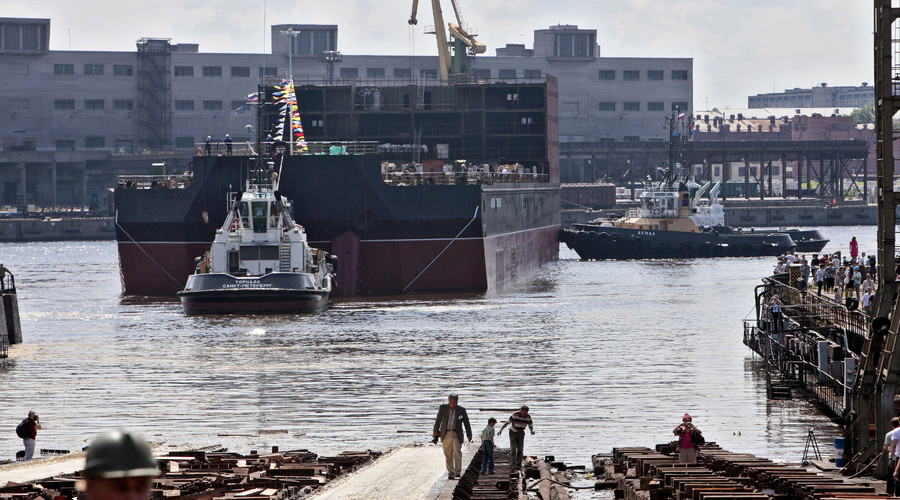
The generating unit of the world's first floating nuclear power plant Academician Lomonosov, was launched at the Baltiysky Zavod Shipyard of the United Industrial Corporation (UIC). © Alexei Danichev
The generating unit of the world’s first floating nuclear power plant Academician Lomonosov, was launched at the Baltiysky Zavod Shipyard of the United Industrial Corporation (UIC). © Alexei Danichev / Sputnik

From RT

October 7, 2016

The world’s first floating nuclear power plant is set to start producing power and heat in 2019. While the plant is already being tested, construction of the dock has begun on the Arctic coast in Russia’s Far East.

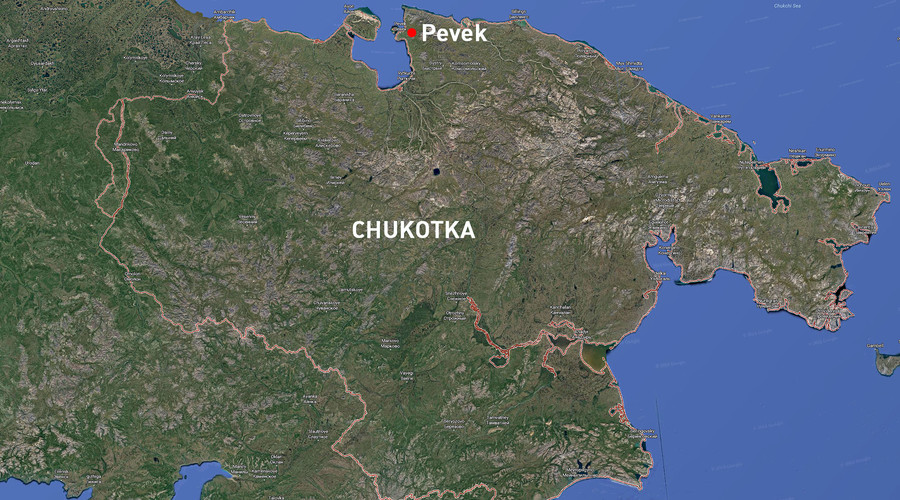
The construction works on the dock, which will host the floating nuclear power plant ‘Akademik Lomonosov’, kicked off Wednesday in the bay of the city of Pevek, Chukotka, RIA Novosti reports.

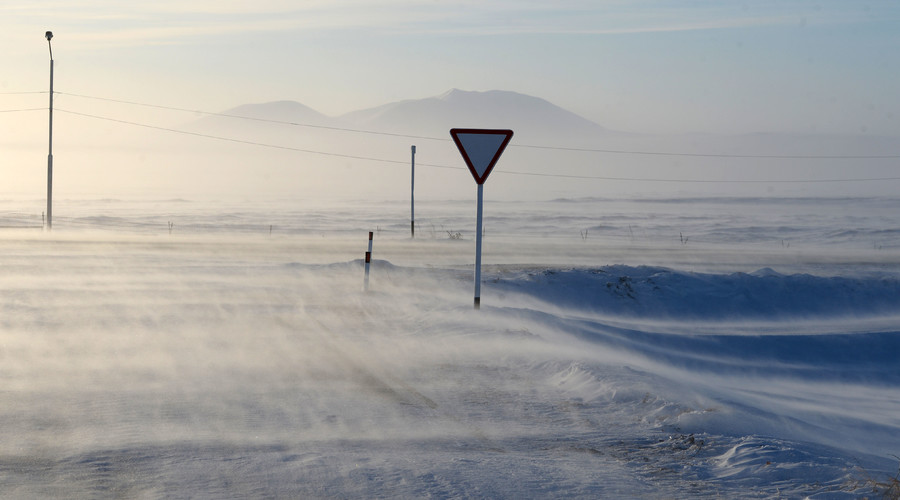
The severity of weather conditions (in winter, the temperature drops down to minus 60 degrees Celcius) obliging, the onshore facilities will be forced to endure ice impact and squalling winds. 

Road sign not far from Anadyr. © Konstantin Chalabov

Contractor company Zapsibgidrostroy’s Director-General Marat Kharisov, in charge of the construction, said the dock will be ready by October 2019.

The plant, work on which was announced back in 2007, will consist of the floating power-generating unit, the dock with onshore facilities for transmitting electricity and heat, and waterworks.

© Google maps

The facility, which is scheduled to start operating by the end of 2019, is set to replace the generating capacities of the Bilibino nuclear power plant and Chaunsky thermal power plant, which currently supply Chukotka Region with energy and heat.

According to the , the new NPP has electric power capacity of 75 MW, almost twice as much as Bilibino.

<iframe width=”766″ height=”500″ src=”https://www.youtube.com/embed/hfoI7kIS-lY&#8221; frameborder=”0″ allowfullscreen><!–iframe>

The cost of the floating plant is estimated at around 30 billion rubles (US$480 million),  to Sergey Zavyalov, head of the plant construction.

The power-generating unit for ‘Akademik Lomonosov’ is currently going through dock trials at the Baltic shipyard in St. Petersburg, known for manufacturing ships of Russia’s nuclear icebreaker fleet and the world’s only shipbuilder with experience building civilian naval reactors.

The 21,000-tons unit will have two Russian-designed KLT-40S reactors, low-enriched uranium-fueled reactors used in some of Russia’s icebreakers, and two steam-driven turbines. One unit is able to provide enough electricity to power a city of 200,000 people. It can also produce 300 megawatt of heat that can be transferred onshore, equal to saving some 200,000 tons of coal every year.

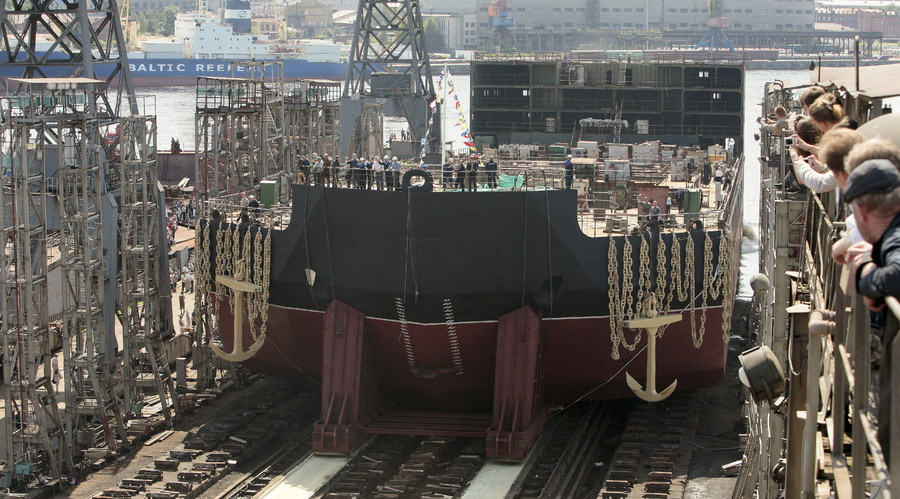
The main element of Concern Energoatom project, the generating unit of the world's first floating nuclear power plant Academician Lomonosov, was launched at the Baltiysky Zavod Shipyard of the United Industrial Corporation (UIC). © 
Alexei Danichev
The main element of Concern Energoatom project, the generating unit of the world’s first floating nuclear power plant Academician Lomonosov, was launched at the Baltiysky Zavod Shipyard of the United Industrial Corporation (UIC). © Alexei Danichev / Sputnik

The FPU is not self-propelled and must be towed to the location of operation. It is a barge consisting of three decks and 10 compartments. Apart from reactors, it is equipped with storage facilities for fresh and spent nuclear fuel, as well as liquid and solid nuclear waste.

Experts have praised floating power plants for being secure from earthquakes and tsunamis, as well as from meltdown threats, as the reactor’s active zone is underwater.

Reactor units are small and self-contained. They are nothing like those installed at the Chernobyl nuclear power station, of course. A scenario like that at the Fukushima power plant is also excluded,” Professor Georgy Tikhomirov of the Moscow Engineering Physics Institute recently  EFE news agency.

The crew of the plant consists of 70 engineers.

It’s like a journey on a cruise ship. The staff will be living on the platform in four-star hotel conditions, with all the amenities, because they have to spend a whole year in the cabins,” Tikhomirov added.

The FPU will have a service life of up to 40 years, with three operating cycles of 12 years. After each cycle the unit will be towed to the shipyard for repairs, defueling, refueling and radioactive waste removal.

The concept of floating nuclear power generating facilities is not new, with the US and  announcing research in the sphere lately, but ‘Akademik Lomonosov’ may become the first such facility actually to go into operation.

The deployment of nuclear facilities out to sea, however, also raises concerns of environmentalists, who warn that despite claims they answer all security guidelines for nuclear power facilities, these guidelines were written when the concept did not yet exist and thus should be revised.

Greenpeace, for instance,  that a sea-based nuclear facility is prone to torpedo and missile attacks, and could also be seized by terrorists who could use nuclear materials to create a nuclear bomb.

Accident at Leningrad Nuclear Power Plant: radioactive steam release, panic, evacuation and reactor shutdown

From ENE News
December 22, 2015

Mass panic as radioactive cloud pours from nuclear plant — Radiation levels reportedly spike near reactor after emergency shutdown — Traffic jams as people evacuate area — “Everyone got very worried and rushed to get iodine” (PHOTOS)

Express, Dec 21, 2015 (emphasis added): Russians flee Chernobyl-style plant over fears of radioactive leak — Russians took iodine and caused traffic jams… amid fears officials were covering up a radioactive leak. The panic followed the emergence of pictures showing a cloud of vapour pouring from Leningrad Nuclear Power Plant, some 50 miles from St Petersburg. The authorities insisted that the was no radioactive leakage… but people did not believe the “no danger” claim. Radio Svoboda reported that in the wake of the incident on Friday locals in Sosnovy Bor started withdrawing money from their credit cards. They said locals were in panic mode despite statements from officials that the radiation level was normal… One local said: “Everyone got very worried and rushed to get iodine.”… There were traffic jams as residents left the area and headed for St Petersburg… The plant manager (not pictured) insists there are no reasons for evacuation. [Oleg Bodrov, chairman of Green World ecological group] said: “They know well that the officials’ first task is to say all is normal but not to report about danger, even if there is one. All those who understand a bit about nuclear energy know that it was an attempt to mistake the wish for the reality… this vapour is surely radioactive… Bodrov called for medical checks for staff at the power plant. Interfax reported that a special commission was working at the nuclear station aiming to find out the reasons for the emission.

Daily Mail photo captions: A cloud of vapour pouring out of Leningrad Nuclear Power Plant in St Petersburg caused mass panic… Russian radio reported St Petersburg residents rushing out to buy iodine to protect against radiation poisoning after spotting the steam flowing out of the power station… The billowing vapour spreads across buildings

QHA, Dec 19, 2015: Accident occurred at Leningrad Nuclear Power Plant (PHOTO) — Eyewitnesses of the accident and the inhabitants of the Russia’s northern capital are scared. The second unit was stopped at the station… The accident occurred at the second power unit when a pipe with steam cracked in turbine hall yesterday. The steam filled the room, and leaked beyond the power plant. The employees of the Leningrad Nuclear Power Plant (LNPP) had to go home… According to specialists, the release was radioactive, because the waste steam entered the so-called loop reactor coolant. However, the population was encouraged not to panic.

Baltic Newsletter of the Green World, Dec 20, 2015: An emergency stop of the second power unit of Leningrad Nuclear Power Plant took place… The reason for the stop and cooling of the reactor was a sudden leak of radioactive steam from a faulty pipe in one of the rooms of the turbine shop… During the cooling – down step, the reactor steam was ejected through the pipe into the environment. A south – southeast wind of 5 meters per second (not typical for this area) blew the radioactive steam toward the Gulf of Finland… Thus, the five millionth city of St. Petersburg, located 40 km east of the Leningrad Nuclear Power Plant was fortunate this time. According to some sources , the radiation level rose a few times higher than the background radiation only in the NPP area.

Watch video from the Director of Leningrad NPP here

http://enenews.com/mass-panic-radioactive-steam-pours-nuclear-plant-radiation-levels-spiked-area-plant-traffic-jams-people-evacuate-area-everyone-very-worried-rushed-iodine-photos