Energodar authorities: 11 plant employees were injured in the attack of the Armed Forces of Ukraine on the Zaporizhzhya NPP
ENERGODAR (Zaporozhye region), July 20 – RIA Novosti. Eleven employees of the Zaporozhye NPP were wounded on Monday during an attack by drones of Ukrainian troops, a spokesman for the Energodar military-civilian administration told RIA Novosti.
“During the attack on the Zaporozhye NPP on Monday, 11 employees were injured, four of them are now in serious condition. As of today, there is no data on the victims,” the statement says.
Guterres office: UN does not have first-hand information about the attack on the Zaporozhye nuclear power plant
UN, July 20 – RIA Novosti. The UN has no first-hand information about the attack on the Zaporozhye nuclear power plant, Farhan Haq, deputy spokesman for the UN Secretary General, said at a briefing.
“I don’t have first-hand information on this,” Haq said when asked to comment on reports of a strike by Ukrainian forces on the Zaporozhye nuclear power plant .
Earlier, a representative of the administration of the Zaporozhye region , Vladimir Rogov , said that three Ukrainian kamikaze drones attacked the Zaporozhye nuclear power plant. According to him, the zone where the reactors at the Zaporozhye NPP are located was not affected.
Kyiv blocked the visit of the IAEA delegation to the Zaporozhye nuclear power plant, said the CAA
IMFEROPOL, June 21 – RIA Novosti. The International Atomic Energy Agency (IAEA) remotely monitors the situation at the Zaporozhye nuclear power plant in Energodar, the personal arrival of the organization’s delegation is blocked by the Ukrainian side, Vladimir Rogov, a member of the main council of the military-civilian administration of the Zaporozhye region, told RIA Novosti.
“The IAEA remotely monitors the situation at the nuclear power plant. All the necessary data is transmitted to them, including on the level of radiation, generation. We invited the IAEA delegation to personally visit the nuclear power plant, but the Kyiv regime prevents this and blocks the visit,” Rogov told the agency.
According to him, the Kiev authorities are afraid that if the IAEA delegation arrives , illegal stocks of enriched uranium and plutonium accumulated during the time when the nuclear power plant was under the control of Kievwill be opened and become the property of the international community.
At the same time, Rogov stressed that the delegation could visit the nuclear power plant through the territory of Russia , in particular Crimea, or the Donetsk People’s Republic .
“The land transport corridor is open and safe,” he said.
During the special operation, the Russian military took control of the Kherson region and the Azov part of the Zaporozhye region in southern Ukraine . Civil-military administrations were formed in the regions, the ruble was put into circulation, and Russian TV channels and radio stations began broadcasting. The regions announced plans to become subjects of the Russian Federation.
The organization Strategic Stability reported July 20, 2022:
The authorities of city of Energodar reported four attacks by Ukrainian UAVs on the Zaporozhye NPP in a day on July 20th. This was reported to RIA Novosti by the press service of the city Administration. Energodar is located very close to this NPP. It is reported that the last attack was recorded at 16:01 (Moscow time). The building located nearby was damaged. The Administration of the Zaporozhye Region also reported that the reactor part of the NPP was not damaged as a result of the attack, the radiation level is normal.
What will be the reaction of the IAEA?
– – – –
The last IAEA bulletin on Ukraine was July 14. No IAEA response so far.
Ukrainian attack drones attacked the Zaporozhye nuclear power plant
Zaporizhia authorities said that Ukrainian strike drones attacked the nuclear power plant
ENERGODAR (Zaporozhye region), July 20 – RIA Novosti. Ukrainian drones hit the Zaporozhye nuclear power plant, the press service of the Energodar administration told RIA Novosti.
“Today, Kyiv carried out an attack on the Zaporozhye nuclear power plant with the help of strike UAVs,” the official said.
“According to preliminary information, the UAVs were equipped with warheads with an explosive mass calculated in kilograms in TNT equivalent,” Vladimir Rogov, a representative of the CAA , wrote on his Telegram channel .
At the same time, the reactor part of the nuclear power plant was not damaged.In a commentary to RIA Novosti, Rogov added that strikes on the station were carried out to intimidate workers. He expressed confidence that this goal would not be achieved.Earlier , the
Armed Forces of Ukraine already tried to damage the object. On July 12, Ukrainian UAVs dropped several 120mm caliber mines on a building located next to the nuclear power plant. The roof and windows were damaged. In addition, an attempt to attack the power plant using drones was recorded on Monday, when 11 employees were injured, four of them in serious condition.
Russia has been conducting a military operation in Ukraine since February 24. President
Vladimir Putin called its goal “the protection of people who have been subjected to genocide by the Kiev regime for eight years.” The Russian Ministry of Defense called the liberation of Donbass the main task .
In particular, in the DPR , the military occupies Volnovakha, a strategically important regional center south of Donetsk, Mariupol, the largest city on the coast of the Sea of Azov, and Svyatogorsk. In addition, in early July, with the capture of Lisichansk and the surrounding settlements, the allied forces controlled the entire territory of the LPR. During the special operation, the Russian military took control of the Kherson region and the Azov part of the Zaporozhye region in southern Ukraine, including the largest power plant in Europe. Civil-military administrations were formed in the regions, the ruble was put into circulation, and Russian TV channels and radio stations began broadcasting. The regions have announced plans to become Russian subjects.
I am sure that certain Democratic senators such as Cory Booker and Sheldon Whitehouse, who are reasonably progressive on a host of social issues, would not considers themselves racist, sexist or ageist.
Nuclear power is all three of these things, yet Booker, Whitehouse and a number of others on the Democratic left, support nuclear power with almost fervent evangelism.
Let’s start with racism. The fuel for nuclear power plants comes from uranium, which must be mined. The majority of those who have mined it in this country — and would again under new bills such as the ‘International Nuclear Energy Act of 2022’ forwarded by not-so-progressive “Democrat”, Senator Joe Manchin (D-WV) — are Native Americans.
As such, they have taken the brunt of the negative health impacts as well as the environmental degradation both created and then left behind by uranium mines when they cease to operate, as most in the U.S. now have.
Studies conducted among members of the Navajo Nation have shown increases in a number of diseases and lingering internal contamination from uranium mine waste among newborns and children. Chronic ailments including kidney disease and hypertension found in these populations are medically linked with living near –and contact with — uranium mine waste.
Navajo children are especially vulnerable to uranium exposure and among the least protected. (Photo: Phil Darnell/Wikimedia Commons)
At the other end of the nuclear power chain comes the lethal, long-lived and highly radioactive waste as well as the so-called low-level radioactive waste stream of detritus, including from decommissioned nuclear power plants. Again, Indigenous peoples and poor communities of color are routinely the target.
The first and only high-level radioactive waste repository identified for the U.S. was to have been at Yucca Mountain, Nevada, against the strong wishes of the Western Shoshone Nation of Indians, on whose land the now canceled site is located. The Western Shoshone had already suffered the worst of the atomic testing program, with the Nevada atomic test site also on their land, making them “the most bombed nation on Earth,” as Western Shoshone Principal Man, Ian Zabarte, describes it.
An attempt to site a “low-level” radioactive waste dump in the largely Hispanic community of Sierra Blanca, TX was defeated, as was an allegedly temporary high-level radioactive waste site targeted for the Skull Valley Goshute Indian reservation in Utah.
Currently, efforts are underway to secure what are euphemistically known as “Consolidated Interim Storage Sites” in two communities in New Mexico and Texas, again with large Hispanic populations and considerable opposition.
Needless to say, these waste projects come with notable incentives — sometimes more accurately characterized as bribes — for the host community, in an effort to describe the deal as “voluntary.” But this preys upon the desperate economic needs of the most vulnerable communities, which are usually those of color.
The only two new U.S. nuclear reactors still under construction sit close to the African American community of Shell Bluff, Georgia, a population riddled with cancers and other diseases and who bitterly opposed the addition of more reactors to an already radioactively contaminated region.
Nuclear power is sexist because exposure to the ionizing radiation released at every stage of the nuclear fuel chain harms women more easily than men. Women are more radiosensitive than men — the science is not fully in on this but it is likely connected to greater hormone production — but women are not protected for.
Instead, the standard guidelines on which allowable radiation exposure levels are based (and “allowable” does not mean “safe”), consider a healthy, White male, in his mid-twenties to thirties and typically weighing around 154 pounds. He is known as “Reference Man”.
Women’s more vulnerable health concerns, and especially those of pregnant women, the fetus, babies and small children — and in particular female children — are thus overlooked in favor of the higher doses a healthy young male could potentially withstand.
As my colleagues Cindy Folkers and Ian Fairlie wrote:” “Women, especially pregnant women and children are especially susceptible to damage from radiation exposure. This means that they suffer effects at lower doses. Resulting diseases include childhood cancers, impaired neural development, lower IQ rates, respiratory difficulties, cardiovascular diseases, perinatal mortality and birth defects — some appearing for the first time within a family in the population studied.”
Even around nuclear power plants, the very young are at greater risk. Numerous studies in Europe have demonstrated that children age five or younger living close to nuclear power plants show higher rates of leukemia than those living further away. The closer they lived to the nuclear plant, the higher the incidences.
Similarly, the elderly are more vulnerable to the harmful effects of radiation exposure than adults in the prime of life. They, too, are overlooked in favor of protecting a robust man. Elders exposed to radiation are mainly to be found in the uranium mining and milling communities, or where waste dumps are located, and are therefore more likely to be low-income with poorer access to health care and fewer finances to pay for it.
The urgency of the climate crisis is a valid reason to revisit all electricity sources and make some important choices about lowering — and ideally eliminating — carbon emissions. Ruling out fossil fuel use is a must. But turning to nuclear power — rather than the faster, cheaper and safer options of renewable energy and efficiency — is not a humane choice.
If health is the concern, along with climate change, as it most certainly is for someone like Cory Booker, then choosing nuclear power as a substitute for fossil fuels is simply trading asthma for leukemia and asking frontline and Indigenous communities to, once again, suffer the greatest harm for the least return.
A truly progressive energy policy looks forward, not back. Nuclear power is an energy of the past — borne of a public relations exercise to create something positive out of splitting the atom. It was a mistake then. And it is a mistake now. If we are to address our climate crisis in time, and to do so with justice and equality, then we must ensure a Just Transition that considers the most vulnerable and discriminated among us, not what is best for that healthy, White Reference Man.
Governor Newsom has been carrying PG&E’s water for too long. When will it end? July 8, 2022
Governor Newsom’s cozy relationship with PG&E has been ongoing since his run for San Francisco Supervisor in 1998. By now, contributions from PG&E add up to well over $10 million in support of his campaigns and ballot measures. The company has also contributed hundreds of thousands to Newsom’s wife’s foundation. In return, Newsom has helped PG&E get away with murder, literally. And now, Newsom is proving his loyalty to the company by providing a runway for PG&E to keep Diablo Canyon nuclear plant open past its agreed-upon closure date of 2025.
On June 30, the Department of Energy (DOE) bowed to Newsom’s plea to change the rules so Diablo could qualify for a portion of the $6 million of Civil Nuclear Tax Credits. The DOE also extended the application deadline until September 6, 2022, allowing PG&E ample time to apply. Newsom is no stranger to manipulating circumstances to help PG&E. After the Camp Fire, which killed 85 people in 2018, Newsom had his lawyers craft a bill, AB 1054. This 2019 bill essentially protected PG&E by creating a $21 billion fund to help utilities cover the cost of major wildfires started by their equipment and forcing customers to pay for half of the cost of the fund. The bill also enabled PG&E to obtain official state safety certificates for two fire seasons since the Camp Fire. Yet, three years later, a state report on the 2021 Dixie Fire indicated that the utility was negligent in its tree-removal program, which helped spark the fire, and that their response the day of the fire was “excessively delayed.”
In response to the Supreme Court’s ruling weakening the EPA, Governor Newsom claimed that “California is taking bold action to further advance California’s progress toward an oil-free future and bolster the state’s clean energy economy.” Yet, at the same time, he convinced members of the State Legislature to pass a very climate-unfriendly Trailer Budget Bill. This legislation provides a $75 million allocation for the Department of Water Resources to purchase electricity from Diablo Canyon and hundreds of millions more for fossil fuel power plants.
Keeping Diablo open past 2025 breaks a hard-fought agreement between environmental organizations, labor, and PG&E. It puts the availability of renewable energy at risk, undercutting the state’s ability to reduce carbon dioxide and other climate-warming emissions 40% below 1990 levels by 2030 and achieve carbon neutrality by 2045. California does not need Diablo to ensure sufficient energy to prevent power outages or meet climate goals. To be clear, Diablo Canyon is closing because PG&E determined in 2016 that doing so would enable it to meet California’s renewable energy standard (RES) and emissions standards more rapidly and more cost-effectively.
Newsom’s coddling of PG&E and his maneuverings at the state and federal levels to keep Diablo running is all the more disturbing in that his motivations are based on the false narrative that these fossil and nuclear-fueled plants will prevent power outages. They will not. Energy consultant Robert Freehling explains it succinctly: “These plants were operating during the early 2000s energy crisis and in 2020. They did not prevent outages.”
Timeline: PG&E’s disasters since 2010 ABC10 examined the disasters and wildfires caused by PG&E, starting with the San Bruno Gas Explosion in 2010 then jumping ahead 8 years to the Camp Fire.Here’s a look at the timeline of PG&E’s disasters by ABC10:2010… PG&E was convicted of six federal felonies, including obstruction of the investigation, stemming from the 2010 San Bruno Gas Explosion. The blast killed eight people. Due to this conviction, the company was placed on probation until 2022, paid a $3 million fine, and was sentenced to 10,000 hours of community service.
2018... Newsom wins the governor’s race in November of 2018. Three days later, the Camp Fire started, destroying the town of Paradise and nearby communities. The fire resulted in the deaths of 85 people. It was determined the company left a hook hanging for nearly a hundred years until it broke, dropped a power line and sparked the fire.
2019… Problems with similar parts on a high tension power line are blamed for sparking the Kincade Fire. It burned more than a hundred homes in wine country. No one died, but it was close. Firefighters were injured while saving people. PG&E is fighting multiple felony and misdemeanor charges filed by Sonoma County in connection to the Kincade Fire.
2020…PG&E pleaded guilty to 84 felony counts of manslaughter, and one felony for sparking the Camp Fire through criminally reckless behavior. Three months after the court proceedings for the Camp Fire, the Zogg Fire broke out when a tree hit a PG&E power line in Shasta County. Four people died, including eight-year-old Feyla McLeod and her mother, both of whom burned to death running for their lives in a pickup truck. It’s an active homicide investigation and prosecutors recently announced they will be filing charges against PG&E and possibly officials who work there. The judge managing PG&E’s probation already found PG&E committed safety “violations” when PG&E’s contractors marked an unsafe tree leaning over the power line, but no one ever followed up to cut it down.
2021… PG&E’s legal obligation to find and cut trees threatening power lines is again under investigation for the Dixie Fire, which is still raging through communities ever since igniting on July 13. The fire started where a tree fell on a PG&E power line just a short distance up the Feather River Canyon from where PG&E sparked the Camp Fire. The question for investigators isn’t whether PG&E sparked the Dixie Fire, but whether PG&E is criminally responsible. That question hinges on whether PG&E should have found the tree and cut it before it fell.
ABC10 series: Fire Power Money For over three years, ABC10’s Fire – Power – Money team has been at the forefront covering California’s wildfire crisis, the danger of PG&E’s power lines, and how the company avoids accountability. Governor Newsom, PG&E, the CPUC, and the California fires https://www.abc10.com/firepowermoney
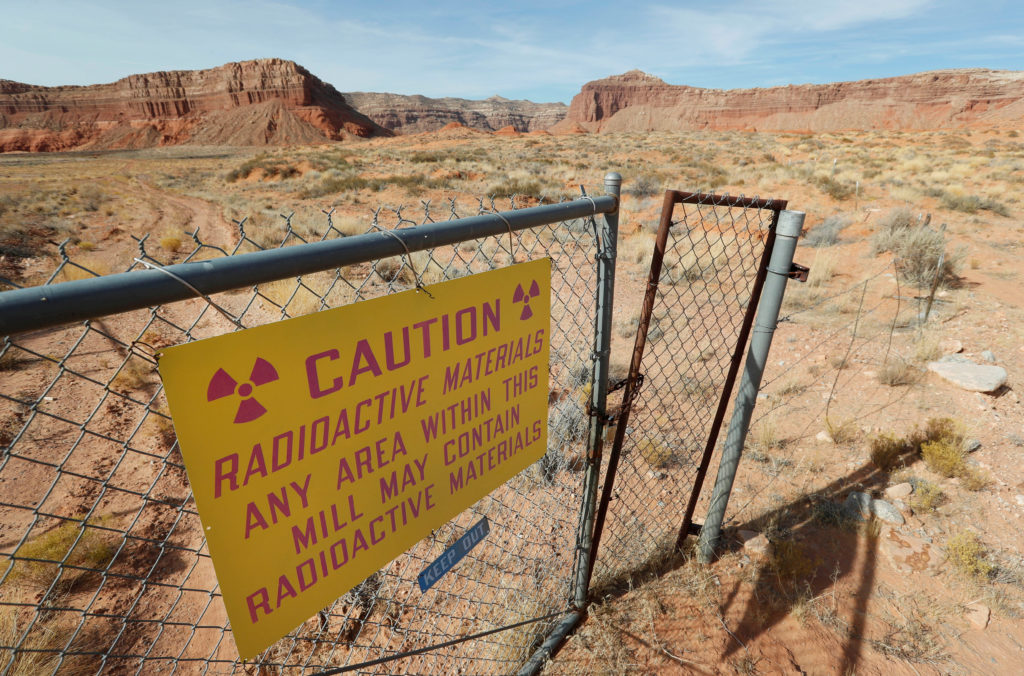
The nuclear fuel chain encompasses the various activities associated with the production of electricity from nuclear reactors. All steps in the chain generate radioactive waste.
#1 Mining and Milling
Uranium mining scars the landscape and devastates the environment. It is commonly done on indigenous and tribal peoples’ lands, destroying their communities.
The byproduct of uranium mining is dangerous dirt called “tailings”, a sandy waste containing heavy metals and radium, which is radioactive. Often the tailings are simply dumped on the land near the mine and left to the elements. A tailings pile may be a large trench or a former mine pit. Wind carries radon gas and radioactive dust from these tailings for many miles. Contaminated rainwater enters the soil, the watershed, and eventually the food chain, endangering health.
The uranium ore is delivered to the mill where it is crushed into smaller particles before being extracted with strong acids or bases. The uranium ore is concentrated into a solid substance called “yellowcake.”
#2 Enrichment
A nuclear reactor requires a higher concentration of the U235 isotope than that which exists in natural uranium ore. So the yellowcake must be “enriched” at large industrial chemical conversion plants. The uranium in yellowcake is converted to uranium hexafluoride (UF6 ), a compound that can be made into nuclear fuel. This conversion process is carbon intensive. It involves large amounts of water and electricity as well as a number of volatile chemicals, creating risks associated with inhalation if a release occurred. In addition, the conversion process uses hydrogen gas which is flammable and could create an explosion hazard.
#3 Fabrication of Fuel
Fuel fabrication is the last step in the process of turning uranium into nuclear fuel rods. The enriched uranium is converted into fuel “pellets” and placed into thin metal rods. Each rod joins hundreds of others in a bundle called a fuel “assembly” to be loaded into the reactor core of the nuclear power plant.
#4 Storage of Used or “Spent” Nuclear Fuel: High Level Radioactive Waste
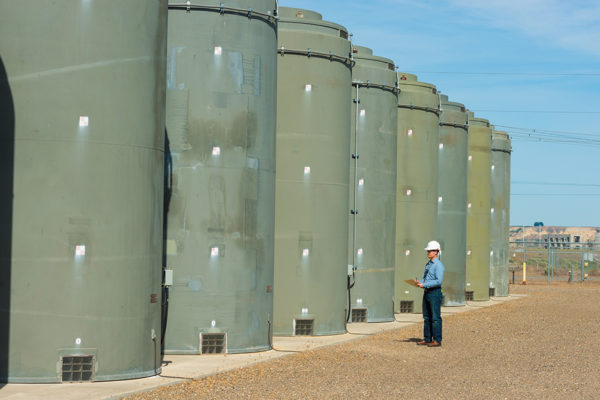
Nuclear fuel is typically used in the reactor for 3-6 years and then must be removed. The rods are highly radioactive and must be stored under water for cooling and radiation shielding. After years in the over-crowded pools, the spent fuel assemblies are moved into dry storage casks which will deteriorate over time.
There is no permanent solution for its disposal or storage which makes this issue particularly dangerous. Short-term solutions do not address the grave health and environmental effects of nuclear waste that last for a million years.
No Nukes Action – Fukushima, Workers & The Environment
July 11 @ 6:00 pm – 8:00 pm PDT FREE
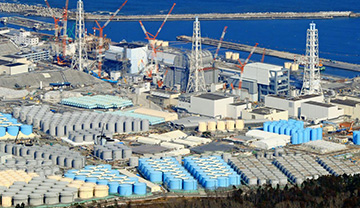
The Fukushima nuclear disaster is still with us more than 11 years after the radioactive explosions at the plants. The melted nuclear radioactive fuel rods still have not been removed and the Japanese government with the support the US wants to dump over 1.3 million tons of radioactive water in the Pacific Ocean. There are also thousands of residents and clean-up workers who have been contaminated by radiation. These contract clean-up workers have been recruited by the Yakuza from the day laborers and from migrants from overseas and have not received proper health and safety training on dealing with this dangerous nuclear disaster sight . This panel will look at the continuing crisis, the workers, residents and Environment with a panel.
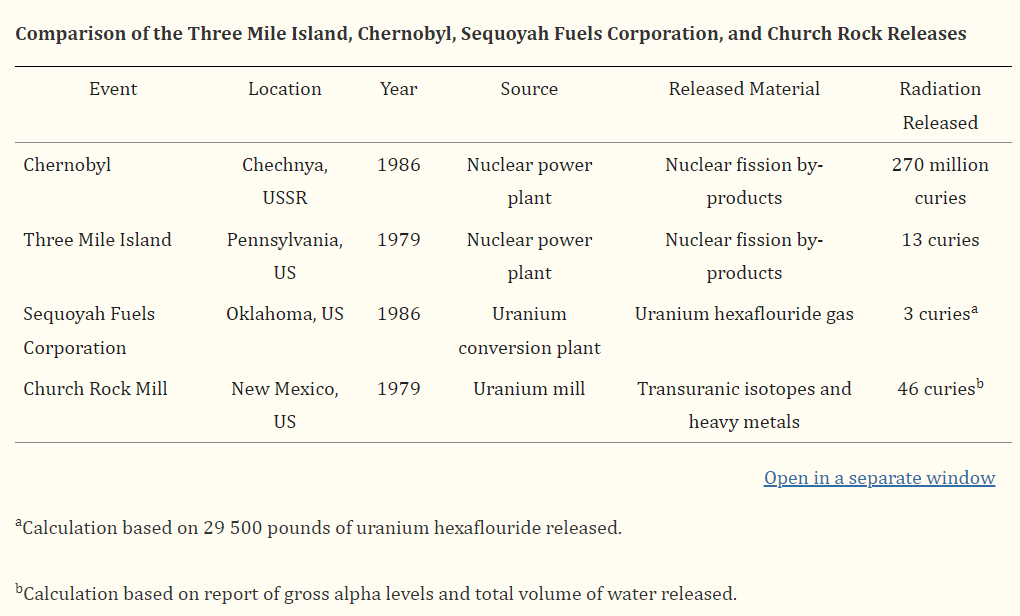
“In the early morning hours of July 16, 1979, less than 4 months after the highly publicized release at Three Mile Island,32 the earthen dam at Church Rock Mill failed (Table 1▶). The amount of radiation released at United Nuclear Corporation was larger than the release at Three Mile Island. The 6-m-wide dam breach sent approximately 1100 tons of radioactive mill waste and 95 million gallons of mine process effluent down Pipeline Arroyo and into the North Fork of the Puerco River.33 This tremendous flow of water backed up sewers, affected 2 nearby aquifers, left pools along the river, and transported contaminants 130 km downstream to a point near Navajo, Arizona.34
…
With the exception of the 6-person human exposure assessment carried out by the Centers for Disease Control and Prevention,33 the various exposure pathways and related human health outcomes associated with this spill have yet to be characterized. The Centers for Disease Control study addressed only inhalation of suspended tailings and ingestion of livestock, ruling out other exposure pathways such as consumption of vegetables, ingestion of river water or groundwater, and inadvertent ingestion of contaminated sediment. This assessment failed to incorporate not only all potential exposures but also radiation types.34 A number of subsequent studies carried out in the Puerco River basin have identified contaminated groundwater from the spill as well as downstream transport and deposition of radionuclides from the Pipeline Arroyo areas, suggesting that exposure will continue to occur through these pathways in the future.35–37
Like Sequoyah Fuels Corporation, the Church Rock spill occurred in a low-income, rural, American Indian area, albeit closer to a substantial secondary city, Gallup, NM, which has large Hispanic and White populations. Because the spill happened in the immediate aftermath of nationwide coverage of the Three Mile Island release, the muted coverage and response is particularly striking. It is not clear that there was acute harm from the Church Rock spill, so like Three Mile Island, the main concern is the development of disease over time after exposure. Compared with Sequoyah Fuels Corporation, the Church Rock spill contained more radioactivity because the tailings included radium, thorium, and other uranium decay products that have relatively high specific activities. In contrast to Three Mile Island, the population near Church Rock was already chronically exposed to uranium mine and mill waste through both occupational and environmental routes and continues to be exposed today.38
A series of local struggles and public health studies have refocused local attention on the Church Rock area as well as the entire Eastern Navajo area. The struggles revolve around proposals to restart uranium mining with in situ leach methods. In response, the Navajo Nation voted to ban all uranium mining, a resolution that is currently being challenged by mining companies.39 The studies are community based and involve a collaboration among Eastern Navajo communities, the Southwest Research and Information Center, the University of New Mexico, and others. The focus of research is the health impact of environmental uranium exposure (oral communication, J. Lewis, PhD, University of New Mexico, and C. Shuey, MPH, Southwest Research and Information Center, March–June 2006)…”
Brugge, D., deLemos, J. L., & Bui, C. (2007). The Sequoyah corporation fuels release and the Church Rock spill: unpublicized nuclear releases in American Indian communities. American journal of public health, 97(9), 1595–1600. https://doi.org/10.2105/AJPH.2006.103044
Former Prime Minister of Japan Sounds the Alarm on Diablo Canyon Naoto Kan Advises Governor Newsom to Close Diablo Canyon Nuclear Plant ASAP
May 2022 – Naoto Kan was Prime Minister of Japan when the March 2011 Fukushima nuclear disaster began. Hearing that California Governor Gavin Newsom is considering extending the operation of the Diablo Canyon Nuclear Plant beyond its current license period, Kan felt compelled to contact the Governor, advising him to shut down the nuclear plant as soon as possible.
As a result of Naoto Kan’s experiences managing the triple meltdown catastrophe, he has become vocally anti-nuclear. As he explains in his memoir, My Nuclear Nightmare, “I came to understand that a nuclear accident carried with it a risk so large that it could lead to the collapse of a country.
“Eleven years on, the nuclear disaster in Japan is on-going. The government is set to release millions of gallons of irradiated water into the Pacific Ocean as early as next spring – angering citizens and governments worldwide.
Both Japan and California are seismically active and share coastlines with the Pacific Ocean. Fukushima Prefecture and San Luis Obispo County have many similarities, both communities relying heavily on agriculture, fishing, and tourism. Naoto Kan has a deep understanding of these shared risks and vulnerabilities. Thus, he is sounding the alarm on Diablo Canyon.
Carole Hisasue, Spokesperson for San Luis Obispo Mothers for Peace, states, “As history has clearly illustrated, nuclear accidents affect the entire world. We will all be safer when Diablo Canyon nuclear plant ceases operation.”
Full text of Naoto Kan’s letter to Governor Newsom:
May 12, 2022
Dear Governor Newsom, I have heard that you have been considering extension of operations at the Diablo Canyon Nuclear Power Plant which is set to decommission in a few years. I was the Prime Minister of Japan at the time of the Fukushima Nuclear Accident and based on my experiences dealing with that disaster, I advise you to shut down the nuclear plant as soon as possible.
As you know, three nuclear reactors built along the Pacific Coast in Fukushima melted down after the Great Northeastern Earthquake and Tsunami of March 11, 2011 and released an enormous amount of radiation.
Until this accident occurred, I never thought a nuclear event in which there would be a meltdown such as this could happen. And yet, in reality, the earthquake cut off external power, the emergency diesel generators were damaged by the tsunami and stopped. All power to control the nuclear plant was lost, three reactors could no longer be cooled and that led to the unthinkable meltdown. An incredible amount of radiation was released and even now, 11 years since then, many of the former residents of the areas around the nuclear plant are still in evacuation.
From my perspective, as someone who has personally experienced this accident, I believe that all nuclear power plants should be decommissioned as soon as possible and that we should move toward renewable energy, such as solar and wind, for all our power needs. This is why I am writing to you today.
I have enclosed the English version of a book I wrote about the Fukushima accident. I hope you can find the time to read it.







 Heal Fukushima