— Fukushima radiation poisoned U.S. Navy personnel tell stories of betrayal

Before they were allowed off ship, Navy personnel were compelled to sign a statement saying they did not hold the Navy responsible and that they were not sick.

Disclaimer: The cover picture on the video claims “100s of US servicemen die”. That is not in the video, and I have not seen that documentation anywhere.

Testimony from 2013

Title: Press conference with US Navy Quartermasters (retired) Maurice Enis and Jaime Plym
Event: The Medical and Ecological Consequences of the Fukushima Nuclear Accident
Date: March 11, 2013 at 1:00p ET

US Navy Quartermasters (retired) Maurice Enis and Jaime Plym who both suffered radiation exposure and subsequent health damage while serving on the USS Ronald Reagan during a Fukushima aid and rescue mission.

At ~9:00 in US Navy Quartermaster (retired) Maurice Enis, USS Ronald Reagan: I go in and they had to remove three layers of skin off my hands and arms. It wasn’t like back to back. They would scrub off one layer then I would have to wash it off, this orange grit stuff that you use to get off paint and oil. Then they would do it over and over again and check. And we’d start the process all over, so in my head I was just praying that the machine would stop beeping so I can get it over with. Nobody told me at the time what was going on, everybody just told me just to stand and be quiet, not touch anybody or anything. It was almost as if I had the plague. Finally the machine stopped beeping and they let me go.

— Many at Fukushima now have brain damage; worker develops 3 types of cancer in a year; secret hospital treated those sickened by radiation exposure

From ENE News

March 3, 2017

Kyodo News, Mar 1, 2017 (emphasis added): A former worker at the site of the 2011 Fukushima nuclear disaster filed a lawsuit Tuesday with the Sapporo District Court seeking labor compensation from the state for his subsequent development of three types of cancer… The man was diagnosed with bladder, stomach and colon cancers between June 2012 and May 2013 after taking part in work to clear debris with heavy machinery at the Fukushima Daiichi nuclear complex… and was exposed to 56.41 millisieverts of radiation in total, according to his written complaint. His application for labor compensation filed at a labor standards supervision office in Fukushima Prefecture was rejected in August 2013. He repeatedly filed requests for re-examination of his application but they were also rejected… But his legal team said, “It’s rare for a person to develop three types of cancer at almost the same time“…

Al Jazeera, Aug 29, 2016: Fukushima’s surfers riding on radioactive waves… An employee of the nuclear plant said that he would never swim here as the water is too contaminated. Five of his friends who work at the plant now have brain damage.

Phoenix New Times, Oct 27, 2016: On my last day in Japan, I met with disaster medicine expert Dr. Atsushi Kumagai in a small conference room in the Fukushima University Hospital, about 52 miles from the Fukushima-Daiichi power plant… Two days after the accident at Fukushima, he, along with two nurses, a radiation technician, and a radiation biologist boarded an army helicopter and flew to Fukushima University Hospital… they managed to set up a temporary and secluded hospital-within-a-hospital at FMU. No one there knew how to handle radiation exposure, which meant that Kumagai and his staff had to train the FMU employees and treat sick people at the same time. For days, the staff worked long hours, taking a few hours at night to sleep on the floor in an empty part of the building. “Every night, we had deep discussions about how to think about this all. We talked about our feelings and anxieties, about the meaning of life, and ‘can we survive?’ “We had such deep conversations, and people cried,” Kumagai says, placing his hands over his heart. “Before the accident, frankly speaking, nobody was concerned about nuclear power… It is a big problem that nobody cared… No one really understood the risk or how to measure or think about the risk,” he says.

See also: “Shocking how many people died in Fukushima” — Cremated bodies of Fukushima radiation workers found near plant — “Such a high rate of cancer” being detected in Fukushima children (VIDEOS)

http://enenews.com/many-at-fukushima-now-have-brain-damage-worker-develops-3-types-of-cancer-in-a-year-secret-hospital-used-to-treat-those-sickened-by-radiation-exposure-doctor-people-cried-can-we-sur

— Professor links die-offs on U.S. West Coast to Fukushima; “Nobody has any idea what to do”

Includes information posted on ENE News, February 28, 2017

Cornell University forum, March 11, 2016
Five years after Fukushima: What have we learned from nuclear accidents?

Charles Perrow, Yale University professor emeritus and Stanford University visiting professor, published Apr 2016 (emphasis added):

Could I just make an observation that’s been missing from this interesting discussion? Fukushima accident is not over – not by any means… The cancer rate in Japan is going to rise steadily. It’s going to be denied by the government because there’s no transparency on this issue in Japan. There’s a particular example of the problem that intrigues me is when they put the plant in, they not only dug it out so it’d be closer to the water source – the sea – but they put it where there was a river flowing underneath that area. They went up the hill and they diverted the river so that it flowed down on the sides of the large area there and that was no problem. They never anticipated an earthquake could wreck their diversion. So know we have a strong underground river flowing directly under the plant where three huge globs of molten fuel are sitting on the bottom, giving off radiation, and sending that radiation into the water through the river that’s underneath the plant. And it’s going out into the ocean and we’re seeing damage in the marine life in the West Coast of the U.S. and British Columbia. There’s no way that’s going to be stopped, until they get the molten cores out of there, and they have no way — that they know of — of doing that. Nobody has any idea what to do about the continuing Fukushima contamination.

Watch Perrow’s comments on Fukushima here (at 1:34:30 in)

Professor Sonja Schmid at 1:39:16

The question of nuclear becomes a question of democracy and ultimately a question of justice. Who gets to say something? And whether we entrust these decisions to governments and technocrats, or how, if we decide to do so, we democratize the process. And it’s challenging no matter how you plan to go forward, but I think that’s the ultimate lesson of this, that we can no longer have technocrats, scientists and engineers in charge defining “the real risk” and then solving it, and the rest of the population just watches and has no impact whatsoever on these questions or how they are being addressed.”

Charles Perrow’s paper “Nuclear Denial”,published in the Bulletin of the Atomic Scientists in 2013

Click to access Bulletin_of_the_Atomic_Scientists-2013-Perrow-56-67.pdf

Sonja Schmid is a professor at Virgina Tech. From her bio: “Sonja Schmid teaches courses in social studies of technology, science and technology policy, socio-cultural studies of risk, energy policy, and nuclear nonproliferation. She is particularly interested in examining the interface of national energy policies, technological choices, and nonproliferation concerns. “

http://enenews.com/yale-professor-links-die-offs-on-us-west-coast-with-fukushima-nobody-has-any-idea-what-to-do-about-the-continuing-contamination-river-flowing-under-plant-with-molten-fuel-on-the-bottom-a

— “Mysterious cancer” killing sea lions along U.S. West Coast; bones turning to “mush”; animals dying at “alarming rates” (VIDEO)

From ENE News
March 1, 2017

KTVU, Aug 12, 2016 (emphasis added): Sea lions are contracting and dying from cancer, at alarming rates in their uro/genital tracts, most often among the females. “We are concerned that it is such a high incidence. It’s 19 or so percent in this particular population of California sea lions which is very unusual for any mammal,” says Dr. Padraig Duignan, Chief Pathologist at the Marine Mammal Center… “So, usually when you see a severe disease outbreak like this, in wildlife, there’s some big underlying problem,” adds Dr. Cara Field, a rehabilitation veterinarian…  “Certainly understanding why they get it and what the contributing factors are and ‘do these contributing factors represent a risk to us?’ is critically important for us in understanding what other risks there may be for us as well as other animals,” says Dr. Field.

California Academy of Sciences (bioGraphic), Aug 29, 2016: Scientists Investigate a Mysterious Cancer Plaguing California Sea Lions… The disease starts in the reproductive organs… By the time they die, tumors have sometimes infiltrated their backbones and turned vertebrae to “mush,” [Tenaya Norris, a scientist at The Marine Mammal Center] says. She describes examining one dead animal whose spine she could simply slice through. More than a quarter of the adult California sea lions that die at the Marine Mammal Center suffer from cancer, says director of veterinary science Shawn Johnson. That’s one of the highest cancer rates seen in any wild animal… There’s been a surge of sick animals, especially California sea lions… “Off the California coast, the ecosystem is really under stress,” says Johnson. That stress is hitting California sea lions particularly hard… Over the past three years, Johnson says, 80 to 90 percent of all California sea lion pups have died… And whether or not the disease is becoming more common or simply holding steady, Johnson says he knows one thing for certain: “It’s not declining.” The disease rates researchers are seeing among sea lions are far from normal, and they want to know why. “Wild populations shouldn’t have cancers like this,” Johnson says… Tumors first form in the cervix or penis, then spread, often metastasizing to the lymph nodes and spine… Inside a stricken animal, “there’s just masses of yellow, cancerous tissue,” says Frances Gulland, senior scientist at the Marine Mammal Center… [C]ancer-stricken sea lions have more pollutants in their blubber… “That’s really important for the human health perspective as well,” Gulland says. “These are contaminants the sea lions are acquiring from their prey. And the fish they eat are the same fish that we eat”…

See report from 2014: CBS: Record number of sick seals & sea lions — Doctor: A lot with “large pockets of green and yellow puss all over their body” (VIDEOS)

Watch KTVU’s broadcast here

— Food chain collapses yet “nowhere is any of this said to be possibly connected to radiation from Japan”

Question posed on Armstrong Economics, February 13, 2017

I have just returned from visiting my friend, who is a senior cetacean biologist at one of the large west coast universities. While there, he described an amazing situation to me that has alarmed me greatly. He said that research at his university has conclusively identified the complete or almost complete collapse of several dozen food chains within the Pacific Ocean, all within the last 36 months or so. Further, in “unauthorized” exchanges with the relevant departments in other coast universities, he learned that the numbers involved may well be more like hundreds of chain collapses in the same timeframe as opposed to dozens. Finally, in talking with authoritative figures in Vancouver, they apparently believe that the figure is likely closer to 1000. My friend also explained that equally alarming is the fact that all these research departments are finding within the genres of sea life they have physically examined within the same timeframe “huge numbers of general body mutations, as well as skin disorders” which all cannot yet be accounted for in terms of causation.
As bad as all of this sounds, here is the real rub. Regarding these findings about food chain collapses, mutations, and injuries, my friend’s university has instituted a policy that forbids them from publishing their findings, from discussing their findings (on this subject) publicly or in private with other researchers outside their own campus, or finally from taking “unauthorized” radiation readings as part of their research. The penalties for violating these new rules are severe: loss of tenure, civil lawsuits for violation of contract, and potentially employment termination. He showed me a memo on the subject from her own university, so there is no doubt about that in my mind. For the part about colleagues at other universities encountering the same things, I have nothing but my his word but that is good enough for me.

I have never viewed myself as an alarmist or a conspiracist, and I know that he is neither of those things; he is someone who has always been dedicated to the scientific method and to facts. However, despite the preposterous look of this thing I must say that I feel something is badly wrong here. In doing some quick research on all of this, I have indeed found quite a number of articles from mainline sources talking about massive food chain collapses in the Pacific, but not quite on the scale my friend’s colleagues have suggested, and nowhere is any of this said to be possibly connected to radiation from Japan…

——————————————

The “answer” includes:

There are some who believe the mutations and dead was set in motion by the nuclear disaster in Japan. The data I have run demonstrates that we are headed toward another spike in the extinction cycle. This is entirely normal cyclical activity….Obviously, man may be aggravating the cycle increasing the amplitude, but there is no evidence that this cycle is set in motion by humankind. This appears to be a natural cycle at this point….

He wouldn’t even use the word “Fukushima”.

The query’s information, if true, is certainly supported by the “there, there; don’t worry over Fukushima” approach in the media, from government officials, and by scientists. When ocean disasters are covered, Fukushima is almost never mentioned. The information about universities is not surprising, if true.

Has the Extinction Cycle Also Turned Against Us?

— Radioactive weapons are killing innocent civilians in Iraq—and the US military is behind it

Global Research, February 26, 2017
Alternet 22 February 2017

“Everyone seems to be dying of cancer. Every day one hears about another acquaintance or friend of a friend dying.”

On Monday, February 20, US-led coalition fighter jets bombed al-Shefaa, a residential area in eastern Mosul (Iraq). Sources from a variety of perspectives say that several dozen civilians died in the raid and a large number were wounded. The highest numbers are being quoted by the Islamic State’s Amaq News Agency, while the lower numbers come from al-Jazeera. The coalition commanders have not answered questions about the raids.

According to Airwars, a large number of civilians have been killed due to US-led coalition bombings that began in 2014. The total civilians killed range from 5,875 to 7,936, while those specifically killed by coalition airstrikes number between 2,405 and 3,517. These are twice the number of civilians as killed by Russian airstrikes in Syria, according to Airwars figures.

The Iraqi military confirms that it has slowed down its advance into Mosul because it does not know how to fight ISIS without endangering the 750,000 civilians in the region. The most recent UN situation report from Iraq counts 160,000 people already displaced as a result of the Mosul crisis. Low income levels, shortages of water, great threats because of the fighting – these define the situation for residents in and around Mosul.

A joint investigation by Airwars and Foreign Policy pushed the US military to confirm that in two incidents in 2015 the United States used depleted uranium (DU) shells against ISIS targets in Syria. When Airwars’ Samuel Oakford asked the United States military whether it had used any DU in Syria, they first denied it, then finally admitted to its use earlier this month. DU ammunition was fired from A-10 aircraft against fuel tankers.

Strikingly, the A-10 aircraft normally carries high explosive incendiary (HEI) ammunition which, according to its manufacturer General Dynamics, ‘provides fragmentation and incendiary effects for use against personnel, trucks, ammunition storage and many other targets’. The HEI would have been sufficient to destroy the fuel tankers, so that it was unnecessary to use DU – a radioactive substance – to contaminate parts of northern Syria.

Make the Desert Glow.

At the same time as the US was using radioactive weapons in Syria, Republican presidential candidate Ted Cruz said of ISIS – ‘We will carpet bomb them into oblivion. I don’t know if sand can glow in the dark, but we’re going to find out’. This was plainly a reference to some kind of radioactive bombardment. It was precisely what the administration of Barack Obama had already been doing.

Not long after Cruz first made this comment – which became a standard for his stump speeches – Mark Halperin of Bloomberg asked another Republican presidential candidate, Donald Trump, whether he would go nuclear against ISIS. ‘Well, I’m never going to rule anything out’, replied Trump. When pushed by Chris Matthews of MSNBC on this issue, Trump said, ‘Somebody hits us within ISIS – you wouldn’t fight back with a nuke?’

Three generals who made their mark in Iraq between 1991 and 2008 now lead President Trump’s national security team. General James Mattis (Secretary of Defense), General John Kelley (Secretary of Homeland Security) and General H. R. McMaster (National Security Advisor) all led the US counter-insurgency operations in Iraq. Of the three, General James Mattis had the closest relationship to the use of radioactive weapons in Iraq. This was during the siege conducted by the United States against the city of Fallujah in 2004. To grasp the attitude of the US officers in this war, reflect for a minute on Mattis’ statement made in a 2003 speech to soldiers regarding how to comport themselves in Iraq, ‘Be polite, be professional, but have a plan to kill everybody you meet’.

Fallujah is one of the most forgotten contemporary US battlefields. In that battle to defeat the popular insurgency against the American occupation, the United States used chemical (white phosphorus) and radioactive (DU) weapons with great abandon. The fierceness of the war destroyed three quarters of the city and sent most of its population to the grave or into flight. At this time, General Mattis headed the 1st Marine Division that was key to the Fallujah war.

Ironically, the United States went into Iraq in 2003 with the claim that it wanted to destroy weapons of mass destruction. In turn, it was the United States that used weapons of mass destruction inside Iraq.

The United States dropped at least 116,000 kgs of DU ammunition during the bombing campaign of the 2003 Iraq War. At that time, A-10 fighter jets were used for these missions, the same planes used in Syria. Strike logs released to George Washington University in 2013, shows that in the early months of the war (March-April 2003), DU ammunition was used against cars and trucks as well as buildings of all kinds. The widespread use of these radioactive weapons across Iraq contaminated large swathes of the country. What transpired in Fallujah the next year was merely the continuation of what had become normal policy. The data from that war has not been released as of yet. It would show that DU weapons were fired not only from A-10 jets, but also from tanks and other ground-based devices. These not only contaminated the soil, but also endangered US troops.

It is not as if the US military did not know that DU weapons are dangerous.

The US Environmental Protection Agency calls these weapons ‘a radiation health hazard when inside the body’. A 1975 US Air Force review suggested that these weapons not be used against troops, but only against ‘tanks, armored personnel carriers or other hard targets’. This prohibition was routinely violated during the US War on Iraq. In 2003, the UK’s Royal Society of Medicine and the UN Environment Program warned against the use of such weapons. None of these warnings were heeded. People like Mattis and Kelley had their fingers on the trigger. There is no available evidence that they cautioned against what is tantamount to a war crime.

Everyone Seems to be Dying of Cancer.

Evidence from Baghdad and Fallujah is compelling. Before she died of leukemia, artist Nuha al-Radi wrote, ‘Everyone seems to be dying of cancer. Every day one hears about another acquaintance or friend of a friend dying. How many more die in hospitals that one does not know? Apparently, over 30 per cent of Iraqis have cancer, and there are a lot of kids with leukemia. The depleted uranium left by the US bombing campaign has turned Iraq into a cancer-infested country’.

Dr. Samira Allani, a pediatric specialist at the Fallujah General Hospital, sees the connection between Iraq and Japan – two countries struck hard by weapons of mass destruction. The rate of children born with birth defects in Fallujah are much greater than that of children born – after 1945 – in Hiroshima and Nagasaki. The dust from DU emits alpha radiation, which experts say is twenty times more dangerous than the gamma radiation from nuclear weapons. There was no dramatic mushroom cloud over Baghdad or Fallujah, but the smaller explosions might have been just as deadly.

Over the years, the Non-Aligned Movement (NAM) has pushed a non-binding resolution in the UN General Assembly against the use of DU ammunition. Both in 2012 and 2014, the overwhelming majority of the world’s states voted for a resolution brought by the NAM against DU weapons. Both times the United States, the United Kingdom, France and Israel voted against the resolution. In December 2014, the NAM resolution came just as US A-10 fighter jets arrived in Kuwait to bomb ISIS targets in Syria and Iraq. There was fear that the US would use DU weapons once more in the region. This fear, we now find, was not unwarranted. The US has said that it used DU twice. One should not be comforted by this number, since there might be other instances where DU was used in the last few years.

It would be naïve to assume that the United States and its coalition are not using DU weaponry in the fight against ISIS in Mosul and elsewhere. These are dangerous weapons, whose radioactivity lasts a very long time and damages societies for generations. Statements by Trump and Cruz about the use of nuclear weapons and the lack of outrage against that shows how desensitized the population has become about violence against the brown bodies of West Asia.

And even against the ecology of the region. In her captivating memoir, Nuha al-Radi writes about fleeing into her family orchard when the US bombing of Iraq took place in 2003. ‘The birds have taken the worst beating of all’, she wrote. ‘They have sensitive souls, which cannot take all this hideous noise and vibration. All the caged lovebirds have died from the shock of the blasts, while birds in the wild fly upside down and do crazy somersaults. Hundreds, if not thousands, have died in the orchard. Lonely survivors fly about in distracted fashion’.

Whether Nuha, powerful artist that she was, wrote of the birds alone or wrote with allegory close to her pen is moot. Both the birds and Iraqis as well Syrians go about in a distracted fashion. Their lives continue to be turned askew by the hideous bombardment of this ongoing war.

Vijay Prashad is professor of international studies at Trinity College in Hartford, Connecticut. He is the author of 18 books, including Arab Spring, Libyan Winter (AK Press, 2012), The Poorer Nations: A Possible History of the Global South (Verso, 2013) and The Death of a Nation and the Future of the Arab Revolution (University of California Press, 2016). His columns appear at AlterNet every Wednesday.

http://www.globalresearch.ca/radioactive-weapons-are-killing-innocent-civilians-in-iraq-and-the-us-military-is-behind-it/5576752

— Santa Susanna Field Lab March 8 meeting on DOE’s broken cleanup promises and how to ensure full cleanup

From the Santa Susanna Field Laboratory Work Group

NEXT SSFL WORK GROUP MEETING
Wednesday, March 8, 6:30 p.m.
Simi Valley Cultural Arts Center
3050 E. Los Angeles Avenue, Simi Valley, CA 93065
The Department of Energy (DOE) recently released a Draft Environmental Impact Statement (DEIS) for the SSFL cleanup in which every option proposed would breach the legally binding cleanup agreement it signed in 2010 to clean up all contamination at SSFL. DOE now proposes instead to leave between 39% and 99% of the contamination not cleaned up. DOE hearings this week demonstrated public anger at DOE proposing to break its cleanup commitments, but much more is needed to ensure that DOE will uphold its SSFL cleanup commitments.

Please join us on March 8 to learn more about:

  • The Administrative Order on Consent (AOC) agreement that DOE signed to clean up all contamination at SSFL, and how the DOE’s proposals violate it
  • The amounts of contamination that DOE is proposing leaving behind, and the risks associated with the contamination
  • Misinformation put forth by DOE to help it break out of the agreement
  • How the community can help ensure a full cleanup of SSFL

We look forward to seeing you on March 8th for some straight talk about SSFL.

PS. If you haven’t yet, please submit a comment demanding that DOE honor its commitment to clean up all contamination at SSFL, and ask your friends, family, and neighbors to do so as well.

The Santa Susana Field Laboratory (SSFL), also known as Rocketdyne, is a former nuclear and rocket engine testing facility that is contaminated with radiological and chemical pollutants. The 2,850 acre site is near Simi Valley, Chatsworth, Canoga Park, Woodland Hills, West Hills, Westlake Village, Agoura Hills, Oak Park, Calabasas, and Thousand Oaks. For over twenty-five years, the Santa Susana Field Laboratory Work Group has served to keep the community informed about the contamination at SSFL and assure it is thoroughly cleaned up.
To learn more visit www.ssflworkgroup.org or contact us at info@ssflworkgroup.org

— 300-400 tons of radioactive water flowing into the Pacific every day; “What is that doing to the Pacific Ocean?”

From ENE News

February 21, 2017

Arnie Gundersen, former nuclear engineer (emphasis added), Feb 2, 2017: “When I went to school, the saying was ‘dilution is the solution to pollution,’ and that’s what the Japanese believe. If they dump [radioactive water from Fukushima Daiichi] on their side and it floats over to the West Coast of the U.S. — the Pacific’s a big place — it’ll dilute out. I don’t think that’s appropriate… people are going to die. Regardless of how low the radiation is, it does cause cellular damage and cancer. So if you spread it out in a big body of water, the concentration goes down, but on the other hand, you’ve got a couple billion people exposed to it because they’re on the edge of that big body of water. So the concentration is down but the population is up and you’re still going to get cancer; it’s inevitable.”

Dr. Helen Caldicott, Feb 13, 2017: As the water flows beneath the damaged reactors, it immerses the three molten cores and becomes extremely radioactive as it continues its journey into the adjacent Pacific Ocean. Every day since the accident began, 300 to 400 tons of water has poured into the Pacific where numerous isotopes including cesium 137, 134, strontium 90, tritium, plutonium, americium and up to 100 more, enter the ocean and bio-concentrate by orders of magnitude at each step of the food chain… tuna, salmon and other species found on the American west coast now contain some of these radioactive elements… [Fukushima Daiichi] will continue to pour water into the Pacific for the rest of time

Fox News, Feb 8, 2017: Adam Housley, who reported from the area in 2011 following the catastrophic triple-meltdown, said… small levels of radiation are still being detected off the coasts of California and Oregon and scientists fear it could get worse. “The worry is with 300 tons of radioactive water going into the Pacific every day, what is that doing to the Pacific Ocean?” said Housley…

Fox News video transcript excerpts, Feb 8, 2017: Nearly 300 tons of radioactive water is dumped into the Pacific Ocean each and every day… There is still radiation being detected off the west coast of California and Oregon… The worry is with 300 tons of radioactive water going in every day to the Pacific — what is that doing to the Pacific Ocean?… We really don’t know what this radioactive water is doing to the Pacific I think a lot of people are very concerned about that…. As we know that water moves toward the west coast of the US.”

Watch the FOX News broadcast here

http://enenews.com/tv-scientists-fear-fukushima-radiation-hitting-us-to-worsen-a-lot-of-people-are-very-concerned-experts-billions-are-being-exposed-reactors-will-continue-to-pour-water-into-pacific-for

There are various inaccuracies in the Fox report:

  • 400 tons at least, not 300 tons
  • 530 Sievert/hour reading is from a different area in the reactor that TEPCO had not been measured before which is closer to the core. It may always have been this high. 73 Sieverts/hour  was measured on 3/11 at a different location, farther away. I haven’t seen a current reading there, for comparison. The surprise is being able to measure the true levels of radiation and finding it this high (this reading is also an estimate).
    “Although the radiation level is “astoundingly high,” says Azby Brown of Safecast, a citizen science organization that monitors radiation levels, it doesn’t necessarily signify any alarming change in radiation levels at Fukushima. It’s simply the first time they have been measured that far inside the reactor.” Washington Post
  • According to Washington Post, the evidence is not for new leaks but that melted fuel escaped at some time. Many experts said this happened perhaps within hours of the melt-downs. However, radioactive contamination is constantly “leaking” or rather, pouring into the Pacific Ocean.

What’s important is that mainstream news is covering this and the ocean contamination as a very important and ongoing event that can also impact the West Coast of America. That is a change.

— Iodine-131 detected in Europe, source unknown; U.S. Air Force deploys nuclear sniffer aircraft

From ENE News
February 20, 2017

The Aviationist, Feb 19 2017 (emphasis added): U.S. Air Force deploys WC-135 nuclear sniffer aircraft to UK as spike of radioactive Iodine levels is detected in Europe… Along with monitoring nuke testing, the WC-135 is used to track radioactive activity as happened after the Chernobyl nuclear plant disaster in the Soviet Union in 1986 and Fukushima incident back in 2011… As of yet, there has been no official statement from the U.S. military about the reasons why such nuclear research aircraft was deployed there. However, many sources suggest the aircraft was tasked with investigating the spike in Iodine levels detected in northern Europe since the beginning of January… no one seems to know the reason behind the released Iodine-131…

Barents Observer, Feb 19, 2017: … radioactive Iodine-131 of unknown origin was in January detected over large areas in Europe. Since the isotope has a half-life of only eight days, the detection is a proof of a rather recent release. Where the radioactivity is coming from is still a mystery… Iodine-131 in the air could come from an incident with a nuclear reactor…  Someone out there knows why the radioactivity was spread over larger areas of Europe… Nuclear installations [where] radioactivity was first discovered, includes nuclear power plants in Finland, Sweden and Russia… The source could as well come from even further away installations.

IRSN (France’s Radioprotection and Nuclear Safety Institute), Feb 13, 2017: Iodine-131 (131I), a radionuclide of anthropogenic origin, has recently been detected in tiny amounts in the ground-level atmosphere in Europe. The preliminary report states it was first found during week 2 of January 2017 in northern Norway. Iodine-131 was also detected in Finland, Poland, Czech Republic, Germany, France and Spain, until the end of January. Iodine-131 is a radionuclide with a short half-life (T1/2 = 8.04 day). The detection of this radionuclide is proof of a rather recent release… the origin of which is still unknown… Lead-210 [concentration detected by IRSN peaked at 1600 µBq/m3 in January, four times higher than the usual mean value]… It must be pointed out that only particulate iodine was reported. When detectable, gaseous iodine is usually dominant and can be estimated to be 3 to 5 times higher than the fraction of particulate iodine. In France, particulate 131I reached 0.31 µBq/m3 and thus the total (gaseous + particulate fractions) can be estimated at about 1.5 µBq/m3.

See map of 131I detections here

http://enenews.com/mystery-radiation-spikes-being-detected-in-many-countries-us-military-secretly-deploys-nuclear-sniffer-aircraft-radioactivity-levels-quadrupled-officials-iodine-131-is-proof-of-ra

— Another cover-up: new UK study finds 110 MoD nuke accidents — 4X higher than reported by govt.

From RT

February 23, 2017

Dozens of nuclear alerts underreported by British MoD, new study reveals
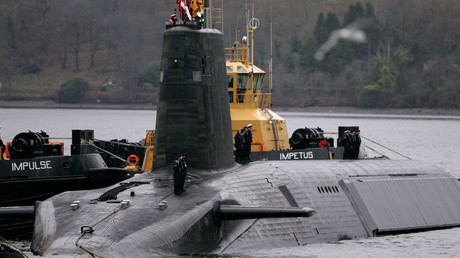
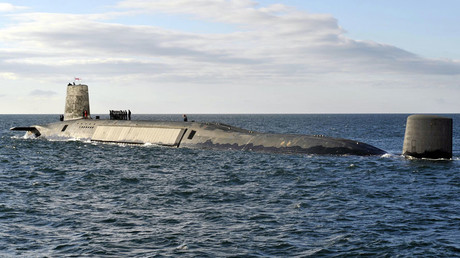
The UK Ministry of Defense has been accused of downplaying the real dangers stemming from the UK nuclear deterrent after the report by a safety watchdog put the number of accidents, involving British nukes, at 110, four times higher the official count.

Unveiled on Wednesday by the Nuclear Information Service (NIS), an independent nuclear watchdog, the report sheds light onto dozens of mishaps involving British nuclear weapons, featuring previously unreported accidents with potentially disastrous consequences. The in-depth study, which traces back all 65 years of the British nuclear program, arranges accidents into seven sections in accordance with their place of origin.

The report is based on the official findings, including  the report on nuclear weapons safety written by Professor Sir Ronald Oxburgh, information revealed during parliamentary questions, obtained under the Freedom of Information Act as well as from whistleblowers, witnesses and other researchers.

The biggest group of all lists accidents that took place on nuclear-capable submarines, ships and aircraft. The causes for a total of 45 mishaps, including 24 that occurred with nuclear-armed submarines, range from collision and fires to the effects of lightning.

In one of the most notable accidents of that kind, Royal Navy submarine HMS Vanguard, which is capable of carrying up to 48 Trident nuclear warheads, collided with a French Le Triomphant submarine, which could be armed with about the same amount of TN75 nuclear warheads. The circumstances of the accident, which happened early February 2009 in the Atlantic Ocean, were hushed up at the time and still not known to the full.

Although the official investigation report into the collision came to the reassuring conclusion that “at no time was nuclear safety compromised and the Strategic Weapon System remained inside tolerable limits at all times”, whistleblowers’ accounts are far more daunting. An officer who was on board the UK submarine reportedly said “We thought, this it we’re all going to die,” while recalling the incident in the conversation with Royal Navy whistleblower William McNeilly.

Other case studies include a nuclear warhead carrier sliding off the rode into the ditch on January 10, 1987 in Wiltshire. The misfortune is described by the authors as “most visible” and “embarrassing” incident to date. Overall, 22 road transportation incidents, among them overturning of vehicles carrying nukes, have been cited in the report.

While only 14 accidents, linked to the faults in manufacturing and production process, are listed in the report, the most severe nuclear accident in UK history also falls into this category. The fire at the Windscale plant in 1957 led to massive release of radiation from graphite-moderated reactor that triggered “around 100 fatal cancers and around 90 non-fatal cancers.”

The report also lists 21 “security-related” incidents and eight incidents blamed onto the improper storage and handling of the nukes.

The comprehensive study, spanning over 100 pages under an awe-inspiring title “Playing with Fire,” blames the defense ministry for attempting to sweep the issue of nuclear safety under the carpet by concealing essential details of the incidents and downplaying their impact.

READ MORE: Trident whistleblower calls out MoD’s ‘lame attempt’ to excuse nuke malfunctions

The report argues that the official data released by the British Defense Ministry in 2003 which put the number of incidents at 27, is “far from a full list of all the accidents.”

It is not the first time the British military has been accused of covering up major issues with its nuclear deterrent. News on a failed Trident missile test, carried out off Florida coast in June 2016, sparked a new round of heated debates on the British nuclear program. The routine test performed by the HMS Vengeance in June 2016 from Port Canaveral went horribly wrong with the missile heading back to the US mainland. However, the UK authorities did not issue any statement on the failed test, reportedly, advised to refrain from sharing unfavorable data by US colleagues.

READ MORE: Trident nukes useless against today’s actual security problems – CND report

The Trident missile malfunction came just weeks before the UK parliament voted in favor of renewing controversial Britain’s Trident deterrent, estimated to cost some £40 billion.

In January, McNeilly, who was first to leak the details about the serious fire issues aboard Trident submarine, told RT that he has witnessed Trident “fail 3 out of 3 WP 186 Missile Compensating Tests.”

https://www.rt.com/uk/378340-nuclear-accidents-report-defense/

Posted under Fair Use Rules.