From SGT Report
Year: 2016
ALERT! Chitin – essential living building block – absorbs radiation; why insects, crustaceans, krill, fungi are damaged; a scientific basis for destruction of ocean food chain via radiation
From Nuke Professional
February 11, 2016
by Stock
I think this is really big folks. If you like this stuff, sign up as a follower, drop a comment, and tweet this out and post it on Facebook—
A quick background for those who aren’t following things. The oceans have become particularly DEADLY to plants and animals, fish, and mammals in the last 5 years. Large scale die-offs are almost a daily occurence. Even the top of the food chain, Whales, have been affected and are seeing NOAA certified “UMEs” Unusual Mortality Events, aka mass die offs. Seals are starving and the rescue centers can’t keep up.
Fishing seasons have been halted because of very low populations. Bird species have died by the hundreds of thousands, all found starving, nothing in their stomach. Seriously. Some people are calling it the “Death of the Pacific”. Google it, get this on your radar.
stock here I believe that I may have discovered the smoking gun describing how radiation can be killing off so many important parts of the food chain, and decay chain on land and in water

Chitin is a polysaccharide biological structural polymer found in exoskeletons, like krill, insects, crabs, beaks of squid etc, and combined with calcium carbonate to form shells of crustaceans. It absorbs radioactive fallout.
Chitin, is an extremely important building block of many types of organisms.
Radiation
- blows up the skeletons of important sea life at the bottom of the food chains like krill,
- destroys fungis,
- damages mushrooms,
- and it destroys the structural veins of insects wings.

See all the little snippets on Chitan from the “Dictionary_Of_Science.pdf”


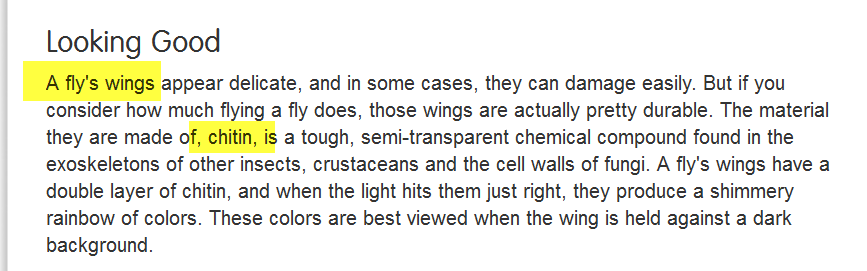
In 2011, after Fukushima, ALL the flies went away….for a full year. When the flies came back, I also starting feeling more healthy again. How can this be? Flies with broken wings would not do well…how could all the wings get broke? Simple, they are made of Chitin. from http://animals.mom.me/flies-transparent-wings-10244.html
SUMMARY
What are dying?
Whales they eat krill
Mures, they eat fish that eat krill
Reindeer and caribou die offs, they eat lichens/fungi
Insects are dying their wings are made of Chitin
Birds that eat insects are dying
Krill have an exoskeleton made of Chitin
Fungi have biological structures made of Chitin
Chitin absorbs radiation and Chitin has its chemical structure destroyed by radiation.
After Three Mile Island and after Fukushima in Hawaii…all the flies went away for a year. Fly wings are made of Chitin.
No Chitin Sherlock, the smoking gun uncovered.
——————————————————————————————-
Radiation destruction of chitin
[en]
The change in functional composition and molecular mass of crab, shrimp, and Antarctic shrimp (krill) chitin under the effect of ionizing radiation has been studied.
By electron paramagnetic resonance spectroscopy it was established that primary radicals appear in positions 1 and 4 of the pyranose ring with subsequent breakdown of the glycoside bond analogous to cellulose and chitosan decay when γ-irradiated. {RADIATION}
A scheme of radiochemical transformations of chitin is suggested
—————————————————————————


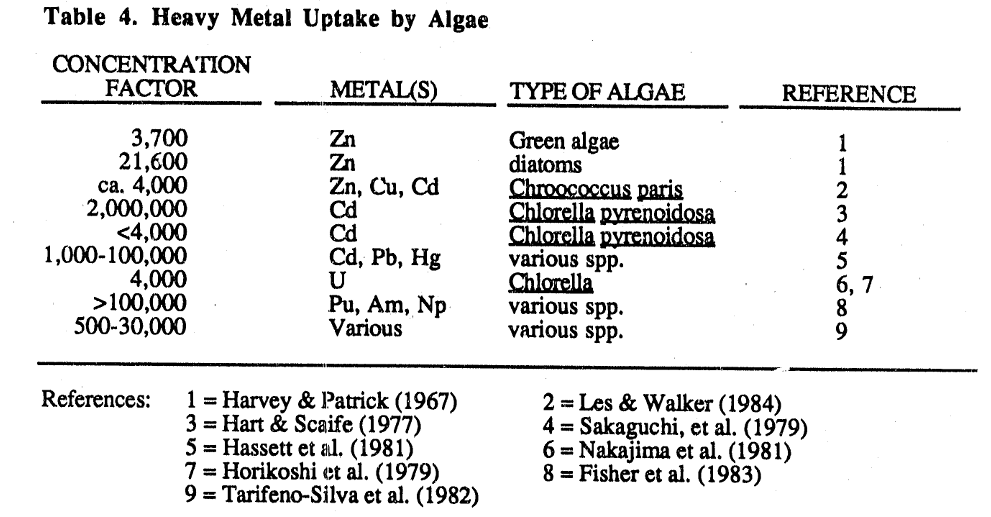
stock here–supporters of the Nuclear Industry will often throw out their deception that “but the level of contamination in the ocean is so small compared to natural radiation”. They completely ignore known science using the “Concentration Factor”. Some life forms will bio-accumulate, or bio-magnify if you will, up to 2 Million times what is in the water around them. See this table. Note that they are not usually testing for Cesium and Strontium in these tests, but those could also be a darling of the heavy metal uptake and deserves a deeper look.
http://www.osti.gov/scitech/biblio/5671763
Par for the course, seems like the “scientists” are always concerned with exploiting a natural process and never use their intuition to also assess….what potential ramifications does my research have for protecting the eco-system.
Apart from clogging, shading, corrosive, and degrading effects, the major interest of many researchers was the fouling-mediating role of biofilms
from http://www.ncbi.nlm.nih.gov/pmc/articles/PMC3425911/
So they neglect to think….perhaps these biofilms that are on almost every marine plant or animal could be concentrating metals into the “host” plant or animal. They know it happens, but only parse the question in terms of how it could affect “fouling”.
the passage of chemicals and radiation across these membranes is modulated by microfouling quite analogously to what is happening at the living surfaces of marine organisms covered by epibiotic biofilms. However, this insulating or filtering function of biofilms is much less studied in epibiotic associations because typically these biofilms cannot be maintained structurally and functionally intact in the absence of the host.
Code says
stock, in my mind, a distinction should be made in the bioabsorption, and concentration of radionuclides and the destruction of the chitin by the same.
For example, mutation could come from the concentration or precipitation (think ion exchange resin) of chitin and its effect on DNA, as opposed to sheer structural degradation. Also there is an important time factor. So as an insect is growing or hatching, the timed polymerization of chitin must be VERY critical. Rather than structural degradation, a speeding up or retardation of polymerization during that crucial stage could result in poor wing shape etc.
stock here
So interestingly enough….Chitin is researched as an effective “sponge” to soak up Uranium, Plutonium, Americium, Curium, strontium, Cesium.
Hmmmmmmm
A background on Chitin, they are thinking for commercial development
http://slideplayer.com/slide/4415459/#
And here is another lengthy scientific article on Chitin as a cleanup material for nuclear waste.
http://www-pub.iaea.org/MTCD/Publications/PDF/te_1336_web.pdf#page=192
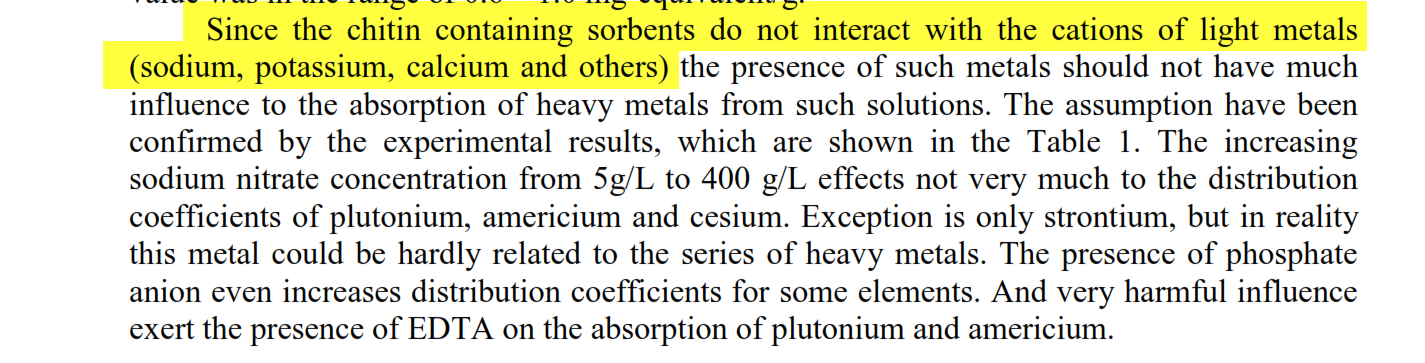
Chitin absorbs and concentrates radionuclides. This is part of the familiar bioconcentration/bioaccumulation story. The concentration factor for heavy metals can be hundreds, thousands or even millions of times. The reason I started thinking about chitin is because I was looking for a natural organic ion exchange resin. They use ion exchange resin to concentrate and isolate cesium from ocean water for measurement. Chitin is well known for its heavy metal absorption and chelation. More is unknown than known about chitin and how it is controlled in biology.
“Despite decades of intensive research, many events associated with the complexity of chitin formation and deposition are still obscure, or only partially understood. The list includes the hormonal control of CS at the transcriptional and translational levels as well as the post-translational CS packaging; trafficking and guidance of CS clusters to proper sites in the cells and their intricate insertion into the plasma membranes; activation of the catalytic step and its control or modulation; and translocation of chitin chains across cell membranes, their orientation, fibrillogenesis and association with other extracellular structural components such as polysaccharides (fungi) and cuticular proteins (insects)”
-

man made radiation concentrating all over the place!…
Once concentrated in body structure, the radiation and heavy metals could interfere with the exquisite hormonal and genetic control of chitins temporal and spacial placement
‘Chitin is considered to be one of the most abundant macromolecules in the biosphere. The chitin microfibrils serve as structural scaffolds in cell walls, cuticles, shells, and intestinal peritrophic matrices. The capacity for chitin production is found in a vast variety of taxonomic groups including algae, fungi, protists, sponges, rotifers, nematodes, arthropods, cuttlefish, brachiopods, and mollusks. Chitin is particularly present in marine ecosystems because oceanic crustaceans produce most of its biomass (mainly pelagic zooplankton such as krill -
Fisher et al found very high concentration factors for radionuclides Pu, Am and Np of greater than 100,000 with living cells of diatoms. Chlorella concentrates Cd two million times
http://www.osti.gov/scitech/servlets/purl/5671763 -
tsezos and volesky showed hat ion exchange capacity of microbial cell wall can be greater than that of commercial ion exchange resins and activated carbon by three times. The test elements were uranium and throium
Living cells can accumulate metals from much lower concentrations…ppb or lower…than inert biomass absorbers with higher concentration factors and greater specificities for a particular toxic metal
microalgae sequester heavy metals by adsorption and absorption mechanisms as well as formation of phytochelatins which they synthesize in response to heavy metal stress. (oh no, hormesis!) Gekeler et al
phytochelatins are peptides produced only by algae and higher plants. They are analogous to the metallothionein proteins produced by fungi and animals in response to heavy metal stress -
biofilms on every animal in the ocean. Biofilms are capable of binding significant quantities of metals under natural conditions, and serve as matrices for precipitation of insoluble mineral phases.
See it? Many different modes of bioabsorption and concentration of man made radiation. Radioactive biofilm on chitin shells
http://www.ncbi.nlm.nih.gov/pmc/articles/PMC3425911/ -
chitin, nothing random about it!
Chitin biosynthesis is a strongly regulated process, both spatially and temporally. It acts like an ion exchange resin and also absorbs by pores and other mechanisms. If the timing and placement isnt perfect, the animal will be deformed.
The ion exchange process is very effective at transferring the radioactive content of a large volume of liquid into a small volume of solid.
Nuclear reactors have been using resins for years. Boiling water reactors generate 20 cubic yards of organic ion exchange resin radioactive waste a year. They dont know what to do with this waste exactly. Told them so, but did they listen?
http://www-pub.iaea.org/MTCD/publications/PDF/TRS408_scr.pdf -
all biological material has an affinity for metals,
‘Chitin is a very important structural component of
fungal cell walls and is an effective biosorbent for metals and
radionuclides, as are chitosan and other chitin derivatives’ Heavy metals are usually powerful poisons to the nervous system.
Natural inorganic ion exchangers;
A large number of organic materials exhibit ion exchange properties; these include polysaccharides (such as cellulose, algic acid, straw and peat), proteins (such as casein, keratin and collagen) and carbonaceous materials
Removal of Heavy Metal from Contaminated Water by Biopolymer Crab Shell Chitosan
http://scialert.net/fulltext/?doi=jas.2009.2762.2769http://europepmc.org/articles/PMC4131215
Sci Rep. 2014; 4: 6053.
Published online 2014 August 13. doi: 10.1038/srep06053
PMCID: PMC4131215
A Magnetic Carbon Sorbent for Radioactive Material from the Fukushima Nuclear Accident
Daizo Yamaguchi,a,1 Kazumi Furukawa,2 Masaya Takasuga,2 and Koki Watanabe1
…Here we present the first report of a carbon-γ-Fe2O3 nanoparticle composite of mesoporous carbon, bearing COOH- and phenolic OH- functional groups on its surface, a remarkable and magnetically separable adsorbent, for the radioactive material emitted by the Fukushima Daiichi nuclear power plant accident. Contaminated water and soil at a level of 1,739 Bq kg−1 (134Cs and 137Cs at 509 Bq kg−1 and 1,230 Bq kg−1, respectively) and 114,000 Bq kg−1 (134Cs and 137Cs at 38,700 Bq kg−1 and 75,300 Bq kg−1, respectively) were decontaminated by 99% and 90% respectively with just one treatment carried out in Nihonmatsu city in Fukushima. Since this material is remarkably high performance, magnetically separable, and a readily applicable technology, it would reduce the environmental impact of the Fukushima accident if it were used.Ocean acidification — University of Bristol
http://palaeo.gly.bris.ac.uk/ocean/Biology.html
…
Pages highlighted in the 600 page book I posted yesterday claim studies show tuffs?(volcanic rock) have a high absorbtion rate for radionuclides. I also recall coral having a high affinity for heavy metal contamination and death. Does this make Hawaii a sea sponge for radioactive particles? Will she be sacrificing her corals, or what is left of them?
So interestingly enough….Chitin is researched as an effective “sponge” to soak up Uranium, Plutonium, Americium, Curium, strontium, Cesium.
Hmmmmmmm
https://www.google.com/url?sa=t&rct=j&q=&esrc=s&source=web&cd=1&cad=rja&uact=8&ved=0ahUKEwithqDyxPDKAhXJ4D4KHROGBOYQFggdMAA&url=http%3A%2F%2Fwww.tandfonline.com%2Fdoi%2Fpdf%2F10.1080%2F00223131.2002.10875518&usg=AFQjCNF-n6vwofG8MZnojs0XbY1Y-8zhZw&sig2=oJKe5oPJNsbewnGD9_kFdA
Notable Fukushima/Chernobyl research scientist Timothy Mousseau has made recent note of the lack of funding/support for necessary/illuminating science on this issue, and deems it a form of censorship.
However, nothing ventured nothing gained is applicable here. I’ll contact some people who might help, maybe some others here can do so too, and maybe who knows , a seed will have been planted: from one little acorn came many oaks … and a great many blessings.Funny how “Science” it focused on exploiting Chitin, rather than protecting Chitin.
http://www.els.net/WileyCDA/ElsArticle/refId-a0000694.html——————————————————————————————–
To those who understand this quick Haiku
You are a chosen few
Spread the word
We have a new bird
To enlighten the jousting crew
—————————————–
Poor Chitin Bats Last
Kenny Tests The Water, Clean
We Are At The Mures
—————————————————————————————–
new material added 2-15-16
Bottom line, if the Chitin as exoskeleton doesn’t form right during creation then the insect (or other critter) will be more susceptible to parasitic attack. Much of bee die off is because of parasitic attack.—With their chitinous shells, insects seem almost invulnerable — but like Achilles’ heel in Greek mythology, their impressive armor can still be attacked. Researchers at the universities of Bonn and Leipzig studied fruit flies (Drosophila) and discovered the molecular processes that are able to break through this protective casing. The enzyme chitinase 2 and growth factor idgf6 are especially important in correctly forming the insects’ shells. These findings are relevant for fighting parasites, and will be published in the professional journal Scientific Reports.
————————————————- rattleshark put this link up at nukepro. Shows how bioaccumulation of plutonium works in shell creatures in ocean. Not as bad as Chitin based animals like krill that can multiply as much as 2 MILLION times! But some of these show Pu multiplication into their shells and muscles (pun intended) of almost 2000 times what is in the water, in just 90 days….I wonder about 5 years…. http://www.int-res.com/articles/meps/22/m022p059.pdf#sthash.MvbdQffD.dpuf
http://nukeprofessional.blogspot.com/2016/02/a-scientific-basis-for-destruction-of.html
New York: Radiation leak at Indian Point Nuclear Power Plant worsens
Two posts.
From ENE News
2-7-16
CNN, Feb 6, 2016 (emphasis added): A leak at the Indian Point nuclear facility in New York has sent contaminant into the area groundwater, causing radioactivity levels 65,000% higher than normal, Gov. Andrew Cuomo said on Saturday… The groundwater beneath the nuclear plant… flows into the Hudson River at a point about 25 miles north of New York City… [T]he NRC plans to send an expert in health physics and radiation protection to the site…
NY Daily News, Feb 6, 2016: Gov. Cuomo said the plant’s operator, Entergy, reported “alarming levels” of radioactivity at three monitoring wells, with one well’s radioactivity increasing nearly 65,000%… Other state officials also blasted the controversial nuclear facility’s most recent mishap. Assemblywoman Ellen Jaffee (D-Suffern) said she was concerned not only for the surrounding community but also for the “impact this radioactive water may have on public health and our environment,” Jaffee added.
News 12 transcript, Feb 6, 2016: “Tonight on News 12 — a radioactive leak at Indian Point sparking a full investigation by the State over concerns of contamination… Officials discover alarming levels of radioactivity at several monitoring wells… with one’s radioactivity increasing by nearly 65,000%… Officials say… there is no immediate threat to the public.”
AP, Feb 6, 2016: It was unclear how much water spilled, but samples showed the water had a radioactivity level of more than 8 million picocuries per liter… The levels are the highest regulators have seen at Indian Point… Contaminated groundwater would likely slowly make its way to the Hudson River, [an NRC spokesman] said… Tritium [is] a radioactive form of hydrogen that poses the greatest risk of causing cancer when it ends up in drinking water.
Gov. Andrew Cuomo, Feb 6, 2016: “Yesterday I learned that radioactive tritium-contaminated water leaked… The company reported alarming levels of radioactivity at three monitoring wells, with one well’s radioactivity increasing nearly 65,000 percent.”
Gov. Cuomo’s letter to Commissioner Zucker (Dept. of Health) & Acting Commissioner Seggos (Dept. of Environmental Conservation), Feb 6, 2016: “I am deeply concerned… Indian Point has experienced significant failure in its operation and maintenance… levels of radioactivity reported this week are significantly higher than in past incidents… Our first concern is for the health and safety of the residents… I am directing you to fully investigate this incident… to determine the extent of the release, its likely duration, its causes, its potential impacts to the environment and public health, and how the release can be contained.”
Ellen Jaffee, New York Assemblymember, Feb 6, 2016: “I am concerned about the alarming increase in radioactive water leaking… My primary concern is the potential impact this… may have on public health and our environment.”
CBS 6 Albany transcript, Feb 6, 2016: “[The NRC] says that exposure to high levels of tritium may cause cancer in humans or genetic defects.”
Watch broadcasts here: News 12 | News 10 | CBS 6 | CBS NY
From Beyond Nuclear
February 20, 2016
Mum’s the word as radioactive leak at Indian Point gets worse
Entergy’s Indian Point nuclear power plant at Buchanan, NY is leaking more radioactive tritium at higher concentrations into groundwater draining into the Hudson River. Failure of a sump pump needed for filtering radioactivity in contaminated water accumulated from a refueling outage is believed to be the cause of this latest spill picked up in three onsite monitoring wells next to Unit 2.
The depth, breadth and flow rate of the underground contaminated plume remains unknown. One monitoring well (MW-32), which is 57 feet deep, first tested positive for high levels of tritium, radioactive hydrogen, at 8 million picoCuries per liter (pCi/L). In a press release, Entergy “voluntarily” admitted that a more recent follow-up test for tritium has now increased by 80%. Beyond Nuclear badgered the Nuclear Regulatory Commission (NRC) for more transparency to find that tritium levels in three monitoring wells have soared. Tritium concentrations have risen in MW-30 from 1.5 million pCi/L to 2.7 million pCi/L, MW-31 from 38,100 pCi/L to 9.5 million pCi/L and MW-32 is now 14.8 million pCi/L.
But “voluntary” compliance automatically ducks reliable reporting, federal regulations and enforcement action.
Beyond Nuclear repeatedly called NRC for two days. Entergy publicly posted a dismissive, detail-less Event Notification to the NRC website that they “voluntarily” neglected to post when the tritium leak was first detected nearly a week earlier. Entergy’s account is more evidence of the inconsistency and non-transparency to be expected of voluntary reporting of corporate pollution. Contaminated groundwater is flowing offsite into the Hudson River where according to the NRC and the nuclear power company dilution is the solution to pollution. Actually, its more a cheap substitute for compliance with the federal licensing agreement to control and monitor all radioactive effluent pathways to the environment.
Uncontrolled releases of radioactive effluent through unmonitored pathways into the environment are violations, albeit unenforced, of NRC’s “minimum requirements” and performance criteria (GDC 60 & 64) stipulated in Entergy’s operating licensing agreement. This most recent radioactive leak is more evidence of deteriorating systems where Entergy has lost control of the radioactive effluent coursing through reactor buildings and migrating offsite into the river. Of equal concern, the NRC has abdicated its regulatory authority to nuclear industry’s “voluntary initiative” (aka the Groundwater Protection Initiative). Once again, Indian Point’s leaks are just the latest demonstration of an erosion in public health oversight and the control and monitoring of radioactive water to “Nuclear Regulatory Capture.”
“Leak First, Fix Later: Uncontrolled and Unmonitored Radioactive Releases at Nuclear Power Plants” — report
LEAK FIRST, FIX LATER
Uncontrolled and Unmonitored Radioactive Releases from Nuclear Power Plants
A Beyond Nuclear Report
By Paul Gunter, Director, Reactor Oversight Project
Revised Edition: March 2015
INTRODUCTION
“Leak First, Fix Later” was first published in April 2010. Now nearly five years later, Beyond Nuclear takes another look at the problem of aging and deteriorating piping systems carrying
radioactive liquids that still run under every nuclear power plant.
Nuclear power plants have an extensive network of piping systems dozens of which transport liquids that contain radioactive isotopes including tritium — a radioactive form of hydrogen — and long-lived strontium-90. These piping systems are not adequately inspected or maintained due to their inaccessibility.
U.S. reactors continue to experience leaks and spills of radioactive material into groundwater the unmonitored pathways from unknown and unanticipated sources.
…
Now, five years after our initial 2010 report, Beyond Nuclear has determined that the NRC has failed to mandate any corrective action programs that focus on inspection and maintenance programs aimed at groundwater protection by preventing ongoing radioactive leaks and contamination of water resources.
Belgian nuclear reactors riddled with 16,000 unexplained cracks
From the Ecologist
by Oliver Tickell
18th February 2015
The discovery of over 16,000 cracks in two Belgian reactor vessels may have global implications for nuclear safety, says the country’s nuclear safety chief. He and independent experts are calling for the immediate checks of nuclear reactor vessels worldwide.
The safety of every nuclear reactor on the planet could be significantly compromised … What we are seeing in Belgium is potentially devastating for nuclear reactors globally due to the increased risk of a catastrophic failure.
Thousands of cracks have been found in the steel reactor pressure vessels in nuclear reactors Doel 3 and Tihange 2 in Belgium – vessels contain highly radioactive nuclear fuel cores.
The failure of these components can cause catastrophic nuclear accidents with massive release of radiation.
The pervasive – and entirely unexpected – cracking could be related to corrosion from normal operation, according to leading material scientists Professor Walter Bogaerts and Professor Digby MacDonald.
Speaking on Belgian TV, Professor MacDonald said:
“The consequences could be very severe … like fracturing the pressure vessel, loss of coolant accident. This would be a leak before break scenario, in which case before a fracture of a pipe occurred … you would see a jet of steam coming out through the insulation.
“My advice is that all reactor operators, under the guidance of the regulatory commissions should be required to do an ultrasonic survey of the pressure vessels. All of them.”
Professor Bogaerts added:
“If I had to estimate, I would really be surprised if it … had occurred nowhere else … I am afraid that the corrosion aspects have been underestimated.”
Jan Bens, Director-General of the Belgian nuclear regulator the Federal Agency for Nuclear Control (FANC), has said that this could be a problem for the entire nuclear industry globally – and that the solution is to begin the careful inspection of 430 nuclear power plants worldwide.
An unexplained embrittlement
The problem was discovered in the summer of 2012. Both the Doel 3 and Tihange 2 reactors have been shut down since March 24th, 2014 after additional tests revealed an unexplained advanced embrittlement of the steel of the test sample.
At the time the reactors’ operator, Electrabel, dismissed the cracks as being the result of manufacturing problems during construction in the late 1970’s in the Netherlands – but provided no supporting evidence.
FANC also stated that the most likely cause was manufacturing – but added that it could be due to other causes. Following the further tests FANC has now issued a statement confirming that the additional 2014 tests revealed 13,047 cracks in Doel 3 and 3,149 in Tihange 2.
“In carrying out tests related to theme 2 during the spring of 2014, a fracture toughness test revealed unexpected results, which suggested that the mechanical properties of the material were more strongly influenced by radiation than experts had expected. As a precaution both reactors were immediately shut down again.”
As nuclear reactors age, radiation causes pressure vessel damage, or embrittlement, of the steel mostly as a result of the constant irradiation by neutrons which gradually destroys the metal atom by atom – inducing radioactivity and transmutation into other elements.
Another problem is that hydrogen from cooling water can migrate into reactor vessel cracks. “The phenomenon is like a road in winter where water trickles into tiny cracks, freezes, and expands, breaking up the road”, says Greenpeace Belgium energy campaigner Eloi Glorieux.
“It appears that hydrogen from the water within the vessel that cools the reactor core is getting inside the steel, reacting, and destroying the pressure vessel from within.”
He adds that the findings mean that “the safety of every nuclear reactor on the planet could be significantly compromised … What we are seeing in Belgium is potentially devastating for nuclear reactors globally due to the increased risk of a catastrophic failure.”
Immediate action needed to prevent another catastrophe
On February 15th the nuclear reactor operator, Electrabel (GDF / Suez parent company) announced that it would be prepared to “sacrifice” one of its reactors to conduct further destructive tests of the reactor pressure vessel in order to study this poorly understood and extremely concerning damage phenomenon.
Electrabel’s findings will be submitted to FANC which will organize a new meeting of the international panel of experts to obtain their advice on the results of the new material tests and on the new data.
According to Electrabel, the findings constitute a “Level 1 occurrence on the International Nuclear Event Scale (INES)” but the company emphasises that the event “has no impact whatsoever on the wellbeing or health of the employees, the local residents, or the surrounding area.”
But Glorieux dismisses such complacency:
“As we approach the fourth anniversary of the Fukushima-daiichi nuclear disaster, evidence has emerged that demands immediate action to prevent another catastrophe. Thousands of previously unknown cracks in critical components of two reactors point to a potentially endemic and significant safety problem for reactors globally.
“Nuclear regulators worldwide must require reactor inspections as soon as possible, and no later than the next scheduled maintenance shutdown. If damage is discovered, the reactors must remain shut down until and unless safety and pressure vessel integrity can be guaranteed. Anything less would be insane given the risk of a severe nuclear accident”
There are 435 commercial nuclear reactors worldwide, with an average age of 28.5 years in mid 2014. Of these, 170 reactors (44 percent of the total) have been operating for 30 years or more and 39 reactors have operated for over 40 years. As of 2015, Doel 3 has been operating for 33 years; Tihange 2 for 32 years.
Oliver Tickell edits The Ecologist.
Nuclear power safety issue at Belgian border draws big Dutch interest
From Netherland Times
by Janene Pieters
January 20, 2016

At least 200 people attended a meeting in Bergen op Zoom on Tuesday to find out what is going on with the Belgian nuclear power plants. Dutch residents are concerned about their safety due to the growing number of incidents and stations such as Doel, just across the border from Bergen op Zoom, Omroep Brabant reports.
The meeting was organized by various environmental organizations from the Netherlands and Belgium. Attendees included people from Zeeland, Bergen op Zoom, Woensdrecht and Steenbergen.
The attendees were particularly concerned about the safety of the nuclear power plants. Incidents over the past year at the Doel plants included a sudden shutdown, an explosion and sabotage. The Doel plants started operating in 1975 and were intended to close last year, after 40 years of service. But the Belgian government decided to extend the operation until 2025.
“They should stop with the nuclear power as soon as possible. The Belgians must be able to see that they’re playing with fire”, one of the meeting attendees said to the broadcaster.
“We see that the incidents continue to pile up, there is a problem with the sabotage of Doel 4, which to this day has not been resolved and we also have a nuclear reactor with cracks”, Sara van Dyck of the Belgian Fund Better Environment. I think the concerns are certainly justified.”
Posted under Fair Use Rules.
German region protests, fears Fukushima-style disaster after Belgium restarts aging reactor
From Japan Times
December 16, 2015
BRUSSELS – Belgian power utility Electrabel restarted an aging nuclear reactor Tuesday after a near two-year shutdown, angering neighboring Germany, which fears the danger of a Fukushima-style meltdown.
Electrabel said it put the Tihange 2 reactor back on line “in complete safety,” despite opposition from officials in adjacent North Rhine-Westphalia, Germany’s most populous state.
Belgium has been hit by a series of nuclear mishaps in recent years, with three of the country’s seven reactors at one point closed, due in two of the cases to the discovery of micro-cracks in the reactor casings.
The Belgian nuclear authority gave the greenlight to relaunch Tihange 2, as well as another reactor near Antwerp, in November, giving Electrabel permission to operate the plant until its legislated final closure date in 2023.
Garrelt Duin, North Rhine-Westphalia’s economy minister, had warned strongly against the relaunch of Tihange, calling it outright “irresponsible.
Four of Germany’s 10 biggest cities — Cologne, Düsseldorf, Dortmund and Essen—- are located within the state.
The city of Aachen, only 60 km (40 miles) from Tihange, said it had explored legal options to stop the reopening but without success.
Germany, unlike Belgium and France, decided to phase out what was a substantial nuclear energy program after the 2011 disaster in Fukushima.
At the time, Belgium also committed to a withdrawal from nuclear power but has since scaled back its ambitions due to a lack of reliable alternatives.
Posted under Fair Use Rules.
– Comparisons with X-rays and CT scans are “meaningless” — Inhaling particles increases radiation exposure by “a factor of a trillion” says expert
From ENE News
March 22, 2011
Hirose Takashi: The Fukushima Nuclear Power Plant Accident and the State of the Media, Asahi NewStar, March 17, 2011:
Translation by Douglas Lummis
… [Interviewer] Yo: Every day the local government is measuring the radioactivity. All the television stations are saying that while radiation is rising, it is still not high enough to be a danger to health. They compare it to a stomach x-ray, or if it goes up, to a CT scan. What is the truth of the matter?
Hirose: For example, yesterday. Around Fukushima Daiichi Station they measured 400 millisieverts – that’s per hour. With this measurement (Chief Cabinet Secretary) Edano admitted for the first time that there was a danger to health, but he didn’t explain what this means. All of the information media are at fault here I think. They are saying stupid things like, why, we are exposed to radiation all the time in our daily life, we get radiation from outer space. But that’s one millisievert per year. A year has 365 days, a day has 24 hours; multiply 365 by 24, you get 8760. Multiply the 400 millisieverts by that, you get 3,500,000 the normal dose. You call that safe? And what media have reported this? None. They compare it to a CT scan, which is over in an instant; that has nothing to do with it. The reason radioactivity can be measured is that radioactive material is escaping. What is dangerous is when that material enters your body and irradiates it from inside. These industry-mouthpiece scholars come on TV and what to they say? They say as you move away the radiation is reduced in inverse ratio to the square of the distance. I want to say the reverse. Internal irradiation happens when radioactive material is ingested into the body. What happens? Say there is a nuclear particle one meter away from you. You breathe it in, it sticks inside your body; the distance between you and it is now at the micron level. One meter is 1000 millimeters, one micron is one thousandth of a millimeter. That’s a thousand times a thousand squared. That’s the real meaning of “inverse ratio of the square of the distance.” Radiation exposure is increased by a factor of a trillion. Inhaling even the tiniest particle, that’s the danger.
Yo: So making comparisons with X-rays and CT scans has no meaning. Because you can breathe in radioactive material.
Hirose: That’s right. When it enters your body, there’s no telling where it will go. The biggest danger is women, especially pregnant women, and little children. Now they’re talking about iodine and cesium, but that’s only part of it, they’re not using the proper detection instruments. What they call monitoring means only measuring the amount of radiation in the air. Their instruments don’t eat. What they measure has no connection with the amount of radioactive material. . . .
Waveforms, sonifications, and the 3-11-11 earthquake that hit Japan
The Great Honshu earthquake and the Tohoku earthquake are two names for the 3-11-11 earthquake that hit Japan.
From Majia’s Blog
January 6, 2016
The Mainichi has a very interesting article on North Korea’s probable nuclear explosion. The article explains how Japanese scientists used the explosion’s waveform to distinguish it from a naturally occurring earthquake:
Natural earthquake vs. nuclear test: waveform graphs tell the story.
The Mainichi, January 6, 2016 (Mainichi Japan) http://mainichi.jp/english/articles/20160106/p2a/00m/0na/011000cNorth Korea claimed on Jan. 6 that it had tested a hydrogen bomb. Before the official announcement, however, news agencies were already reporting a possible nuclear test after an “artificial” earthquake was detected with its epicenter around North Korea’s nuclear testing site in the northeast of the country…
How can earthquake monitoring agencies tell the difference between a natural quake and one caused by a nuclear blast? The answer is in the incident’s waveform. The undulations in the ground produced by a natural quake build to a sudden crescendo, while those produced by an underground nuclear test spike at the very beginning and then trail off….
I recommend reading the original article because it includes sample waveforms.
Just out of curiosity I searched for a seismograph of the 3/11 earthquake in Japan, the Great Honshu quake of 2011.
Here are a couple of findings:
VUME Virtual Upper Mantle of the Earth http://www.virtualuppermantle.info/2011-Sendai-Japan.htm
Sonification of Tohoku Earthquake https://www.youtube.com/watch?v=3PJxUPvz9Oo
I particularly recommend the second link, sonification of Tohoku Earthquake.
?
http://majiasblog.blogspot.com/2016/01/waveforms-and-sonifications.html
UCLA study finds advanced thyroid cancer rate in some California counties is well above national average
[Dr. Avital] Harari said it is not clear why the incidence of advanced-stage thyroid cancer is that much higher in California than the national average, but her research suggests there might be an environmental component.
…However, the only known environmental risk factor for thyroid cancer is radiation exposure, and that alone is unlikely to fully explain the phenomenon.
This was prior to Fukushima. What happens when this population, which already has a higher incidence of advanced thyroid cancer, is then impacted by heavy and ongoing fall-out from Fukushima? And what are the sources of this problem?
From University of California, Los Angeles
by Reggie Kumar | December 09, 2015
A team of UCLA researchers found that there are several parts of California where, in a high percentage of people with thyroid cancer, the disease is already at an advanced stage by the time it is diagnosed.
The research was led by Dr. Avital Harari, a member of the UCLA Jonsson Comprehensive Cancer Center and assistant professor of surgery.
Approximately 63,000 people were diagnosed with thyroid cancer nationwide last year, and according to the National Cancer Institute, the incidence of thyroid cancer has increased across racial, ethnic and gender lines over the past several decades. When detected early, thyroid cancer is treatable and even curable. However, survival rates are much lower for people who are diagnosed at advanced stages of the disease.
The UCLA scientists examined county-by-county data from the California Cancer Registry for 27,000 people who had been diagnosed with thyroid cancer from 1999 to 2008. To ensure that they were comparing similar population sizes, the researchers grouped together some smaller counties for the analysis.
Nationally, about 29 percent of people with thyroid cancer have advanced-stage disease by the time it is diagnosed, according to data from the NCI’s surveillance, epidemiology, and end results program, also known as SEER. Of the 47 geographical areas the UCLA researchers analyzed, 20 had significantly higher percentages than that, ranging from 33 percent (Orange County) to 51 percent (for the combination of Alpine, Amador and Calaveras counties).
Overall, in 35 percent of Californians with thyroid cancer — 6 percentage points higher than the national average — the disease has reached the regional and/or distant metastatic stage, meaning that it has spread beyond the thyroid to other tissues in the neck, regional lymph nodes or other parts of the body, by the time it is diagnosed.
According to the UCLA findings, the California counties (or combined county groups) where people were most likely to have advanced thyroid cancer at the time of diagnosis were:
- Alpine, Amador and Calaveras (combined): Disease was advanced in 51 percent of those with thyroid cancer
- Imperial: 48 percent
- Sutter: 45 percent
- San Francisco: 41 percent
- Santa Barbara: 40 percent
Southern California counties outside of the top five were San Bernardino, which ranked 12th (37 percent of people with thyroid cancer had advanced-stage disease), San Diego (13th, 36 percent), Los Angeles (14th, 35 percent), Fresno (17th, 34 percent), Ventura (18th, 34 percent) and Orange (20th, 33 percent).
The counties with the highest percentages of people with advanced cancer were not grouped together in any obvious geographic pattern, meaning that none of the larger regions within the state seem to have a higher risk for the disease than any other.
Harari said it is not clear why the incidence of advanced-stage thyroid cancer is that much higher in California than the national average, but her research suggests there might be an environmental component.
“California has the largest amount of farmland in the country, so this type of exposure could very well contribute to our thyroid cancer rates,” she said.
However, the only known environmental risk factor for thyroid cancer is radiation exposure, and that alone is unlikely to fully explain the phenomenon.
The next stage of Harari’s research will evaluate possible links between thyroid cancer and exposure to pesticides and radon.
The study was published online by the Journal of Surgical Research.
Media Contact
- Reggie Kumar
- 310-206-2805
- reggiekumar@mednet.ucla.edu
 Heal Fukushima