— Oppose Kings Bay Nuclear Trident base in Georgia — sign on letter due July 23, comments due July 24

From Nuclear Watch South

Dear Friends,

Nuclear Watch South invites all U.S. based organization and individuals
to sign the comments pasted below. Turn around time is tight!! The
Navy’s deadline to submit comments is Monday, July 24.

Send sign-ons to to Glenn Carroll atom.girl@nonukesyall.org by midnight
Sunday, July 23

Please include your name, title, organization, city, state or for
individuals your name, city and state.

We ask you to please circulate this sign-on opportunity widely! Nuclear
Watch South has traditionally focused on environmental concerns and is
not as well connected to the peace community as many of you!

The draft EA can be found here:
https://www.nepa(dot)navy(dot)mil/Current-Projects/Aircraft-Home-Basing-Ship-Homeporting/Columbia-Class/Documents/

You  may submit comments here:
https://www.nepa(dot)navy(dot)mil/Current-Projects/Aircraft-Home-Basing-Ship-Homeporting/Columbia-Class/Public-Commenting/

The Navy’s Environmental Assessment is narrow and concerned with
expanding Kings Bay Trident base to accommodate the new Columbia class
submarines, part of the nuclear weapons modernization program. Nuclear
Watch South has taken NEPA’s requirements to look at all impacts
seriously and is demanding a full EIS to include studying the impacts on
the North Atlantic right whales, whose Georgia birthing waters were only
first discovered as the Navy was displacing these creatures to the open
Atlantic Ocean by constructing Kings Bay. We bring the U.N. Treaty on
the Prohibition of Nuclear Weapons into the mix, and challenge the Navy
to contemplate that the environmental impact of nuclear weapons is,
ERRR, wholesale environmental destruction!

We invite U.S.-based organization and individuals to sign on to the
following comments on the draft EA:

July 24, 2023

Ms. Sara Goodwin
code: EV22.SG
6506 Hampton Blvd
Norfolk, VA 23508-1212

COMMENTS ON COLUMBIA CLASS HOMEPORTING EA | KINGS BAY TRIDENT SUBMARINE
BASE

Dear Ms. Goodwin,

Thank you for granting the request by Nuclear Watch South and others for
a deadline extension on the Columbia Class Homeporting Environmental
Assessment for Kings Bay Trident Submarine Base in the Cumberland Sound
near St. Marys, Georgia. The original deadline was June 25, 2023. We
requested a 90-day extension of which you granted 30 days for a July 24,
2023, deadline.

Nuclear Watch South (formerly Georgians Against Nuclear Energy) is
drafting these comments and inviting additional signatories. Nuclear
Watch South is a grassroots, direct action, environmental nonprofit
based in Georgia since 1977. The Kings Bay Trident nuclear submarine
base near St. Marys, Georgia, deploys enough nuclear firepower to
destroy all life on Earth. The environmental impact of Kings Bay is
planetary. Nuclear Watch South invites all U.S.-based organizations and
individuals to co-sign these comments.

BACKGROUND AND HISTORY OF KINGS BAY

Georgia’s 100 miles of Atlantic Ocean coastline is a globally unique,
fertile, and fragile marshland environment of barrier islands,
freshwater tidal forests, maritime forests, and endangered longleaf pine
forest. Georgia’s vast salt marshes support a staggering diversity of
plant and animal life nurturing the eggs and hatchlings of countless sea
creatures and providing significant nesting and migration habitat for
200 bird species.

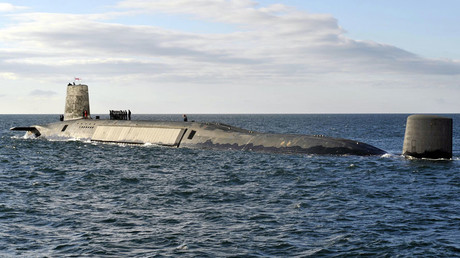
Kings Bay, near the Georgia-Florida state line is home base for six
Trident submarines and deploys 25% of the U.S. nuclear arsenal. A
Trident submarine is the most expensive and deadly nuclear weapons
system on Earth. The only other nation to possess a similarly powerful
system is the United Kingdom, a longtime United States ally. The Trident
has been controversial since its inception as it upsets the so-called
MAD (Mutually Assured Destruction) power balance, fueling a dangerous
and costly international arms race.

The Navy conducted an Environmental Impact Statement (EIS) in 1977 when
Kings Bay Naval Submarine Base was first proposed. The EIS was performed
to fulfill environmental and public accountability requirements of the
newly instituted National Environmental Protection Act (NEPA) of 1969.
In 1979, construction began on Kings Bay. In 1984, it was first
discovered that the base had unwittingly intruded upon the (previously
unknown and apparently only) birthing waters for the critically
endangered North Atlantic right whales in the Cumberland Sound.

Kings Bay base began operations in 1989. The Soviet Union dissolved in
1991. At the same time, the U.S. nuclear weapons manufacturing complex
occupying vast reservations in more than a dozen states from Washington
to South Carolina was shuttering its reactors and facilities amidst
revelations of widespread nuclear contamination and vast inventories of
poorly managed radioactive wastes. The nuclear weapons complex suddenly
and belatedly became subject to environmental law and NEPA has since
proved to be a difficult filter through which to permit new nuclear
weapons manufacture. For example, the U.S. Department of Energy and
National Nuclear Security Agency have failed in five attempts over the
past 30 years to establish a plutonium pit production facility at the
Savannah River Site (SRS) on the South Carolina/Georgia state line
(Savannah River.

Nuclear weapons manufacturing has languished since 1990 in all
nuclear-armed nations and limited nuclear treaties have greatly reduced
nuclear stockpiles. All nuclear testing ceased in 1992. Trident
submarines now carry fewer nuclear weapons, but each Trident submarine
currently can deploy the explosive power of 1,825 Hiroshimas.

In 2021, the U.N. ratified the Treaty on the Prohibition of Nuclear
Weapons, presently counting 68 nations as parties. The treaty begins by
expressing the parties’ concern for “the catastrophic humanitarian
consequences that would result from any use of nuclear weapons, and
recognizing the consequent need to completely eliminate such weapons,
which remains the only way to guarantee that nuclear weapons are never
used again under any circumstances.” This landmark, game-changing Treaty
sets forth as international law that it is illegal to “develop, test,
produce, manufacture, otherwise acquire, possess or stockpile nuclear
weapons or other nuclear explosive devices.”

The North Atlantic right whale population rebounded from near extinction
when hunting the whales was outlawed in 1935. The whales encountered new
hazards, however, with the industrialization of shipping and fishing.
Ship strikes and entanglement in fishing gear are held responsible for
mortality events which are now decimating the whale population. The
current population of the critically endangered North Atlantic right
whale has crashed to fewer than 350 animals. National Oceanic and
Atmospheric Administration (NOAA) estimates 50 births per year are
required to avoid extinction of these ancient, magnificent marine
mammals. In 2022, only 15 North Atlantic right whales were born. _No
environmental study has ever been conducted of the impact of the North
Atlantic right whales’ protected birthing waters being occupied by the
massive Kings Bay naval station._

Continue reading

— Another cover-up: new UK study finds 110 MoD nuke accidents — 4X higher than reported by govt.

From RT

February 23, 2017

Dozens of nuclear alerts underreported by British MoD, new study reveals
The UK Ministry of Defense has been accused of downplaying the real dangers stemming from the UK nuclear deterrent after the report by a safety watchdog put the number of accidents, involving British nukes, at 110, four times higher the official count.

Unveiled on Wednesday by the Nuclear Information Service (NIS), an independent nuclear watchdog, the report sheds light onto dozens of mishaps involving British nuclear weapons, featuring previously unreported accidents with potentially disastrous consequences. The in-depth study, which traces back all 65 years of the British nuclear program, arranges accidents into seven sections in accordance with their place of origin.

The report is based on the official findings, including  the report on nuclear weapons safety written by Professor Sir Ronald Oxburgh, information revealed during parliamentary questions, obtained under the Freedom of Information Act as well as from whistleblowers, witnesses and other researchers.

The biggest group of all lists accidents that took place on nuclear-capable submarines, ships and aircraft. The causes for a total of 45 mishaps, including 24 that occurred with nuclear-armed submarines, range from collision and fires to the effects of lightning.

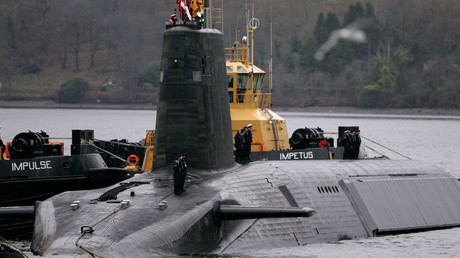
In one of the most notable accidents of that kind, Royal Navy submarine HMS Vanguard, which is capable of carrying up to 48 Trident nuclear warheads, collided with a French Le Triomphant submarine, which could be armed with about the same amount of TN75 nuclear warheads. The circumstances of the accident, which happened early February 2009 in the Atlantic Ocean, were hushed up at the time and still not known to the full.

Although the official investigation report into the collision came to the reassuring conclusion that “at no time was nuclear safety compromised and the Strategic Weapon System remained inside tolerable limits at all times”, whistleblowers’ accounts are far more daunting. An officer who was on board the UK submarine reportedly said “We thought, this it we’re all going to die,” while recalling the incident in the conversation with Royal Navy whistleblower William McNeilly.

Other case studies include a nuclear warhead carrier sliding off the rode into the ditch on January 10, 1987 in Wiltshire. The misfortune is described by the authors as “most visible” and “embarrassing” incident to date. Overall, 22 road transportation incidents, among them overturning of vehicles carrying nukes, have been cited in the report.

While only 14 accidents, linked to the faults in manufacturing and production process, are listed in the report, the most severe nuclear accident in UK history also falls into this category. The fire at the Windscale plant in 1957 led to massive release of radiation from graphite-moderated reactor that triggered “around 100 fatal cancers and around 90 non-fatal cancers.”

The report also lists 21 “security-related” incidents and eight incidents blamed onto the improper storage and handling of the nukes.

The comprehensive study, spanning over 100 pages under an awe-inspiring title “Playing with Fire,” blames the defense ministry for attempting to sweep the issue of nuclear safety under the carpet by concealing essential details of the incidents and downplaying their impact.

READ MORE: Trident whistleblower calls out MoD’s ‘lame attempt’ to excuse nuke malfunctions

The report argues that the official data released by the British Defense Ministry in 2003 which put the number of incidents at 27, is “far from a full list of all the accidents.”

It is not the first time the British military has been accused of covering up major issues with its nuclear deterrent. News on a failed Trident missile test, carried out off Florida coast in June 2016, sparked a new round of heated debates on the British nuclear program. The routine test performed by the HMS Vengeance in June 2016 from Port Canaveral went horribly wrong with the missile heading back to the US mainland. However, the UK authorities did not issue any statement on the failed test, reportedly, advised to refrain from sharing unfavorable data by US colleagues.

READ MORE: Trident nukes useless against today’s actual security problems – CND report

The Trident missile malfunction came just weeks before the UK parliament voted in favor of renewing controversial Britain’s Trident deterrent, estimated to cost some £40 billion.

In January, McNeilly, who was first to leak the details about the serious fire issues aboard Trident submarine, told RT that he has witnessed Trident “fail 3 out of 3 WP 186 Missile Compensating Tests.”

https://www.rt.com/uk/378340-nuclear-accidents-report-defense/

Posted under Fair Use Rules.

— UK Prime Minister Theresa May says “Yes,” she’s prepared to kill hundreds of thousands in nuke attack

Global Research, July 19, 2016
Common Dreams 18 July 2016

Newly installed U.K. Prime Minister Theresa May is prepared to authorize a nuclear strike that could kill hundreds of thousands of innocent people.

So she said before Parliament on Monday, as the body debated whether to renew Trident, Britain’s aging nuclear weapons system.

According to the Independent, May was challenged on her support for the program by the SNP’s George Kerevan, who asked: “Are you prepared to authorize a nuclear strike that could kill hundreds of thousands of men, women and children?”

May replied with one word: “Yes.”

Later, when it was his turn to speak, Labour party leader Jeremy Corbyn countered that he “would not take a decision that kills millions of innocent people,” saying: ”

I do not believe the threat of mass murder is a legitimate way to go about international relations.”

Corbyn’s stance puts him at odds with the official stance of his party, a fact that was not lost during the debate, which comes amid intense Labour infighting.

Meanwhile, the Telegraph reported on another tense exchange in the chamber, this one between May and Green MP Caroline Lucas:

Caroline Lucas, the Green MP:

“If keeping and renewing our nuclear weapons is so vital to our national security and our safety, then does she accept the logic of that position must be that every other single country must seek to acquire nuclear weapons?

“Does she really think the world would be a safer place if it did? Our nuclear weapons are driving proliferation, not the opposite.”

Theresa May, the Prime Minister

“No, I don’t accept that at all and I have say to the honorable lady that sadly she and some members of the Labour Party seem to be the first to defend the country’s enemies and the last to actually accept the capabilities that we need.”

Lucas hit back on Twitter:

According to the Campaign for Nuclear Disarmament (CND), which favors scrapping Trident and was holding a #StopTrident rally outside the House of Commons on Monday evening, the weapons system serves ”no legitimate purpose” and is hugely wasteful.

Of the Trident vote, CND’s general secretary Kate Hudson said:

“This is a once in a generation opportunity to break with this massively expensive yet redundant old technology and instead spend Britain’s valuable resources on meeting the security challenges we face today, like terrorism and climate change.”

Meanwhile, wrote Andrew Smith of the Campaign Against Arms Trade on Monday, “even if we put the financial implications to one side, the potential impact of the weapons is far too deadly to contemplate. One Trident submarine has the power to kill 5.4 million people, and it would do so indiscriminately. The impact could be on an even greater scale than Hiroshima.”

Opposition to Trident is widespread in Scotland, where the issue was among several fueling2014′s independence campaign. Anti-Trident protests were held in more than 30 Scottish cities, towns, and villages on Saturday, according to The Herald.

On Monday, SNP’s Westminster leader Angus Robertson described Trident as an “immoral, obscene, and redundant weapons system” and said renewing the program would speed up Scottish independence.

“The people of Scotland have shown repeatedly, clearly and consistently that we are opposed to the renewal of nuclear weapons,” he said.