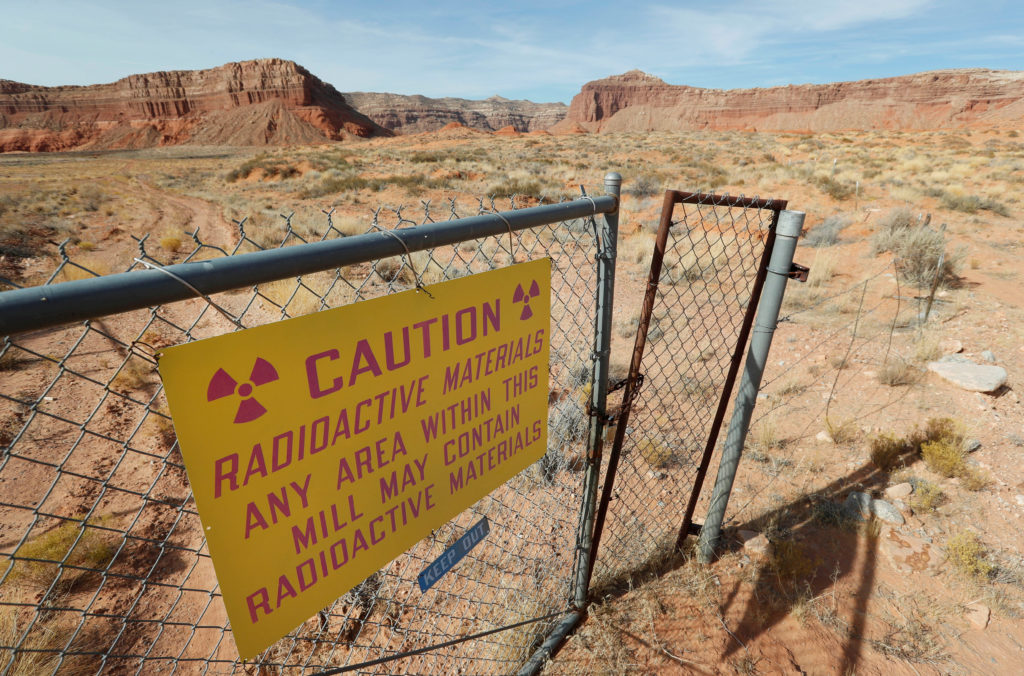
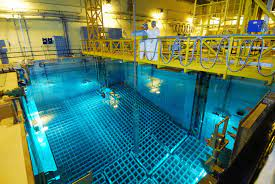
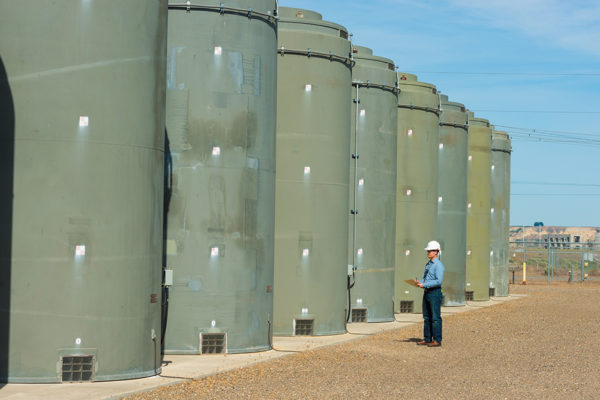
— Ontario officials paid to host nuclear waste repositories despite hazards; residents and First Nation tribes protest

See Canadian Dimension article for details

From Rabble.com

Burying radioactive nuclear waste poses enormous risks
By David Suzuki
July 31, 2024

he spent fuel will remain radioactive for hundreds of thousands of years, and contamination and leaks are possible during storage, containment, transportation and burial.

As the consequences of burning dirty, climate-altering fossil fuels hit harder by the day, many are seizing on nuclear power as a “clean” energy alternative. But how clean is it?

Although it may not produce the emissions that burning fossil fuels does, nuclear power presents many other problems. Mining, processing and transporting uranium to fuel reactors creates toxic pollution and destroys ecosystems, and reactors increase risks of nuclear weapons proliferation and radioactive contamination. Disposing of the highly radioactive waste is also challenging.
http://large(dot)stanford(dot)edu/courses/2021/ph241/radzyminski2/

The people living in Ignace and South Bruce, Ontario, are learning about the potential dangers firsthand. The Nuclear Waste Management Organization (NWMO), a not-for-profit corporation representing nuclear power companies, has identified those communities as potential sites for disposing of six million bundles of highly radioactive waste in a “deep geological repository.” The federal government has agreed to the organization’s plans.

It’s an all-too-common story: environmentally damaging projects foisted on communities that need the money such projects promise.

In this case, the NWMO has already paid Indigenous and municipal governments large sums to accept its plans — ignoring communities that will also be affected along transportation routes or downstream of burial sites.

According to Canadian Dimension, industry expects to ship the wastes “in two to three trucks per day for fifty years, in one of three potential containers.” None of the three containment methods has been subjected to rigorous testing.

Even without an accident, trucking the wastes will emit low levels of radiation, which industry claims will produce “acceptable” exposure. Transferring it from the facility to truck and then to repository also poses major risks.

Although industry claims storing high-level radioactive waste in deep geological repositories is safe, no such facility has been approved anywhere in the world, despite many years of industry effort.

Canadian Dimension says, “a growing number of First Nations have passed resolutions or issued statements opposing the transportation and/or disposal of nuclear waste in northwestern Ontario, including Lac Seul First Nation, Ojibway Nation of Saugeen, Grassy Narrows First Nation, Fort William First Nation, and Wabaseemoong Independent Nations.”

Five First Nations — including Grassy Narrows, which is still suffering from industrial mercury contamination after more than 60 years — have formed the First Nations Land Alliance, which wrote to the NWMO, stating,

“Our Nations have not been consulted, we have not given our consent, and we stand together in saying ‘no’ to the proposed nuclear waste storage site near Ignace.”

Groups such as We the Nuclear Free North are also campaigning against the plan.

All have good reason to be worried. As Canadian Dimension reports, “All of Canada’s commercial reactors are the CANDU design, where 18 months in the reactor core turns simple uranium into an extremely complex and highly radioactive mix of over 200 different radioactive ingredients. Twenty seconds exposure to a single fuel bundle would be lethal.”

The spent fuel will remain radioactive for hundreds of thousands of years, and contamination and leaks are possible during storage, containment, transportation and burial. Industry, with its usual “out of sight, out of mind” approach, has no valid way to monitor the radioactive materials once they’re buried.

With 3.3 million bundles of spent fuels already waiting in wet or dry storage at power plants in Ontario, New Brunswick, Quebec and Manitoba, and many more to come, industry is desperate to find a place to put it all.

Even with the many risks and no site yet chosen for burial, industry and governments are looking to expand nuclear power, not just with conventional power plants but also with “small modular reactors,” meaning they could be spread more widely throughout the country.

Nuclear power is enormously expensive and projects always exceed budgets. It also takes a long time to build and put a reactor into operation. Disposing of the radioactive wastes creates numerous risks. Energy from wind, solar and geothermal with energy storage costs far less, with prices dropping every day, and comes with far fewer risks.

Industry must find ways to deal with the waste it’s already created, but it’s time to move away from nuclear and fossil fuels. As David Suzuki Foundation research confirms, renewable energy from sources such as wind and solar is a far more practical, affordable and cleaner choice.

David Suzuki is a scientist, broadcaster, author and co-founder of the David Suzuki Foundation. Written with David Suzuki Foundation Senior Writer and Editor Ian Hanington.

Learn more at davidsuzuki.org.

https://rabble.ca/environment/burying-radioactive-nuclear-waste-poses-enormous-risks/


— Stand with the Algonquin people to protect Kitchi Sibi / Ottawa River and stop giant radioactive waste dump

From the Ottawa River Institute

Aug 3, 2023 by Lynn Jones, Ottawa River Institute

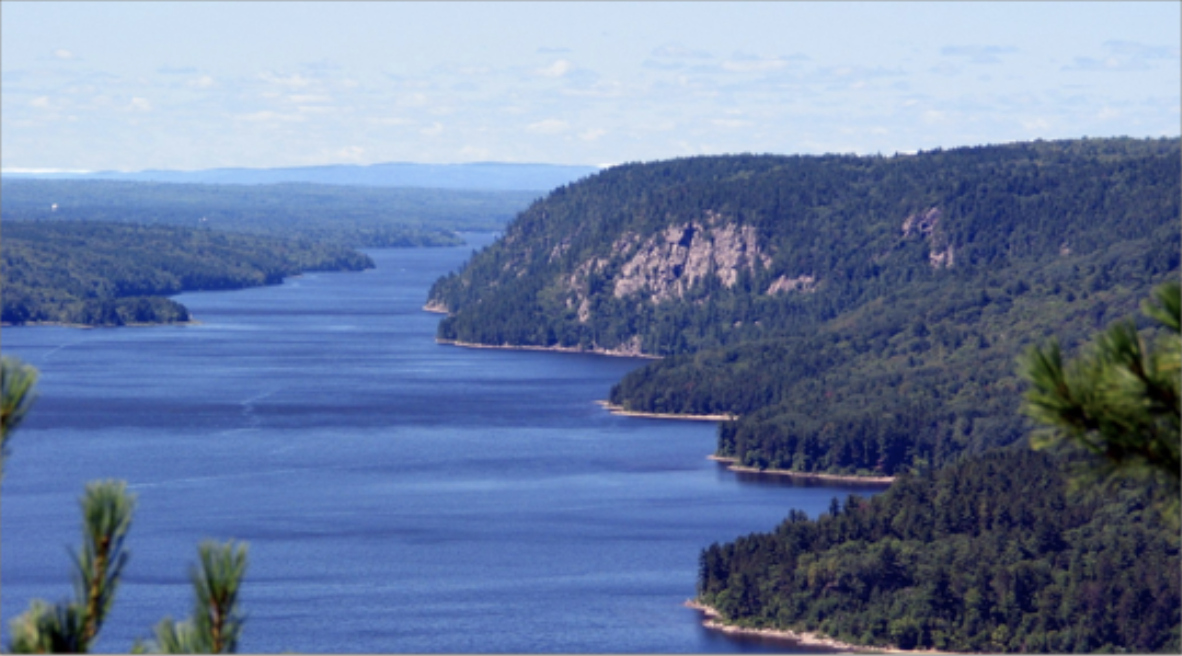
The Ottawa River is a Canadian Heritage River that flows for 1300 kilometers from its origin in central Quebec to its confluence with the St. Lawrence River at Montreal.

The Ottawa River is sacred for the Algonquin Anishinaabe People whose traditional territory it defines. In Algonquin it is called Kitchi Sibi, or “Great River.”

The Algonquin People have lived in the Ottawa River watershed since time immemorial. A strong ethic of environmental stewardship is part of their Anishinaabe worldview and they consider it their responsibility to protect the land and water for all life and future generations.

We are fortunate that the Algonquin People take their stewardship responsibility seriously. Right now, they are a strong protective force standing between a giant above-ground nuclear waste dump and the beautiful Kitichi Sibi that supports so many lifeforms and provides drinking water to millions of people downstream.

A multinational consortium (SNC-Lavalin, Fluor and Jacobs) wants to build the seven-story nuclear waste mound on the grounds of the Chalk River Laboratories, northwest of Ottawa, directly across the Ottawa River from the province of Quebec. If approved, it would hold one million tonnes of radioactive and other hazardous waste. The proposed dump is called the “NSDF,” and the proponent is “Canadian Nuclear Laboratories,” a wholly-owned subsidiary of the multinational consortium.

The Chalk River Laboratories site is heavily contaminated from eight decades of nuclear activities including production of plutonium for the US nuclear weapons program. The accumulated radioactive wastes at Chalk River were described in a 2011 Ottawa Citizen article â€œChalk River’s Toxic Legacy.”  The estimated cost for a proper cleanup is $16 billion. Chalk River Laboratories was privatized by the federal government in 2015 to quickly and cheaply reduce this enormous environmental liability.

The Chalk River site needs to be cleaned up but the proposed giant landfill is not the right approach according to many who have studied the proposal including Algonquin First Nations, retired senior scientists from Atomic Energy of Canada Limited, civil society groups and concerned citizens. The Assembly of First Nations and more than 140 municipalities, including Pontiac County, Ottawa, Gatineau and Montreal have passed resolutions of concern about the proposed project.

Critics say that the proposed site is unsuitable for a dump of any kind. It is located less than one kilometre from the Ottawa River and is surrounded by wetlands that drain into the river. The site is tornado and earthquake prone and the underlying bedrock is porous and fractured.

Other concerns include:
— Many of the radioactive materials destined for the dump, such as plutonium, will be hazardous for 100,000 years. The International Atomic Energy Agency says radioactive wastes such as these must be carefully stored out of the biosphere, not in an above-ground mound.
Dioxins, PCBs, asbestos, mercury, arsenic and hundreds of tonnes of lead would go into the dump along with thousands of tonnes of copper and iron and 33 tonnes of aluminum, tempting scavengers to dig into the mound after closure.
— The dump proponent is importing commercial and federal nuclear wastes to Chalk River for disposal in the NSDF. These shipments are happening despite a specific request from the City of Ottawa for cessation of radioactive waste imports into the Ottawa Valley.
— The mound would leak radioactive and hazardous contaminants into the Ottawa River during operation and after closure. The mound is expected to eventually disintegrate in a process referred to as “normal evolution.”
– There is no safe level of exposure to the radiation that would leak into the Ottawa River from the Chalk River mound. All of the escaping radioactive materials would increase risks of birth defects, genetic damage, cancer and other chronic diseases.
— The giant pile of leaking radioactive waste would be difficult to remediate. Remediation costs could exceed those of managing the wastes had they not been put in the mound. There are far better ways to manage radioactive waste and keep it out of the biosphere but they cost more money. It would be better to spend the money up front on high quality facilities farther away from a major drinking water source.

The environmental assessment for the NSDF has dragged on for seven years. The final licensing hearing is scheduled for August 10, 2023. The assessment and the decision about whether or not to license the dump are in the hands of Canada’s â€œcaptured nuclear regulator,” the Canadian Nuclear Safety Commission. CNSC staff continue to recommend approval of the dump. An Expert Panel  recommended in 2017 that the CNSC not be in charge of environmental assessment for nuclear projects. Participants in the environmental assessment for the NSDF have noted many serious flawsin the process. 

Weeklong licensing hearings in June 2022 were to have been the “final” hearings for the NSDF but in a surprise move, the CNSC decided to “keep the record open” for continued consultations with Kebaowek and Kitigan Zibi First Nations, two of the 11 Algonquin First Nations whose people have lived in the Ottawa River watershed for thousands of years and who have never ceded their territory to the Crown or the Canadian government.

During the extended consultations which wrapped up this past spring, Kebaowek and Kitigan Zibi First Nations conducted research at the proposed dump site. They documented extensive threats to their Indigenous rights and to biodiversity in the NSDF footprint in a booklet available online here. Their joint final submission outlines numerous potential legal failures and violations should the CNSC decide to license the NSDF on their unceded territory.

On June 20 at a press conference in Ottawa, Chiefs of Kebaowek and Kitigan Zibi First Nations along with two Algonquin Grand-Chiefs, together representing 10 of the 11 Algonquin First Nations, said very clearly that they do not consent to the construction of the NSDF on their unceded territory and that approving the dump without their consent would contradict the United Nations Declaration on the Rights of Indigenous Peoples. Earlier in June, their sister First Nation, the Algonquins of Pikwakanagan, signed an agreement with the proponent, offering consent for the NSDF in exchange for economic and business opportunities and a role in monitoring at the site.

This struggle seems destined to play out in the courts over many years. It seems tragic that so much time, energy and money have been expended on such a bad proposal. Canada’s poor nuclear governance system is largely to blame for this; there is literally no one minding the shop other than our captured nuclear regulator, the CNSC and nuclear reactor proponents at Natural Resources Canada. 

Thank goodness for our Algonquin brothers and sisters who are standing firm to protect Kitchi Sibi and actually have a good chance to eventually stop the madness.

Lynn Jones is a founding member of the Ottawa River Institute, a non-profit, charitable organization based in the Ottawa Valley. ORI’s mission is to foster sustainable communities and ecological integrity in the Ottawa River watershed.

https://www.ottawariverinstitute.ca/our-projects/chalk-river-nuclear-waste-cleanup

— DOE nuclear waste siting: ‘Consent-based’ or bribery?

‘ From Beyond Nuclear

June 11, 2023

The US Department of Energy on June 9 announced it will direct $26 million to “groups of university, nonprofit, and private-sector partners” who will help communities decide that they want to be the recipients of the country’s irradiated reactor fuel.

Having abjectly failed to find any safe, long-term radioactive waste management “solution” — possibly because there is none — while also failing to halt the production of nuclear waste, the DOE has now moved to what it calls “consent-based siting”.

The DOE’s interpretation of this term is that the recipients of the $26 million will “work with communities interested in DOE’s community-centered approach to storing and disposing of spent nuclear fuel.” In addition they would “ensure transparency and local support.”

But if past examples are any indicator, the “consenting” communities are likely to be those most deprived of resources, especially Indigenous communities and communities of color, who may feel pressured to accept the DOE largesse along with the fatal outcomes of living alongside high-level radioactive waste.

While U.S. Secretary of Energy Jennifer M. Granholm, insists that “it is vital” that “DOE works to be good stewards of the nation’s spent nuclear fuel,” the end result is more likely to be dumping radioactive waste on communities whose “consent” and willingness is driven by economic hardship.

energy(dot)gov/articles/doe-awards-26-million-support-consent-based-siting-spent-nuclear-fuel

https://beyondnuclear.org/consent-based-or-bribery/

— Paper: Advanced transmutation process and its application for decontamination of radioactive nuclear wastes, Michrowski and Porringa

Complete paper

Proceedings of Congress 2000

University of Alberta

Edmonton, May 29-30, 2000

Advanced transmutation process

and its application for the decontamination of radioactive nuclear wastes

Andrew Michrowski [1] and Mark Porringa [2]

Abstract: There are deviations to the standard model of radioactive atomic nuclei decay reported in the literature. These include persistent effects of chemical states and physical environment and the natural, low-energy transmutation phenomena associated with the vegetation processes of plants. The theory of neutral currents is proposed by Nobelist O. Costa de Beauregard to account for the observed natural transmutations, also known as the Kervran reaction. “Cold fusion” researchers have also reported anomalies in the formation of new elements in cathodes. This body of knowledge provides the rationale for the observed and successful and developed advanced transmutation processes for the disposal of nuclear waste developed by Yull Brown involving a gas developed by him with a stoichiometric mixture of ionic hydrogen and ionic oxygen compressed up to 0.45 MPa. The radioactivity in samples decreases by up to 97%, rapidly, simply and at low cost.

– – –

[1] President, The Planetary Association for Clean Energy, Inc, 100 Bronson Avenue, #1001, Ottawa, Ontario K1R 6G8, Canada. (613) 236-6265; fax: (613) 235-5876.

[2] Zeropoint Research, RR#1, Deep River, Ontario K0J 1P0, Canada. (613) 584-2960; fax: (613) 584-4616

For more information: https://pacenetwork.org/

— Alternative nuclear waste treatment and remediation — the way forward

[Note: New website https://pacenetwork.org/]

PDF — Letter and annexes

From Planetary Association for Clean Energy, Inc.
Bronson Avenue, Suite 1001
OTTAWA, Ontario K1R 6G8, Canada
(613) 236-6265 / fax: (613) 235-5876
paceincnet[at]gmail.com / http://www.pacenet.homestead.com
An international collaborative network of advanced scientific thinking NGO in Special Consultative status with the Economic and Social Council of the United Nations (ECOSOC)

May 7, 2018

Greg Fergus, MP, PC
Parliamentary Secretary to the Minister of Innovation, Science and Economic Development

Hon. Greg Fergus,

First of all, I wish to thank you for organizing the March 5 Town Hall Meeting, Forum on Chalk River at UQO in your riding. Some of our associates were thus able to exchange with the qualified interveners and to affirm professional observations. This keynote event has led to meeting you with our colleagues on April 5th on the interdisciplinary theme of clean soil, water and responsible waste management, with an emphasis on alternative nuclear waste treatment and remediation. We note from the April 12 Government of Canada announcement of the launching of an Expert Panel on Sustainable Finance to enable clean growth an impetus and opportunity for innovative and remunerative rectification of a costly and hurting long-term state of affairs.

In our group meeting with you, we underlined a priori, based on 50 years of hands-on executive experience with landfills that, even in the cases of well-conceived and engineered designs, contaminants, quite toxic, end up deleteriously in soil and in water.

The very concept of landfill is illogical: it implies that all materials (in this case, aging barrels and containers, instruments, rods, construction debris, etc.) are lumped together, with no certainty nor predictability of what can happen between the contaminants. In this case, as well, one does not see a Hazard and Operability Study (HAZOP) methodology of considering everything that could possibly go wrong (used in software research). It applies to complex ‘processes’ such as nuclear waste whereby sufficient predictable and explicitly-identified information is available.

Our first suggestion is that nuclear waste be separated and segregated at source, and in sequence of decommissioning. This is also helpful for alternative on-site, real-time decontamination. One treats to radioactive depletion components such as rods as they are assessed and retrieved, at near range – without hazard to workers, with robotics ; one treats liquids, facility equipment items, structural remains, etc. specifically and with appropriate and the most efficacious technology and protocols than are pre-tested first for their ability to reduce as quickly as viable radioactivity levels.

Our second suggestion is to focus on methodologies that are not only much more affordable, with more immediate applicability in terms of timelines but also those than can lead to productivity and rapid returns on capitalization by offering options for stocks of not only commodities but also of rare earth elements.

The interest of PACE goes back to the demands of its co-founder, scientist Senator Chesley W. Carter who aspired that Canada avoid nuclear energy facilities that were imposed as a result of the energy crisis of the 1970s, by embarking instead on less expensive and less uncertain advanced clean energy production technologies that were then being considered, and since peer-reviewed internationally with the participation of our collaborative network, which includes Nobelists. (See the Annexes.)

Retrospectively, a comptroller exercise shows that had the National Research Council of Canada (under pressure from the U.S. Secretary of State) not contradicted the July 1976 initiative by the Rt. Hon. Pierre E. Trudeau, prime minister to embark on the clean energy path suggested by Senator Chesley W. Carter as spokesperson for our collaborative network, Canada would have probably remained with a deficit-less national budget, and free of need of GST taxation. This repudiation led to the massive federal subsidy of the nuclear energy programme in Ontario and the expensive maintenance of status quo with regards to oil & gas, several megaprojects in a response to the then energy crisis due to rise in oil prices.

We propose that an initiative been undertaken to develop a matrix, on the basis of a full testing in appropriate nuclear licensed facility in Canada to determine which currently described and, additionally other promising and peer-reviewed accelerated and radioactivity-depleting nuclear waste remediation systems and protocols are most adapted and optimised for their logistical decontamination with due regard to the environmental and hazards issues.

We do hope that this communication enables risk-free and enhanced-economic viability for Canada.

Dr. Andrew Michrowski, President
Joseph Kennedy, P.Eng. , Director

Full document with annexes

Planetary Association for Clean Energy, Inc.
https://pacenetwork.org/

— Alert: H.R. 1 would gut environmental laws — Earthjustice

Provisions in the bill includie would waiving nuclear waste restrictions. Oppose H.R. 1

SIGN LETTER BELOW

From Earthjustice

The House of Representatives is bringing H.R. 1, the Polluters over People Act, to the floor next week. Join this community sign on letter opposing this polluter giveaway that would exacerbate the climate crisis, perpetuate environmental injustices, and undermine U.S. economic and national security by prolonging reliance on risky and volatile energy sources. Its sweeping changes to the National Environmental Policy Act (NEPA), the Mineral Leasing Act, the Mining Law of 1872, and the Clean Water Act prioritize polluter profits over the public health and exhibits an astonishing disregard for government accountability and the voices and welfare of communities impacted by federal decisions.

DEADLINE NOON EASTERN ON MONDAY, MARCH 27

https://docs.google.com/forms/d/e/1FAIpQLSd6x6ourj6V8E_poQYweda7ILiA79ipD_82CbY32Z8_u_9Jzg/viewform

Community Sign On: Oppose HR 1

DEADLINE NOON EASTERN ON MONDAY, MARCH 27

The House of Representatives is bringing H.R. 1, the Polluters over People Act, to the floor. Join this community sign on letter opposing this polluter giveaway that would exacerbate the climate crisis, perpetuate environmental injustices, and undermine U.S. economic and national security by prolonging reliance on risky and volatile energy sources. Its sweeping changes to the National Environmental Policy Act (NEPA), the Mineral Leasing Act, the Mining Law of 1872, and the Clean Water Act prioritize polluter profits over the public health and exhibits an astonishing disregard for government accountability and the voices and welfare of communities impacted by federal decisions.

Organization Sign on Deadline: Monday, March 27, 12 PM Eastern. We will only display organization name, not individual staff names.

March 27, 2023

Re: Vote Recommendation on H.R. 1, the “Lower Energy Costs Act”

Dear Representative,

On behalf of our millions of members and supporters, the undersigned organizations write to express our strong opposition and to urge you to vote NO on H.R. 1, the so-called “Lower Energy Costs Act,” which the House will take up next week.

This legislation would exacerbate the climate crisis, perpetuate environmental injustices, and undermine U.S. economic and national security by prolonging reliance on risky and volatile energy sources. Its sweeping changes to the National Environmental Policy Act (NEPA), the Mineral Leasing Act, the Mining Law of 1872, and the Clean Water Act prioritize polluter profits over public health and exhibit an astonishing disregard for government accountability and the voices and welfare of communities impacted by federal decisions.

Division A

Division A would encourage new fossil fuel production and infrastructure, despite the scientific consensus that there is no room for investment in new fossil fuel production if we are to keep the world on a 1.5°C compatible pathway. It would also undermine bedrock environmental laws, including NEPA, by short-circuiting permitting processes and limiting public input. NEPA is a critical environmental law and an important tool for frontline and environmental justice communities to influence federal infrastructure projects that will impact them the most.

Division A’s most egregious provisions:

  • Repeal the Methane Emissions Reduction Program created by the Inflation Reduction Act (IRA). This critical program supports efforts to reduce methane emissions from the oil and gas sector, improve methane monitoring, fund environmental restoration, and help communities reduce the health impacts of pollution.
  • Undercut public transparency and input from communities by arbitrarily limiting the time for environmental reviews. The bill alters the approval process for gas pipelines by requiring all other federal and state agencies to defer to FERC.
  • Strip away the federal government’s responsibility to examine the full impacts of LNG expansion on US energy markets, the environment, and local communities. It would make it easier to approve LNG exports by removing the first three sections of the Natural Gas Act, which require a public interest determination for LNG exports to non-FTA countries and by mandating that FERC deem gas exports in the public interest. LNG exports negatively impact Americans by exacerbating climate change, raising domestic energy prices, and perpetuating environmental injustices, and these factors need to be taken into account when deciding whether to approve additional LNG export terminals.
  • Authorize the Environmental Protection Agency (EPA) to waive the Clean Air Act (CAA) and Solid Waste Disposal Act (SWDA) requirements for waste produced by certain energy facilities. Exempting energy waste potentially including everything from fracking wastewater to mine processing facilities and tailing sites to nuclear facilities from these laws threatens the health of people in frontline communities, as well as our air and water. The waste from energy production are some of the most threatening products and sites, and often they exist for hundreds of years, even in perpetuity, which is part of the reason why the Superfund program is overwhelmed.
  • Undermine the Toxic Substances Control Act by short circuiting the review and approval process for new chemicals used in the energy sector, whether that is for fracking, petrochemicals, mining or dozens of other products. This rushed and weak assessment, which would lead to default approvals, would result in the blind rubber-stamping of chemicals for use in energy that have deleterious impacts on human health and the environment. Virtually any chemical that plays a role in the production, refining, distribution, and use of energy could be designated as “critical” by the Department of Energy.
  • Allow the EPA Administrator to circumvent the scientific process of approving or denying flexible air permitting at the agency. Doing so could potentially allow the EPA Administrator to increase air pollution from so-called “critical energy resource facilities,” subsequently harming environmental and public health. A broad spectrum of facilities that emit toxic air pollution could evade scrutiny for health impacts, including processing and refining products of oil, gas, coal, minerals, and fertilizers.
  • Modify the organization of the Department of Energy, taking the authority on many issues and processes that are vital for the protection of communities, air, lands, and water away from those who have the expertise in understanding the potential impacts of extraction and production, whether that is the Department of Interior (DOI) or Environmental Protection Agency (EPA). In doing so it makes the only metric for consideration economic, which would mean that communities, lands, and waters would be sacrificed.

This Division also contains a provision purporting to support domestic supplies of  “critical minerals,” but in reality creates a new legislated term–“critical energy resources–which the majority has defined to mean virtually anything related to the energy sector, whether that is oil and gas, coal, petrochemicals or nuclear production, mineral processing, and refining. 

Other notably problematic provisions in the remainder of Division A would:

  • Prohibit the President from issuing a moratorium on fracking unless authorized by Congress. Fracking releases massive amounts of methane, a potent greenhouse gas that has more than 80 times the power of carbon dioxide over a 20-year period, driving approximately one quarter of the warming our planet has experienced to date. Fracking also harms local communities and ecosystems by releasing air pollutants and contaminating water sources
  • Exempt certain energy facilities from requirements to secure an interim permit before operating, instead allowing the facilities to operate before securing such a permit. The result could be the release of harmful pollutants into our air and water, threatening the environment and health of people in frontline communities. The facilities that could receive a permit without an accurate assessment of their impact include everything from radioactive waste to petrochemicals to fertilizer to mining waste, all extremely toxic industries.
  • Express disapproval of President Biden revoking the Presidential Permit for Keystone XL pipeline. If built, Keystone XL would have carried 830,000 barrels per day of the dirtiest oil on the planet, threatening our climate, farmland, critical water resources, and wildlife habitat along the pipeline’s path.

Express the sense of Congress that the federal government should not restrict the export of crude oil or other petroleum products. Increased oil drilling and exports have enormous climate repercussions and pollute communities and ecosystems. They also open U.S. consumers to the whipsaw effects of geopolitical tensions and conflicts, creating energy instability and often driving significant increases in energy pricesThe federal government must ensure that these exports do not compromise US climate and environmental justice goals or undermine our global climate leadership.

Division B

Title I would take us in the wrong direction on onshore and offshore oil and gas leasing. It would lock in decades’ worth of fossil fuel infrastructure, preclude protections for millions more acres of public lands, split estates, and offshore waters, and handcuff the Biden Administration’s ability to address the climate crisis through thoughtful management of our shared public resources. Like many recent proposals from the present House majority, it attempts to further prop up the federal fossil fuel program despite rising (and record) production, and industry’s existing access to tens of millions of acres of our shared public spaces and thousands of approved and unused permits to drill on federal lands and in offshore waters.

To start, Title I:

  • Mandates leasing onshore and offshore, eviscerating long-standing precedent that defers leasing decisions to the President and the Secretary of the Interior
  • Rushes oil and gas drilling permits through the environmental review process with zero regard for community input, effects on endangered species, or emissions consequences
  • Exempts as many permitting decisions from the federal review process as possible
  • Severely restricts the President’s authority to protect specific lands with natural, cultural, or scientific significance
  • Repeals the hard-fought common-sense reforms to the outdated oil and gas leasing program that were enacted in the Inflation Reduction Act to ensure that industry pays a fairer share when reaping—and profiting from —shared, public resources

Title II, which incorporates the BUILDER Act, would eviscerate NEPA and fundamentally gut the review of environmental, health, and economic impacts of decisions by over 80 agencies in the federal government. If passed, local community voices would be silenced, the public would be essentially unable to hold the federal government accountable, and polluting industries would be allowed to steer a review process designed to be in the public, not private, interest.

The ways this bill would radically undermine informed government decision-making and accountability are too numerous to detail here, but a few merit particular attention:

  • Dramatically Narrows Application of NEPA and Limits the Scope of Reviews – The bill would radically limit the application of NEPA by redefining the threshold consideration of what is a “major federal action” for the purposes of NEPA. Further, the bill excludes oil and gas gathering lines, federal loans, projects not occurring on federal lands, loan guarantees, and other forms of financial assistance from NEPA, which could potentially allow projects such as offshore oil and gas development, coal fired generating facilities, LNG projects, nuclear facilities, roads, bridges, highways, and concentrated animal feeding operations to evade any review or public scrutiny. For reviews that do occur, it relieves agencies of any responsibility to undertake any new research necessary for informed decision making and potentially prevents the consideration of upstream and downstream impacts of decisions, thus codifying climate denial into federal decisions.
  • Essentially Eliminates Judicial Review – In addition to reducing the statute of limitations to a mere 120 days, the bill would bar legal challenges to categorical exclusions as well as many environmental assessments. For the few remaining projects subject to judicial review, injunctive relief would be prohibited, thus ensuring that projects move forward regardless of how egregiously deficient a review or harmful the impacts of a project on a community or the environment.
  • Allows Inherent Conflicts of Interests In Review – The bill would allow project sponsors to prepare their own environmental reviews, thus eliminating objective analyses about the environmental and related social and economic effects of federal actions and institutionalizing bias in the review process. This potentially undermines the entire purpose of NEPA to have federal agencies make informed, unbiased decisions in the public interest.
  • Prioritizes Project Sponsors Over the Public Interest – The legislation not only would impose arbitrary timelines on reviews but would also prohibit an agency from extending the time if needed to do essential scientific work or to accommodate public comment, unless the project sponsor agrees. Further, the bill would severely narrow what has long been considered the “heart” of the NEPA process, by prioritizing consideration of alternatives that meet the project sponsor goals.

Finally, Title III would exacerbate deficiencies in the existing 151-year-old mining law, result in an unnecessary increase in mining on federal public lands, and put at risk irreplaceable protected lands, special places, endangered and sensitive wildlife, tribal sacred sites, and culturally significant sites.

Current mining law has allowed for the pollution of America’s environment and waterways, placing additional unjust burdens on communities who have already borne the brunt of our nation’s toxic mining legacy. The GAO estimates America is littered with hundreds of thousands of abandoned mines while the Environmental Protection Agency (EPA) estimates hardrock mines have polluted 40% of the headwaters of western U.S. watersheds and will cost taxpayers more than $50 billion to clean up. Under current law, taxpayers are potentially liable for billions more in cleanup costs at currently operating mines because the legal requirements for mining companies to remediate lands and waters remain inadequate. This legislation does nothing to address the legacy of abandoned mines or promote remediation of American lands and waters.

Of particular concern, this title upends more than a century of practice by validating mining claims under the Mining Law of 1872 before the claimant has proven a mineral discovery. Currently, mining claims do not become valid just because the claimant says so: mining rights fully vest only after the miner discovers valuable minerals. Yet, under Section 20307, a claimant would no longer need to actually prove they discovered valuable minerals. Instead, any person could “claim” mining rights on unwithdrawn public lands merely by grounding a stake, paying a fee, and filing some paperwork. This section would effectively lock out most other uses of public lands, prioritizing mining instead regardless of whether those lands had any value for mineral development.

Title III also continues the current majority’s constant attempts to unnecessarily prop up the domestic uranium industry. Under Section 20308, the U.S. Geological Survey is once again directed to reevaluate its list of critical minerals. However, under this bill, “fuel minerals” are now defined to specifically exclude uranium, making it an automatic candidate for consideration despite its dominant use as a fuel mineral.

Division C

Division C (as well as section 10008(e) of Division A) would weaken state and tribal authority under Section 401 of the Clean Water Act, one of the law’s most important provisions empowering states. Native, rural, and socioeconomically disadvantaged communities have been fighting to stem the marginalization accompanying resource extraction for decades and Section 401 enables those communities to work through states and tribes to protect their waters.

States and authorized tribes depend on the Clean Water Act Section 401 certification process to ensure that projects requiring federal licenses and permits will not harm the waters within their borders—projects like dams, river alterations, wetland fills, and interstate pipelines. If this bill is enacted, state and tribal experts would lose a key oversight tool for activities that can threaten state and tribal investments in pollution control programs, fish recovery programs, temperature control mechanisms, minimum-flow requirements, and other essential activities. 

The bill seeks to limit states’ longstanding authority under Section 401 to broadly consider the impact of a project or activity on water quality. It would significantly curb Section 401’s express authority enabling states to make certification decisions based on requirements of state law, which would severely hamstring states’ and tribes’ ability to comply with laws they have adopted to maintain and improve the condition of their water bodies. As tribes often do not receive the required government-to-government consultation, they depend on Section 401 certification to ensure their waters remain protected. Rollbacks in this proposed legislation would severely restrict the usage of this tool, leaving tribes without one of the few tools they have to ensure their waters are healthy enough to support tribal rights and traditions.

Conclusion

H.R. 1 would encourage new fossil fuel production and infrastructure, locking us into increased extraction, high and volatile energy prices, and even greater profits for fossil fuel companies. It would undermine bedrock environmental laws through its short circuiting of government accountability, meaningful public input, and review. It would put the interests of industry ahead of the public. We urge all Members to vote NO on H.R. 1, and to instead prioritize efforts to meet the challenge of the climate crisis, secure our clean energy future, and protect public health, community voices, public lands, waters, and oceans.

Sincerely,
— Ward Valley: Remembering a People Power Victory in California

From NoNukesCalifornia/ Ecological Options Network

This week people from around the state and the entire country will gather in Ward Valley, California to remember and celebrate the 25th anniversary of an historic people’s victory – the shutdown of a proposed nuclear waste dump project that would have endangered the water supply of Arizona, Southern California and Northern Mexico.

It was a victory of over a decade of persistent non-violent resistance by a coalition of Native American tribes and numerous other activist organizations who joined forces in an inspiring example of the impact united people power can have. That power was again shown in the successful campaign leading to the shutdown of the San Onofre Nuclear Generating Station (SONGS) in 2013.

In his book Doing Democracy – The MAP Model for Organizing Social Movements, the late social movement theorist Bill Moyer [not the TV guy] stressed the importance for activists to remember and celebrate their victories.

In honor of the Ward Valley Win celebration we are issuing an updated version of our 1992 film Choicepoint: California’s Water and Radioactive Waste.

In 1989, a small group of Californians –including Phil Klasky, Ward Young, Rachel Johnson, Pam Dake and EON Co-Director Mary Beth Brangan – joined the Fort Mojave Indian Tribe and a few residents of Needles, California to help begin a movement to stop a planned nuclear waste dump at Ward Valley in the Mojave Desert near the Colorado River.  Diane D’Arrigo of NIRS gave expert organizing assistance and Dan Hirsch of Committee to Bridge the Gap and Roger Herried of Abalone Alliance provided technical and procedural help.

Considered by many a hopeless cause at the beginning, over time the movement grew to include scientists, environmentalists and the region’s many Native American tribes. After a ten-year battle, an peaceful occupation at the proposed site and the powerful involvement of Native American tribal organizers, a judge’s ruling in 1999 brought an end to the planned dump.

This film – produced in thirty years ago and re-mastered from an archival copy – tells the story of that successful movement’s beginning.  It portrays many of the now-fallen peaceful warriors who played important roles in the successful campaign and whose memories will be honored at the Ward Valley gathering.

The film’s analysis of radioactive waste issues is as relevant today as when it was first released.

Mary Beth Brangan and James Heddle Co-Direct EON, the Ecological Options Network.. The EON feature documentary S.O.S. – The San Onofre Syndrome will be released this Spring.

https://nonukesca.net/remembering-a-people-power-victory-in-california/

— Reminder: January 10, Remote access public hearing on San Onofre decommissioning, A.22-02-016

This Public Participation Hearing will be remote access only and is for taking public comment by phone only.

Call in early to get in line. Phone comments will be taken in order

From the California Public Utilities Commission

The California Public Utilities Commission (CPUC) will hold a remote public forum to provide an opportunity to offer comment about Southern California Edison’s (SCE) and San Diego Gas & Electric’s (SDG&E) requests related to the San Onofre Nuclear Generating Station (SONGS), as follows:

WHEN: January 10, 2023, 5 p.m PT

WHERE: Remote access via webcast or phone:

  • Listen and comment English Phone: 800-857-1917, passcode: 1767567#
    • Participants will have audio in English and will be able to make comments. (To make a comment, after entering the passcode, when prompted press *1, unmute your phone (*6), and record your name.)
    • Wait times depend on the number of speakers in the public comment queue. During times of high call volumes, wait times will be longer. The operator will call on you when it is your turn to speak.
  • View only — Live video broadcast with English or Spanish captions via webcast: www.adminmonitor.com/ca/cpuc
    • Participants who choose to participate via webcast will only have audio and video capabilities but will not be able to make verbal comments. If you would like to make a comment during the meeting, the phone-in information is below.
    • For captions, after clicking on the name of the workshop, click the green button at the bottom of the video for captions. Then select captions by clicking on the white icon next to the word “live” at the bottom of the video.
    • The forums will also be recorded and archived for future viewing.

You can also make your voice heard in this proceeding, and read the comments of others, on our online Docket Card comment section for the proceeding at apps.cpuc.ca.gov/c/A2202016.

The public forum (also formally known as a Public Participation Hearing) will not have in-person attendance. Members of the public can view the public forum via the Internet or listen. Those who would like to make public comment must participate by telephone and make comment through the toll-free phone line.

WHAT: The public forum will begin with a brief overview by SCE and SDG&E explaining its updated nuclear decommissioning cost activities for the Palo Verde and SONGS nuclear power plants. Public comments will be taken live by phone. At least one representative from SCE and SDG&E will be present throughout the forum to answer questions.

BACKGROUND: On February 28, 2022, SCE and SDG&E submitted an application for their Nuclear Decommissioning Cost Triennial review to the CPUC requesting approval for cost recovery related to Palo Verde and SONGS nuclear power plants that were completed during January 1, 2018, through December 31, 2020, and for undistributed decommissioning expenditures incurred during the same period. SDG&E owns a minority share of SONGS.

The CPUC welcomes attendance and comments on SCE and SDG&E’s request at the public forum, as public comments help the CPUC reach an informed decision. The Administrative Law Judge assigned to the proceeding is scheduled to issue a Proposed Decision in the case for consideration by the Commission within a year.

While a quorum of Commissioners and/or their staff may attend the remote public forum, no official action will be taken on this matter.

If special accommodations are needed to attend, such as non-English or sign language interpreters, please contact the CPUC’s Public Advisor’s Office at public.advisor@cpuc.ca.gov or toll-free at 866-849-8390 at least three business days in advance of the public forum.

Further information on public forum is available at www.cpuc.ca.gov/pph.

Documents related to this proceeding are available at apps.cpuc.ca.gov/p/A2202016.

— The nuclear fuel chain

From Mothers for Peace

The nuclear fuel chain encompasses the various activities associated with the production of electricity from nuclear reactors. All steps in the chain generate radioactive waste.

#1 Mining and Milling

Uranium mining scars the landscape and devastates the environment. It is commonly done on indigenous and tribal peoples’ lands, destroying their communities.

The byproduct of uranium mining is dangerous dirt called “tailings”, a sandy waste containing heavy metals and radium, which is radioactive. Often the tailings are simply dumped on the land near the mine and left to  the elements. A tailings pile may be a large trench or a former mine pit. Wind carries radon gas and radioactive dust from these tailings for many miles. Contaminated rainwater enters the soil, the watershed, and eventually the food chain, endangering health.

The uranium ore is delivered to the mill where it is crushed into smaller particles before being extracted with strong acids or bases. The uranium ore is concentrated into a solid substance called “yellowcake.”

#2 Enrichment

 A nuclear reactor requires a higher concentration of the U235 isotope than that which exists in natural uranium ore. So the yellowcake must be “enriched” at large industrial chemical conversion plants. The uranium in yellowcake is converted to uranium hexafluoride (UF6 ), a compound that can be made into nuclear fuel. This conversion process is carbon intensive. It involves large amounts of water and electricity as well as a number of volatile chemicals, creating risks associated with inhalation if a release occurred. In addition, the conversion process uses hydrogen gas which is flammable and could create an explosion hazard. 

#3 Fabrication of Fuel 

Fuel fabrication is the last step in the process of turning uranium into nuclear fuel rods. The enriched uranium is converted into fuel “pellets” and placed into thin metal rods. Each rod joins hundreds of others in a bundle called a fuel “assembly” to be loaded into the reactor core of the nuclear power plant.  

#4 Storage of Used or “Spent” Nuclear Fuel:  High Level Radioactive Waste

Nuclear fuel is typically used in the reactor for 3-6 years and then must be removed. The rods are highly radioactive and must be stored under water for cooling and radiation shielding. After years in the over-crowded pools, the spent fuel assemblies are moved into dry storage casks which will deteriorate over time.

There is no permanent solution for its disposal or storage which makes this issue particularly dangerous. Short-term solutions do not address the grave health and environmental effects of nuclear waste that last for a million years.

Resources:

http://www.iaea[dot]org/sites/default/files/18/10/nuclearfuelcycle.pdf

https://www.nrc%5Bdot%5Dgov/reading-rm/doc-collections/fact-sheets

http://www.reachingcriticalwill.org/resources/fact-sheets/critical-issues/5446-nuclear-fuel-cycle

https://www.sciencedirect%5Bdot%5Dcom/topics/engineering/nuclear-fuel-cycle

https://mothersforpeace.org/the-nuclear-fuel-cycle/