Aired on ABC TV (Australia), December 2016
Reporter: Mark Willacy
Aired on ABC TV (Australia), December 2016
Reporter: Mark Willacy
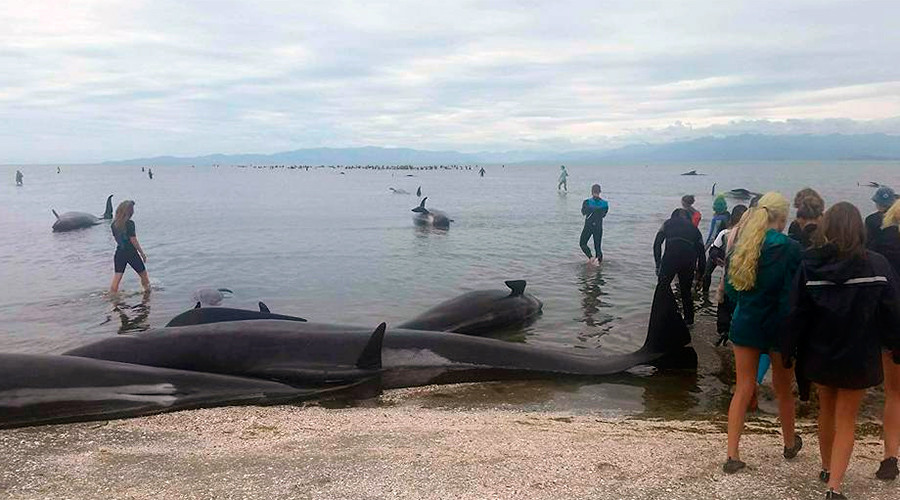
“Swimming through that for eight hours a day for an entire year could have possible health effects,”
Dr. Ken Buesseler, Woods Hole Oceanographic Institution
What do whales do for the other 16 hours a day, Dr. Buesseler? Stop the smoke and mirrors!
Educational comments posted with the article as well.
From ENE News
February 5, 2017
KGMB, Jan 17, 2017 (emphasis added): Officials investigate record number of humpback whale deaths… Six humpback whale carcasses have washed up onto Hawaii shores since November. That’s double the number typically found in a season, which runs from November to May… The previous record [of five] whale carcasses found in Hawaii waters was in 2013… Biologists aren’t sure what’s behind the increase in deaths. “It is higher than usual. It’s almost double this early in the season for what we’d get in a whole season,” said [NOAA’s] David Schofield… Since November, whale carcasses have been scattered throughout the main Hawaiian islands… Biologists are investigating to see if the whales starved or if there’s a problem with the ocean’s health…
officials will be meeting with partners in Alaska and Washington D.C. to investigate further.
KGMB reporter Mahealani Richardson, Jan 17, 2017: Woah! Dead whales! Wildlife officials are investigating a mystery over a record number of humpback whale deaths
Other recent whale deaths in Hawaii
KHON, Nov 22, 2016: Beached melon-headed whale euthanized on Maui… “The body condition was significantly compromised…” said [NOAA’s] Aliza Milette-Winfree… a necropsy will be done to determine what made it sick.
KHON, Oct 23, 2016: A pregnant dwarf sperm whale found dead on Maui’s Makena shoreline… this is very unusual because these whales normally live in deep waters… samples have been sent to the mainland to see if the whale also had any diseases… [NOAA] reported that a witness saw two small whales stranded in Makena…
AP, Aug 26, 2016: Experts are reporting the sighting of a sickly humpback whale off Maui. [NOAA’s] Malia Chow said Friday the animal is emaciated and covered in whale lice… She says the animal’s poor condition is a mystery.
Hakai Magazine, May 25, 2016: No-Show Pacific Ocean Humpbacks Stump Scientists… Whale researchers from around the Pacific are reporting that far fewer whales showed up in their usual wintering grounds… [NOAA’s Ed Lyman] says he started noticing changes in December 2015… [He] was getting calls from tour boat operators asking where the whales were. “Something happened this year,” agrees Jim Darling, a researcher with the nonprofit Whale Trust Maui. “It almost seemed as if the females didn’t bother to show up”… the density of cows and calves was especially low… Darling also reported hearing from colleagues in the Philippines and Japan of similarly low whale numbers… Also striking was the low number of calves… Puerto Vallarta, Mexico, also saw fewer whales than normal says Oscar Frey, an oceanographer… he observed “the least number of mothers with babies that I have ever seen.”
How about in 2017? — The Garden Island, Jan 30, 2017: Annual whale count… [Jean Souza, HINMS Kauai programs coordinator] said the Kauai sites… saw an average of four whale viewings within a 15-minute time count period… down from the six sightings of the 2016 count.
Dr. Ken Buesseler, Woods Hole Oceanographic Institution, Jan 7, 2017: “We know there can be health effects from exposure to any amount of radiation… the highest level we’ve seen north of Hawaii is 10 Becquerels per cubic meter. Swimming through that for eight hours a day for an entire year could have possible health effects, but that additional dose is one thousand times smaller than a single dental X-ray.”
From ENE News
February 3, 2017
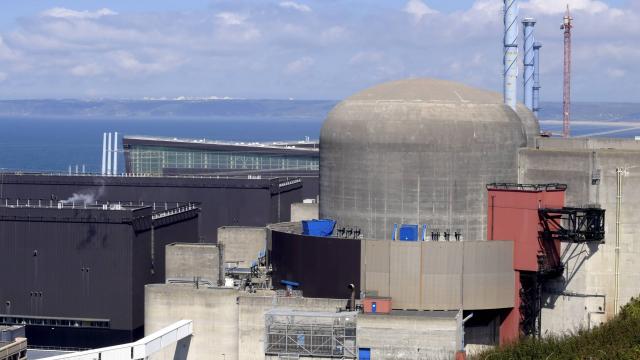
NHK World, Feb 3, 2017 (emphasis added): The operator of the crippled Fukushima Daiichi nuclear power plant is examining if it can go ahead with a plan to deploy a robot into one of the damaged reactors at the facility… An analysis of the images found that the radiation level inside the vessel was up to 530 sieverts per hour. Officials speculate that fuel debris–a mixture of nuclear fuel and melted parts of the reactor’s facility–may be emitting strong radiation
inside the vessel… Last week’s probe found that part of a metal grating just beneath the reactor was missing. The robot was supposed to move around on the grating. The image analysis also found that an around one square-meter section near the missing segment is about to collapse.
NHK World transcript, Feb 3, 2017: “[Tepco] is facing more setbacks. Tepco has found unstable grating near a rector that will make it difficult to conduct further surveillance to help it decommission the plant… They found a section the size of a square meter is about to collapse. They had already found holes in other sections… A nuclear power expert suggests that will make it difficult for workers to locate the fuel.”
NHK World transcript, Feb 3, 2017 (at 1:30 in): “Engineers were able to get a glimpse inside Reactor No. 2… They found that a section one meter square is about to collapse. They had already found holes in other sections.”
Asahi, Feb 3, 2017: TEPCO said it will consider a different route for the robot… Fumiya Tanabe, an expert on nuclear safety… said the findings show that both the preparation for and the actual decommissioning process at the plant will likely prove much more difficult than expected. “We have few clues on the exact locations, the sizes and the shapes of the nuclear fuel debris,” he said. “The planned investigation by the robot needs a rethink. Work to decommission the plant will require even more time.”
CNET, Feb 3, 2017: High radiation levels at Fukushima reactor is bad, bad news — Time to reconsider that trip to the east coast of Japan. A containment vessel at the destroyed Fukushima No. 1 power plant has reached off-the-chart radiation levels, reported the Japan Times… Experts believe that escaped melted fuel can account for the spiked reading.
Comments from Beyond Nuclear below.
From Japan Times
January 28, 2017
Toshiba Corp. will cease taking orders related to the building of nuclear power stations, sources said Saturday, in a move that would effectively mark its withdrawal from the nuclear plant construction business.
The news comes amid reports Toshiba’s chairman may resign over the massive write-down that has doomed the company’s U.S. nuclear business.
The multinational conglomerate said Friday it will review its nuclear operations and spin off its chip business to raise funds in a bid to cover an expected asset impairment loss of up to ¥700 billion ($6.08 billion).
After Toshiba ceases taking new orders, it will focus on maintenance and decommissioning operations, according to the sources.
The company will continue work on four nuclear plants under construction in the United States that are expected to be completed by 2020.
The Japanese industrial conglomerate may announce company chairman Shigenori Shiga’s resignation as soon as Feb. 14, when it reports its April-December financial results, the sources also said.
Shiga once served as president of the U.S. nuclear unit, Westinghouse Electric Co., which Toshiba has said could face a multibillion-dollar loss due to cost overruns from delays in plant projects.
The post of Toshiba chairman is expected to remain vacant after Shiga’s resignation.
Westinghouse Chairman Danny Roderick is also set to step down, the sources said, but Toshiba President Satoshi Tsunakawa is likely to stay on.
Shiga, Roderick and Tsunakawa took their current posts last June as Toshiba reshuffled its management following an accounting scandal that surfaced in 2015.
Shiga was the vice president in charge of the power systems business when Westinghouse acquired CB&I Stone & Webster in late 2015. CB&I Stone & Webster is the U.S. nuclear plant construction firm at the heart of Toshiba’s massive write-down problem.
Comment on article:
Posted under Fair Use Rules.
From Beyond Nuclear:
…Toshiba will suffer an estimated $6 billion loss due to its uneconomic nuclear business and is looking to offload Westinghouse, its U.S. subsidiary. The company turmoil could throw a welcome wrench into the proposed new reactor at Moorside in the U.K., a nation whose nuclear problems are compounded by its exit of Euratom as part of the Brexit deal. Toshiba says its 4 Westinghouse AP-1000 reactor projects underway in Georgia and South Carolina will continue although the Vogtle project (pictured) is at least three years behind schedule and more than $3 billion over budget. And with the Trump administration threatening to weaken already inadequate federal regulations, Toshiba is seizing the opportunity to blame its financial woes on what it calls “stricter safety standards in the U.S.” Our mandate will now mean not only insisting on the enforcement of existing regulations, but likely a fight to block them from being gutted.
Yet another sharp contrast to the news reports that the plume is just reaching the American West Coast now.
From ENE News
January 23, 2017
Royal Society of Chemistry, National Institute for Physics & Nuclear Engineering, Romania, 2015 (emphasis added): AMS analyses of I-129 from the Fukushima Daiichi nuclear accident in the Pacific Ocean waters of the Coast La Jolla, San Diego, USA — This paper presents the results of an experimental study we performed by using the Accelerator Mass Spectrometry (AMS) method with iodine 129 (Halflife = 15.7 Million years], to determine the increase of the radionuclide content in the USA West Pacific Coast waters, two years after the March 2011 Fukushima Daiichi nuclear power plant accident… The results of the experiments showed a significant increase of the radionuclide concentration during the late spring of 2013. Compared to the isotopic ratio 129I/127I, measured at a 40 km distance, offshore of Fukushima and immediately after the accident, our results show an increase on the USA West Coast that was more than a 2.5 factor higher. Also, compared with the pre-Fukushima background values [in San Diego], our results show an isotopic ratio of about two orders of magnitude higher…
The Fukushima Daiichi nuclear power plant… released an enormous amount of liquid waste of 129I and other fission isotopes directly into the Pacific Ocean that were subsequently dispersed eastwards. This paper reports on the determination of the nuclear plume impact on the West Coast of the USA that happened during April–July 2013… The determined maximum 129I concentration
increase was in an amount of more than 2 times greater than the concentration of the isotope measured offshore of Fukushima at a 40 km distance immediately after the accident…
129I concentrations were measured… from the ocean water of the West Coast of the USA [at] La Jolla, San Diego… This work reports two sudden increases of the 129I/127I isotopic concentration in the ocean water, which were observed at the end of spring 2013…
Our exploratory measurements on the USA West Coast started on samples collected at the beginning of 2013. The lowest 129I concentrations that we measured had values between [6-20 million] atoms per L. Such values correspond to the equilibrium concentration of iodine… offshore of La Jolla, San Diego…
Our results… measured offshore of Cove La Jolla, San Diego, USA, during the spring of 2013, are presented in Fig. 5. Two high and distinct spike maxima are visible. They reveal the maximum concentration values of [1.2 billion] atoms per L measured on May 24, 2013 and [1.7 billion] atoms per L measured on June 18, 2013, with 24 days in between. Both peaks occurred in the measurement spectrum after a slow increase in concentration
that started about 15-20 days before the main increase…
Samples collected [by Fukushima Daiichi, Jun 2011] at a distance of about 40 km away from the coast [had] a maximum concentration value of [620 million] atoms per L for 129I in the surface water of the ocean. Taking into account this value as a reference value, the maximum 129-iodine concentration reaching the USA West Coast was 2.5 times stronger than in the contaminated ocean water offshore of Fukushima after the accident. If we compare it to the equilibrium value of 129I concentration in the ocean water [near San Diego], then during the impact its concentration was about 100 times higher…
AMS measurements of 129I were performed on ocean water… offshore of Cove La Jolla, San Diego, USA, and definitely have shown an increase of the radioactivity more than two orders of magnitude over the natural level of the Pacific Ocean before the accident…
Read study for free here ($50 at Royal Society of Chemistry)
From ENE News
January 22, 2017
Kyodo News. Jan. 21, 2017 (emphasis added): Crane falls on building storing spent nuclear fuel at Takahama plant — A crane collapsed Friday night at the Takahama power station… damaging a building housing spent nuclear fuel, the plant operator said Saturday… An official apologized for the accident at a news conference at the plant, saying the utility would re-examine the risk of crane accidents amid strong winds and investigate the cause of the latest incident…
Asahi Shimbun, Jan 21, 2017: The mangled wreckage of the construction crane at the Takahama nuclear power plant
… The 113-meter tall [nearly 400 foot] crane used for construction work collapsed around 9:50 p.m. … The plant’s operations have been suspended. The mangled wreckage lies on [a] building used to store spent nuclear fuel… Winds gusting at 50.4 to 54 kph [31 to 34 mph] were raging at the time, and a warning had been issued…
Jiji Press, Jan 21, 2017: Large Crane Falls Down at Takahama Nuclear Plant… A 113-meter crane toppled over two buildings… Friday night, the operator… [T]he 270-ton boom crane partially damaged steel frames of an auxiliary building and an adjoining spent fuel storage facility for the No. 2 reactor… The central control room for the reactor is located in the auxiliary building…
Getty Images, Jan 21, 2017: Crane falls on Takahama plant building housing spent nuclear fuel… where a crane collapsed a day earlier, damaging a building housing spent nuclear fuel.
Manichi Daily News, Jan 21, 2017: After the incident, the framework of the collapsed crane was seen bent along the buildings on which it fell, and the metal rails on the edges of the roofs of the two affected buildings were damaged… [A] worker at the plant’s central control room heard a loud sound and checked to find one of the four cranes collapsed…
NHK, Jan 20, 2017: A large crane has toppled onto a building storing nuclear fuel… Part of the building’s roof was damaged… Workers at the plant found… the crane had half-collapsed onto the building next to the containment vessel… They confirmed damage to a facility collecting rainwater on the roof, but say they have detected no change to radiation levels in the surrounding area… Nuclear Regulation Authority says its inspectors have confirmed the falling crane caused wall panels inside the building to move. Workers are checking the building’s functions to prevent radioactive materials from leaking… The Takahama plant’s operational chief… apologized for the accident…
From Japan Times
December 25, 2016
TAIPEI – The first of three public hearings on whether Taiwan should ease its ban on Japanese food imports imposed after the 2011 Fukushima nuclear crisis was canceled Sunday amid shouting, table pounding, and physical altercations.
Hundreds of protesters mobilized by the main opposition Kuomintang clashed with police outside the hearing venue in New Taipei City. A truck parked outside bore placards calling President Tsai Ing-wen “Japan’s servile follower” and demanding her resignation.
Participants allowed inside criticized organizers for blocking people outside from entering. One opponent who prepared her own microphone said the hearings are meaningless because Tsai has the final say on the matter.
In addition to the protest in the morning, KMT also organized a march in Taipei during the afternoon.
When the March 2011 Great East Japan Earthquake and tsunami triggered a triple core meltdown, Taiwan banned food imports from Fukushima, Ibaraki, Gunma, Tochigi, and Chiba prefectures, and began conducting random radiation checks on nine categories of imported foods.
The Tsai administration recently formulated a plan to relax the ban in two stages.
Under the proposal, Taiwan plans to keep in place its ban on the import of all food products from Fukushima but conditionally allow imports of certain products from the other four prefectures.
The first stage of the plan will serve as a reference for the further relaxation of restrictions in the second stage, possibly about six months later.
Sunday’s public hearing, video conferencing with participants on the outlying Matsu Islands and streamed live on the internet, was the first of three the administration promised to hold after 10 were held across the island last month.
The KMT criticized the Tsai government for holding the 10 hearings in three days, questioning whether it has made a secret deal with Japan in exchange for something.
The administration then decided to hold three more, one in New Taipei on Sunday, another in Kaohsiung in the south on Jan. 2, and the third in Taipei on Jan. 8.
During Sunday’s hearing, opponents alleged that the event was improperly organized and that documents were not provided in an appropriate manner.
The organizers decided to cancel the event but allowed participants to voice opinions in the afternoon, calling it a discussion session.
The morning session began with chaos, with participants shouting, throwing documents and pounding and jumping on the tables.
KMT Vice Chairman Hau Lung-bin argued that Sunday’s hearing was “illegal” and “meaningless” because the Tsai administration has already planned to ease the ban.
Hau, who initiated a signature drive to endorse a referendum on whether to relax the ban, said the administration is duty-bound to explain the possibility of it using the ban easing as a bargaining chip in exchange for a trade deal with Japan and how such a trade deal will benefit Taiwan.
KMT legislator Wang Yu-min said Chiou I-jen, chairman of the Association of East Asian Relations, Taiwan’s semi-official agency handling the island’s relations with Japan, should attend Sunday’s public hearing because he is responsible for negotiating the trade deal.
She also argued the administration is in no position to talk about the government’s plan to ease the ban because it cannot ensure food safety, citing the recent discovery that packets of soy sauce subject to the ban entered the country illegally.
Following the discovery, the Executive Yuan, or Cabinet, said before a mechanism is established to ensure the safety of food products imported from the five prefectures and public confidence in the government is restored, easing the ban is not an option.
It also emphasized that the government does not have any set position and there is no timetable set for easing the ban.
Posted under Fair Use Rules
“I think the event is winding down, and — probably some time at the end of winter, spring next year — it will be kind of just a distant nightmare, rather than a current bad dream.”
Nicholas Bond, research meteorologist, University of Washington
From the Santa Rosa Press Democrat
Year in Review: Ocean changes upend North Coast fisheries
Notable impacts for the North Coast included last year’s persistent, widespread “red tide” — a bloom of Pseudo-nitzschia, a single-celled organism that thrives in warm water and produces a neurotoxin called domoic acid. In addition to contributing to fatalities among sea lions and other pinnipeds, the toxin shut down last year’s Dungeness crab fishery for 4½ months, including the lucrative holiday season, pushing many in the North Coast’s commercial fleet to the brink of insolvency.
The crisis isn’t over. Lingering toxicity along the California coast continued into early fall this year, though in a more localized distribution pattern, UC Santa Cruz Professor of Ocean Health Raphael Kudela said during an October public hearing on fisheries and aquaculture.
Warmer than usual water also is believed to have contributed to the collapse of the bull kelp forest off Sonoma and Mendocino counties, along with an explosion of purple urchins that have devoured remaining plant life. The urchins, in turn, are out-competing red abalone, the shellfish that attract thousands of sport divers and pickers each year to the Sonoma and Mendocino coast.
Evidence of starvation in abalone populations prompted authorities to impose new restrictions in the sport abalone fishery next year to limit the catch. The commercial red urchin fishery is suffering, as well, as the larger, marketable red urchins starve.
Meanwhile, the commercial salmon harvest, California’s most valuable ocean fishery, continues to suffer, with spawning populations reduced significantly by the state’s prolonged drought.
Mass-starvation events have hit a spectrum of other West Coast marine wildlife, mostly due to the collapse of food chains brought on by warmer ocean water.
Large dieoffs of Cassin’s auklets, a tiny seabird, were first noticed when dead birds began washing ashore in fall of 2014. A year later, it was malnourished and dead common murres that were found adrift.
Juvenile California sea lions, Guadalupe fur seals and other marine mammals have suffered for several years, as well, both from starvation and, to a lesser extent, from domoic acid poisoning.
The dieoff California sea lions, declared an “unusual mortality event” by scientists in early 2013, has taken a toll on the population, especially the young, with Southern California strandings peaking last year at a record-breaking 4,000, according to the NOAA Fisheries. About a third of the sea lions rescued received treatment at the Sausalito-based Marine Mammal Center.
Researchers believe nursing mothers had been unable to find enough forage, like sardines and anchovies, to properly nourish their young.
The situation for sea lions and seals — mammals known as pinnipeds — appears to have improved somewhat this year, though sea lion strandings were still above 2,000. And there’s been encouraging news on the condition of pups surveyed this fall at Southern California birthing colonies, suggesting food availability may have stabilized somewhat as the warm blob relents, researchers said.
“The short story is that the warm ocean temperatures have moderated, but it’s still noticeably warmer than normal in a narrow strip right along the coast, the entire coast, of North America,” said Nicholas Bond, a research meteorologist with the University of Washington who first coined the term to describe the huge mass of warm water offshore.
There’s some reluctance among scientists and fishermen to predict what comes next.
Washington state fisherman Ron Anderson, who came south to catch crab because northern fisheries remained closed, said the ocean temperature had dropped 6 degrees since he and his crew arrived in the North Bay around Nov. 1.
Another crabber, Bob Monckton of Santa Rosa, said he’d recently seen another harbinger of cooling conditions. “I’ve seen more anchovies out there than I’ve seen in a while,” he said.
But it’s unclear how quickly or if the ocean will return to “normal,” or even what normal would be, given the relatively short period of time during which scientists have monitored conditions historically.
“Even when temperatures moderate,“ Bond said, “it takes a while for the biology to respond, so it’s still a fairly disrupted ecosystem.”
“But all that being said, I think the event is winding down, and — probably some time at the end of winter, spring next year — it will be kind of just a distant nightmare, rather than a current bad dream.”
You can reach Staff Writer Mary Callahan at 707-521-5249 or mary.callahan@pressdemocrat.com. On Twitter @MaryCallahanB.
http://www.pressdemocrat.com/news/6411090-181/year-in-review-ocean-changes?artslide=0
Posted under Fair Use Rules.
The vast majority of die-offs are like the ones here — unstudied, uncounted or reported only in newspapers. Still, scientists tracking the largest mass mortality events have found that the ones they can count are becoming larger — killing more birds, fish and marine invertebrates.
…the sea stars’ pandemic began before the anomalously warm “Blob” of water appeared in the Gulf of Alaska, spreading across places with vastly different environmental conditions, linked to temperature in some places but not others.
Last winter, tens of thousands of murres starved to death. This summer, the remaining murres abandoned their nesting colonies and failed to raise chicks.
…a phytoplankton community with…smaller cells
…How weird is all this? And does it all fit together?
…”The system is just really variable,” said Katrin Iken, a marine biologist at the University of Alaska Fairbanks. “It’s hard to pick out a change that is different than that variability.”
So, variability is the problem????
…”Mother Nature [???] is giving us this huge natural [???]experiment,” [Kris] Holderied [oceanographer with the National Oceanic and Atmospheric Administration, NOAA] said. “The conditions we’ve been seeing, we’ve never seen them before. They’re three or four standard deviations above the normal — but by 2046, this will be normal.”
The enormous monster in the room — how long can the pseudo-scientific community avert its eyes?
From ADN
Kachemak Bay has seen massive die-offs of sea stars and other species. What’s going on?
by Erin McKittrick
November 14, 2017
JAKOLOF BAY — I came to the beach to count sea star corpses. You might know them as starfish — stiff, five-pointed bodies like a child’s drawing of a star, crayon-bright. About 10 species once were common in the intertidal zone here, with different colors and shapes and numbers of rays — hundreds of which had been dismembered and scattered over the beach, as if a monster had stalked through before us, tearing their bodies apart.
The monster is sea star wasting disease. Broken patches on the skin turn into fissures, with brown globs of sea star insides leaking through the cracks. Within days, the stars turn limp, fall off rocks, shed arms and melt away into soft, wet puddles.
The tide sweeps over them, scattering their last remains. We’re left with an absence, another mystery, and an ocean that seems to be shifting too quickly for anyone to keep up.
A few months earlier, my kids and I kicked the eagle-scavenged carcasses of murres off one of our favorite camping spots before heading down to low tide among a mass of then-alive sea stars. The birds were leftovers of last winter’s die-off, when tens of thousands of murres starved to death and washed up along beaches all over Southcentral and Southwest Alaska. Biologists counted more dead seabirds than they ever had before, but there were more than anyone could count, leading to the second consecutive summer of empty nesting colonies, a silencing of the usual raucous chatter of sex and birth.
It was also the second summer in a row with no clams or clammers on Ninilchik beaches, and no young clams to promise a recovery. Otters washed up dead on the shores of Kachemak Bay. Dead whales rotted on the surface, and live whales lingered in our fjords late into last winter, months past their usual departure.

How weird is all this? And does it all fit together?
“That’s the question we’re all trying to answer,” said Kris Holderied, oceanographer with the National Oceanic and Atmospheric Administration, or NOAA. While we talked, whitecaps swept down Cook Inlet, where she had hoped to be out on a boat, monitoring the ocean. Rain spattered against the roof, and punctuated the cellphone signal with brief gaps of static. It fell on the ocean, and flowed from the rivers, creating a layer of freshwater that floated and spread across the Gulf of Alaska.
“The last two winters, we never had the big cold-air outbreak, cooling the northern Gulf of Alaska. It rained all winter long, and that freshwater stabilized the water column. Not only are you not cooling it, but it stops nutrients from mixing, and changes what happens with the plankton.”
Blooms of a plankton called Alexandrium, associated with warm water, burst into Kachemak Bay, giving us our first high levels of paralytic shellfish poisoning (PSP) toxin recorded in more than a decade.
Pseudo-nitzschia, another blooming plankton, left domoic acid, another neurotoxin, in its wake. Holderied’s research focuses on the most basic parts of the ocean — the temperature, the nutrients and these smallest pieces of life. From there, currents swirl and plankton are swallowed by a complex food web of largely unseen creatures, until there’s something dramatic enough for us to notice.
Vanishing sea stars
Katie Aspen Gavenus, a naturalist with the Center for Alaskan Coastal Studies, was one of the first to notice the dying sea stars.
Gavenus’ job has her out in tidepools all summer, teaching schoolchildren and guests about the creatures. She could always make an impression with a sunflower star. Bright orange to deep purple, these stars are larger than the lid of a 5-gallon bucket, with up to two dozen creeping arms. They’re voracious predators, simultaneously fuzzy, spiny and slimy to the touch, gliding over the kelp beds with startling speed.
“I picked up one that appeared to be completely healthy, and I was showing it to some guests — a family — supporting it with two hands,” she said. “Then a ray fell off. Then another one. I knew what was happening, but I didn’t know how to explain it to them — that it was dying in front of their eyes.”
Soon there were no more sunflower stars to be found. Other species followed. Gavenus returned to the sea star plots naturalists had been surveying since 2014, recording melting sea stars, and then almost no sea stars at all.

She reported dead sea stars to researchers in California, as she’d reported dead seabirds to researchers in Washington state. “Sometimes this summer, it felt like I was doing nothing but counting dead animals.”
Temperatures spiked this summer in Kachemak Bay at around 57 degrees, several degrees higher than the usual summer peak and warmer than any summer since 2005. In the middle of August, the Kachemak Bay Research Reserve warned of toxic mussels in the Homer harbor, just when the sea stars were beginning to succumb. Wasting had been present here at a low level for years. Perhaps higher temperatures finally caused it to break into a full-scale plague.
It’s a simple story — but it’s too simple. Farther south, the sea stars’ pandemic began before the anomalously warm “Blob” of water appeared in the Gulf of Alaska, spreading across places with vastly different environmental conditions, linked to temperature in some places but not others.
The bodies of these dying stars teem with a virus called SSaDV (sea star-associated densovirus), but the healthy stars have it too, as do museum-preserved stars from as far back as 1942. None of the scientists I spoke to could explain what sparked the current plague, which broke out in the summer of 2013, leaping up and down the coast from Washington to California to Oregon, British Columbia and Alaska.
“It’s probably a pathogen plus environmental factors,” said Melissa Miner, a researcher with University of California, Santa Cruz who’s been tracking the outbreak for years. “Some people are looking at ocean acidification as well.”
Aquariums signal problems
In some places, the first people to notice sea star wasting were workers in aquariums, where stars in kiddie touch tanks melted away, infected by the filtered, pumped-in ocean. Water is a sea star’s blood. It enters through a pore on the top of the animal, and moves through a series of canals, operating the thousands of tiny tube feet through a system of hydraulics.
The same water soon becomes the blood of its neighbor. As land creatures, we live in our protective bags of skin. But in the ocean, currents sweep up pathogens and toxins, plankton and larvae, connecting distant places and creatures.
The vast majority of die-offs are like the ones here — unstudied, uncounted or reported only in newspapers. Still, scientists tracking the largest mass mortality events have found that the ones they can count are becoming larger — killing more birds, fish and marine invertebrates. Fewer die-offs are caused by cold stress, while more are now caused by harmful algal blooms, by disease or by several simultaneous factors.
Sea stars are brainless, heartless and inedible. They might still be important. Decades ago, scientists removing ochre stars from the beach watched mussels grow over the rocks, and invented the concept of a “keystone species.” The loss of sea stars may cascade through the entire intertidal ecosystem. Or juveniles may carpet the rocks, quickly growing to replace what was lost. Miner has seen evidence of both futures in her long-term monitoring sites — beaches with babies, beaches empty.

We don’t know what will happen with the sea stars. We don’t even know what is happening with the sea stars. The scientists I spoke to didn’t know why the Kachemak Bay sea stars died this summer — they didn’t even know it had happened. There are so few scientists in Alaska, scrabbling for funding, fighting the weather and dealing with a huge and complicated ocean. Plus, Alaska’s 34,000 miles of tidal shoreline, according to NOAA, is nearly four times more than the No. 2 state of Florida.
“The system is just really variable,” said Katrin Iken, a marine biologist at the University of Alaska Fairbanks. “It’s hard to pick out a change that is different than that variability.”
Some strands braid together neatly. Last winter, tens of thousands of murres starved to death. This summer, the remaining murres abandoned their nesting colonies and failed to raise chicks.
But what about sea star viruses?
Or herring drifting into Kachemak Bay from Prince William Sound to feed humpback whales and winter kings?
Or a phytoplankton community with bigger numbers and smaller cells?
Or shifts in kelp beds?
All these braid together like my daughter’s hair after a week in the wilderness — a confusion of snarled knots and flyaway strands and tucked in bits of spruce twig.
New normal?
We’re probably missing strands. Most of the ocean is invisible and unnoticed — built of species neither cute, iconic nor commercially harvested.
Kachemak Bay is better monitored than most. Mandy Lindberg, a biologist with NOAA, hopes that remote-sensing networks can be deployed across the state to catch some of what we’re missing: “We need instruments that send data and imagery. It’s more important now because of all these weirdnesses with the climate.” [NOAA wants to use microwave radiation sensors to “monitor” the situation? This will cause further harm to this very fragile environment.]
“Mother Nature is giving us this huge natural experiment,” Holderied said. “The conditions we’ve been seeing, we’ve never seen them before. They’re three or four standard deviations above the normal — but by 2046, this will be normal.”
This summer, I walked the beaches with a little yellow notebook in my pocket. It’s full now, scribbled with geeky little lists of each species I found at low tide — sometimes 70 in a single morning. They were records of new things I learned. Perhaps they’re also records of things that will never be the same. I used those lists when I uploaded my observations to the citizen-science site tracking sea star wasting. My pin marks showed up on the map. They made me feel important. It was unnerving, exciting and sad all at the same time.
Change is fascinating.
In October, my son and I walked down the beaches of Jakolof Bay, hands tucked into our pockets to protect against the frost. The crabs hunched motionless in the cold, and the corpses of birds and sea stars had been long since swept away. I spotted a glimpse of pink and plunged my arm into the water to pull up a single rainbow star, the only one I’d seen in a month. Three of its five arms were tiny regenerating stubs. We speculated about its brush with death, and whether this single survivor could become the grandmother to future generations. Its tube feet reached out to grip the rock. I made a mark in my notebook, and then put it back — extra carefully.
Erin McKittrick is a writer, adventurer and scientist based in Seldovia. She’s the author of “A Long Trek Home: 4,000 Miles by Boot, Raft and Ski,” the children’s book “My Coyote Nose and Ptarmigan Toes” and “Small Feet, Big Land: Adventure, Home and Family on the Edge of Alaska.” Her next book, “Mud Flats and Fish Camps: 800 Miles around Alaska’s Cook Inlet,” is due out in spring 2017. You can find her at GroundTruthTrekking.org.
Posted under Fair Use Rules.
From Public Employees for Environmental Responsibility
For Immediate Release: Dec 22, 2016
Contact: Kirsten Stade (202) 265-7337
EPA Hid Planned Exposure Levels 1,000s of Times Safe Drinking Water Act Limits
Posted on Dec 22, 2016
Washington, DC — In the last days of the Obama Administration, the U.S. Environmental Protection Agency is about to dramatically increase allowable public exposure to radioactivity to levels thousands of times above the maximum limits of the Safe Drinking Water Act, according to documents the agency surrendered in a federal lawsuit brought by Public Employees for Environmental Responsibility (PEER). These radical rollbacks cover the “intermediate period” following a radiation release and could last for up to several years. This plan is in its final stage of approval.
The documents indicate that the plan’s rationale is rooted in public relations, not public health. Following Japan’s Fukushima meltdown in 2011, EPA’s claims that no radioactivity could reach the U.S. at levels of concern were contradicted by its own rainwater measurements showing contamination from Fukushima throughout the U.S. well above Safe Drinking Water Act limits. In reaction, EPA prepared new limits 1000s of times higher than even the Fukushima rainwater because “EPA experienced major difficulties conveying to the public that the detected levels…were not of immediate concern for public health.”
When EPA published for public comment the proposed “Protective Action Guides,” it hid proposed new concentrations for all but four of the 110 radionuclides covered, and refused to reveal how much they were above Safe Drinking Water Act limits. It took a lawsuit to get EPA to release documents showing that –
“To cover its embarrassment after being caught dissembling about Fukushima fallout on American soil, EPA is pursuing a justification for assuming a radioactive fetal position even in cases of ultra-high contamination,” stated PEER Executive Director Jeff Ruch, noting that New York Attorney General Eric Schneiderman has called for the PAGs to be withdrawn on both public health and legal grounds. “The Safe Drinking Water Act is a federal law; it cannot be nullified or neutered by regulatory ‘guidance.’”
Despite claims of transparency, EPA solicited public comment on its plan even as it hid the bulk of the plan’s effects. Nonetheless, more than 60,000 people filed comments in opposition.
“The Dr. Strangelove wing of EPA does not want this information shared with many of its own experts, let alone the public,” added Ruch, noting that PEER had to file a Freedom of Information Act lawsuit to force release of exposure limits. “This is a matter of public health that should be promulgated in broad daylight rather than slimed through in the witching hours of a departing administration.”
###
View ultra-high proposed PAG allowable concentrations
(and explanation for the chart)
See briefing memo explaining why EPA wants water PAGs